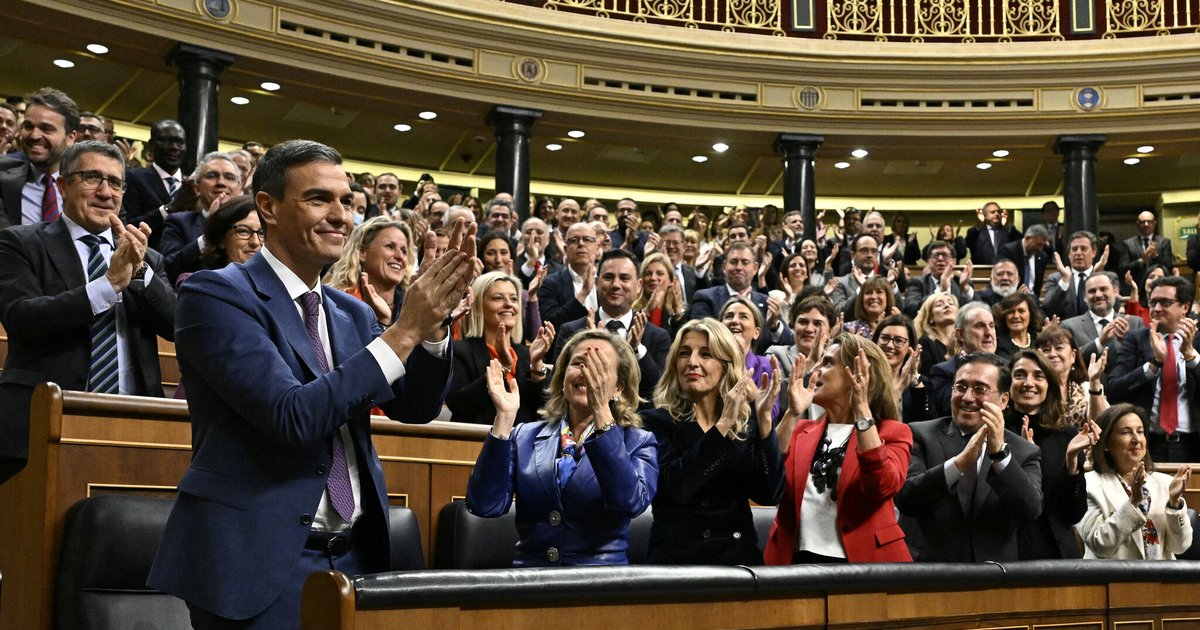
Spanish Prime Minister Pedro Sanchez announced on Wednesday Spain's stance against supporting any party that contributes to igniting conflicts, during his welcome of the ceasefire between the United States and Iran. Sanchez affirmed that this truce does not mean forgetting the chaos and destruction left by previous hostilities.
In a post on social media, Sanchez stated: "Ceasefires are always good news, especially if they lead to just and lasting peace. However, this moment of respite cannot make us forget the chaos, destruction, and lives lost." He added, "The government of Spain will not praise those who ignite wars just because they later appear with a bucket of water."
Details of the Event
Sanchez's remarks come after U.S. President Donald Trump announced a two-week suspension of attacks on Iranian infrastructure, which sparked a wave of relief in financial markets. Trump had previously threatened that "a whole civilization will be wiped out tonight, and it will never return" if an agreement was not reached by his deadline.
At the same time, Iranian authorities confirmed that the temporary ceasefire means safe passage through the Strait of Hormuz would be "possible," but only on the condition of coordination with Iranian armed forces and the existence of "technical restrictions," potentially giving Tehran some leeway to determine compliance according to its own terms.
Background & Context
Sanchez has emerged as one of the most prominent critics of U.S. and Israeli strikes against Iran since these operations began on February 28. The Spanish government had previously refused to allow the use of two joint military bases on its territory for U.S. attacks against Iran, before closing its airspace to U.S. aircraft involved in the strikes, reflecting its anti-war stance.
In response, Trump renewed his criticisms of Spain's defense spending and threatened to cut all trade relations with the country. These tensions reflect the difficulties Spain faces in balancing its commitments as a NATO member with its independent stance in foreign policy.
Impact & Consequences
Current analysis shows that the ceasefire between the U.S. and Iran may be fragile, as analysts have warned that the lack of trust between the parties will complicate the path to achieving lasting peace. Additionally, international reactions to this ceasefire indicate that many countries hope this step will lead to a de-escalation of tensions in the region.
Furthermore, Sanchez's position reflects a shift in European policy towards conflicts in the Middle East, as European countries seek to promote diplomacy rather than military escalation. This trend may influence how European nations handle regional issues in the future.
Regional Significance
In the Arab context, this development is significant, as any escalation in the conflict between the U.S. and Iran could directly impact security and stability in the region. Arab countries, especially those suffering from conflicts, are closely monitoring these developments.
Moreover, the ceasefire could open the door for more dialogue among the concerned parties, potentially contributing to easing tensions in other areas such as Lebanon and Syria. The stability of the region heavily depends on how these events unfold.
The stance of Spain against supporting hostilities reflects a shift in European policy and underscores the importance of diplomacy in resolving conflicts. As developments continue, hope remains for achieving lasting peace in the region.