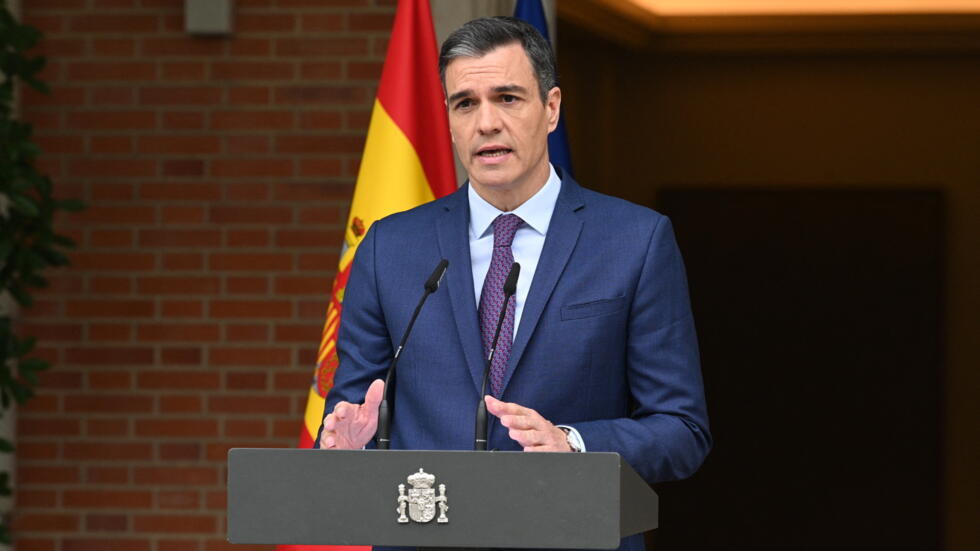
Spanish Prime Minister Pedro Sánchez has condemned the ongoing war in the Middle East, indicating that it involves a "much worse scenario" than the 2003 invasion of Iraq. Sánchez described this war as senseless, brutal, and illegal, warning of its negative repercussions on the economy and society.
During his speech before the Spanish Parliament, Sánchez asserted that the impact of this war could be broader and deeper than what Europe experienced after the invasion of Iraq. He noted that the war did not achieve its objectives but instead increased the suffering of citizens. He added that the invasion led to a sharp rise in fuel and food prices, resulting in a migration crisis and exposing Europe to attacks from extremist groups.
Details of the Event
In his remarks, Sánchez pointed out that the current war hinders Spain from achieving its economic, social, and environmental goals. He highlighted that the attacks on Iran could economically affect millions of people, increasing pressure on Spanish families. Sánchez also rejected a request from the United States to use Spanish military bases for attacks on Iran, despite threats he received from former President Donald Trump to cut trade relations with Spain.
Sánchez stated, "Every bomb dropped in the Middle East ultimately affects our families' purchasing power," emphasizing that it is unfair for Spaniards and other Europeans to bear the consequences of an illegal war.
Context and Background
Sánchez's statements come at a time when European criticism of the war launched by the United States and Israel against Iran has intensified since the end of February. This war, which has seen exchanges of attacks in various regions of the Middle East, has raised significant concerns about escalating regional tensions and their impact on security and stability.
German President Frank-Walter Steinmeier also noted that this war represents a catastrophic political mistake, asserting that it was unnecessary and could have been avoided. These criticisms reflect growing anxiety in Europe regarding the potential consequences of the war on regional security and stability.
Impact and Consequences
The repercussions of the current war extend beyond the Middle East, potentially affecting the global economy, especially amid rising energy and commodity prices. As economic pressures mount, European citizens may find themselves facing new challenges related to the cost of living.
On the other hand, this war could exacerbate humanitarian crises in the region, where civilians suffer from the ongoing conflict's consequences. The escalation of violence may increase the number of displaced persons and refugees, placing additional pressure on European countries that receive those fleeing the conflict.
Impact on the Arab Region
For the Arab region, the war on Iran may redraw the map of alliances and conflicts. It could escalate tensions between Arab countries and Iran, threatening stability in nations such as Iraq, Syria, and Lebanon. Moreover, any military escalation could pave the way for new foreign interventions, complicating the situation further in the region.
In conclusion, Sánchez's statements reflect the growing concern over the implications of the war on Iran, not only at the regional level but also globally. The continuation of conflicts in the Middle East presents significant challenges that require an urgent political solution.