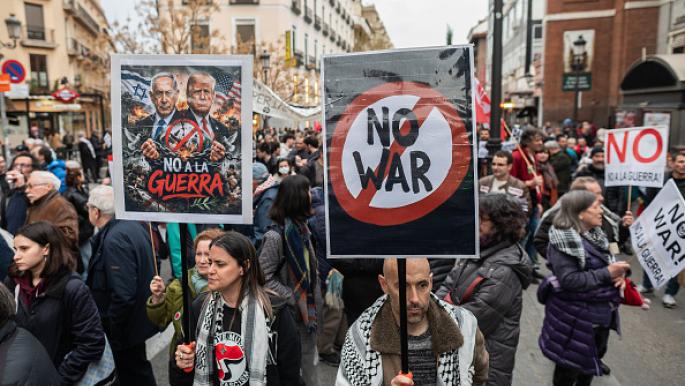
A recent survey conducted by the 'Forty DB' organization and published by the Spanish newspaper 'El País' and the radio station 'Cadena SER' reveals that Spaniards perceive former U.S. President Donald Trump, Russian President Vladimir Putin, and Israeli Prime Minister Benjamin Netanyahu as the most significant threats to global peace. These results reflect an increasing anxiety among Spanish citizens regarding the political and security tensions present in the international arena.
These findings come at a time when geopolitical crises are escalating, with Spaniards expressing concerns about the impact of these figures on global stability. The data showed that 45% of survey participants consider Trump the most dangerous, followed by Putin at 30%, and Netanyahu at 25%.
Survey Details
The survey was based on the opinions of a sample of Spanish citizens, who were asked about the political figures they perceive as the most threatening to peace. The results indicated a broad consensus across various age and social groups regarding these views. There was also a noticeable variation in perspectives on the influence of these figures on international issues, particularly amidst ongoing crises in the Middle East and Europe.
These results serve as an indicator of the increasing awareness among Spaniards regarding global issues, reflecting their concerns about the challenges facing the world today, such as armed conflicts, economic crises, and climate change.
Background & Context
Historically, international relations have experienced significant fluctuations, with political figures playing a pivotal role in shaping global policies. Trump, for instance, had a substantial impact on U.S. foreign policy, affecting relations with America's allies. Meanwhile, Putin, often seen as a controversial figure, has contributed to escalating tensions with the West through his military policies.
Netanyahu's government has been associated with numerous controversial decisions in the Israeli-Palestinian conflict, further intensifying tensions in the region. This background makes it essential to understand how Spaniards view these figures and their influence on global peace.
Impact & Consequences
The survey results indicate an urgent need to enhance international dialogue and cooperation among nations. With rising concerns about escalating conflicts, it is crucial for governments to seek peaceful solutions to existing disputes. Additionally, these findings may influence domestic policies in European countries, potentially prompting governments to adopt more cautious stances towards controversial political figures.
Furthermore, these opinions could affect how the media addresses international issues, as they may contribute to shaping public opinion regarding political figures and their impact on global peace.
Regional Significance
These findings hold particular significance for the Arab region, where the mentioned figures play a crucial role in regional issues. The tensions between Israel and the Palestinians, U.S. policies towards the Middle East, and Russian interventions in the region are all factors that impact security and stability in Arab countries.
Therefore, understanding how Spaniards perceive these figures can provide valuable insights into how international policies affect the Arab region and reflect shared concerns about the future of peace and security.