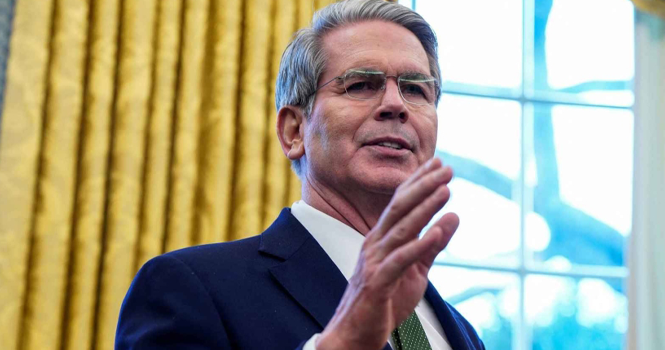
Market experts indicate that U.S. Treasury Secretary Scott Bissent's statements will facilitate the Bank of Japan's interest rate hike during its upcoming June meeting, as part of Washington's efforts to enhance Japanese monetary policies to support the yen.
This statement follows Bissent's recent visit to Tokyo, where he met with Prime Minister Sanae Takayichi. Analysts at Nomura Securities noted that this visit could bolster the Japanese government's acceptance of a decision to raise interest rates, especially given the urgent need to curb the ongoing decline in the value of the local currency.
Details of the Event
Bissent expressed confidence in the ability of Bank of Japan Governor Kazuo Ueda to make necessary monetary decisions if granted full independence by the Japanese government. This statement reflects indirect U.S. pressure to push the bank towards a new cycle of interest rate hikes.
This comes as markets prepare for the bank's monetary policy meeting scheduled for June 15 and 16, where markets currently price in an 80% probability of raising the short-term interest rate to 1% from 0.75%.
Background & Context
Historically, the Bank of Japan has undergone several rounds of monetary easing in recent years in an attempt to boost economic growth and tackle challenges arising from deflation. However, the shift towards raising interest rates reflects a change in monetary policies, particularly amid global inflationary pressures.
Japan, which is grappling with a declining yen, aims to achieve economic stability through bold steps in its monetary policy. There have been increasing calls from economists to raise interest rates as a means to address current economic challenges.
Impact & Consequences
If interest rates are raised, it could have significant effects on the Japanese economy, including strengthening the yen and improving the country's financial situation. However, the Japanese economy may face new challenges if growth rates decline due to increased borrowing costs.
On the other hand, this move could affect global markets, as raising interest rates in Japan may lead to changes in capital flows and foreign investments, impacting financial markets in other countries.
Regional Significance
The monetary policies of the Bank of Japan are particularly important for the Arab region, as any changes in interest rates could affect oil prices and commodity prices, reflecting on the economies of oil-producing Arab countries.
Moreover, the stability of the yen could influence trade relations between Japan and Arab countries, necessitating close monitoring by decision-makers in the region.
In conclusion, Bissent's statements and the anticipated decisions from the Bank of Japan reflect a significant shift in monetary policy, which could impact the global economy in general and the Arab region in particular.