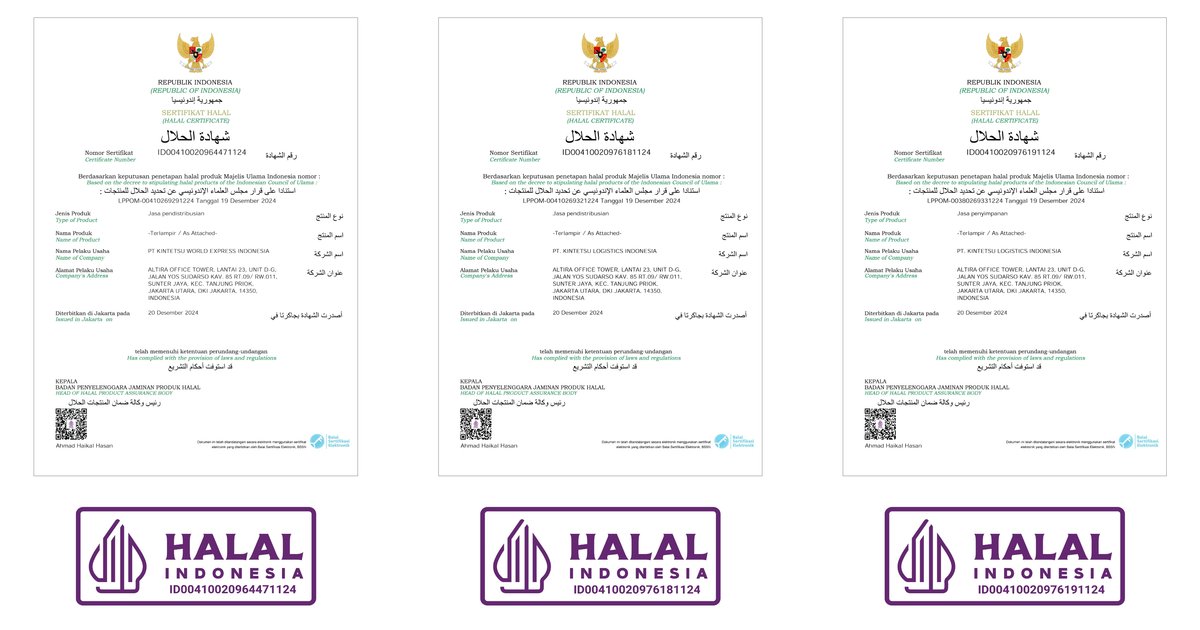
The National Agency for Halal Product Assurance (BPJPH) in Indonesia has underscored the significance of integrity as a fundamental element in monitoring halal products, especially with the upcoming implementation of mandatory halal certification in October 2026. In statements made by the agency's head, Ahmad Haikal Hasan, in Jakarta, he pointed out that integrity is not merely a technical issue but also relates to the ethical commitment of every employee within the agency.
Haikal added that the agency is organizing technical workshops to enhance human resource capabilities, aiming to support the implementation of halal product assurance policies at the national level. He emphasized that these efforts are part of the agency's preparations to face the increasing challenges related to halal product monitoring.
Event Details
In a related context, the agency's secretary-general, Mohammad Aqil Irham, mentioned that the role of inspectors within the agency becomes increasingly important as the date for mandatory certification approaches. He stressed the need for inspectors to actively educate business owners, particularly those who have not yet obtained halal certification.
Aqil pointed out that inspectors play a strategic role in ensuring that business owners understand their obligations regarding halal certification, which contributes to enhancing consumer trust in halal products in the market.
Background & Context
Indonesia is considered one of the largest Muslim-majority countries in the world, where halal products form an essential part of the national economy. With the growing awareness of the importance of halal products, the Indonesian government aims to strengthen the halal product assurance system to ensure the safety and quality of products available in the markets.
Historically, Indonesia has been organizing the halal products sector for several years, but with the impending implementation of mandatory certification, it has become crucial to intensify efforts to ensure compliance with required standards.
Impact & Consequences
The agency anticipates that strengthening integrity in halal product monitoring will lead to improved product quality and increased consumer confidence. This could result in a higher demand for halal products, positively impacting the national economy.
Moreover, effectively implementing the halal certification system may open new avenues for Indonesian trade with other Muslim countries, enhancing Indonesia's position as a key player in the halal product market.
Regional Significance
Indonesia's experience in enhancing its halal product assurance system serves as a model that Arab countries can benefit from. With the rising demand for halal products in the Arab world, Arab nations can leverage Indonesian experiences to develop similar systems.
Furthermore, cooperation between Arab countries and Indonesia in the halal products sector could contribute to strengthening inter-trade, benefiting local economies.
In conclusion, strengthening integrity in monitoring halal products in Indonesia represents an important step towards achieving an effective system that ensures product quality and safety, enhancing consumer trust, and potentially opening new avenues for trade and economic growth.