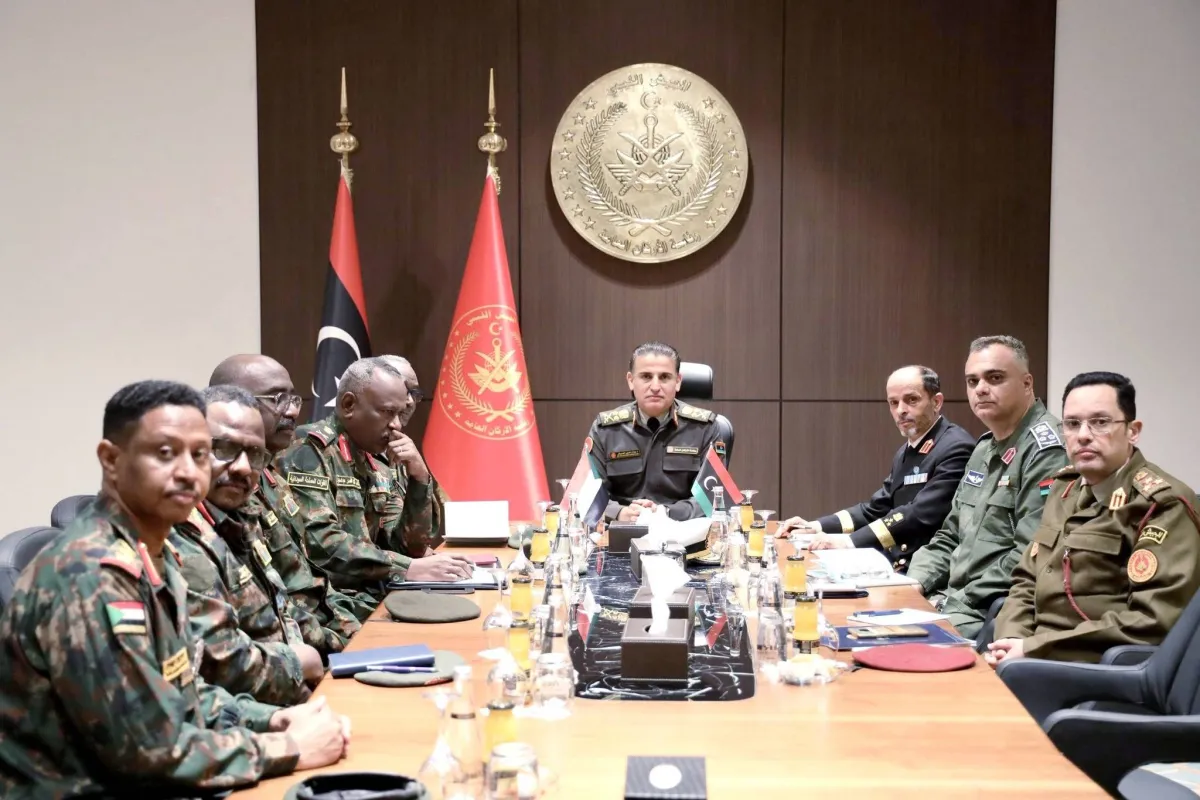
The Sudanese army held a high-level meeting with the interim National Unity Government in western Libya, focusing on ways to enhance military and security cooperation between the two nations. The meeting, which took place in Tripoli, brought together the Chief of Staff of the National Unity Forces, General Salah Namroush, and the Director of Sudanese Military Intelligence, General Mohamed Ali Sabir, in an unexpected move reflecting both parties' desire to strengthen bilateral relations.
This meeting comes at a sensitive time when Libya is experiencing political and military division between the east and west, with Field Marshal Khalifa Haftar controlling the eastern region. This division has raised concerns about worsening security conditions, prompting the Sudanese army to take steps to enhance cooperation with the Dbeibeh government.
Details of the Meeting
The General Staff of the National Unity Government reported that the meeting addressed ways to enhance military and security cooperation between the two countries. Namroush emphasized the importance of developing joint coordination to serve the interests of both nations and contribute to supporting security and stability in the region. Mechanisms for activating cooperation in areas such as information exchange and security coordination were also discussed.
This step comes amid accusations against Field Marshal Haftar of collaborating with Sudan's Rapid Support Forces, complicating the security landscape in Libya. A source close to the National Unity Government considered the meeting a significant move by the Sudanese army to address the security challenges facing Libya.
Background & Context
Historically, relations between Sudan and Libya have seen several fluctuations; however, the current situation necessitates strengthening cooperation between the two countries in light of increasing security challenges. The visit of Sudan's Sovereignty Council President, General Abdel Fattah Al-Burhan, to Tripoli in February 2024 was an important step towards enhancing bilateral relations, where agreements were made to exchange delegations and activate signed agreements between the two countries.
The National Unity Government seeks to enhance the country's stability through cooperation with neighboring countries, especially amid the political and economic crises it is facing. Additionally, the situation in Sudan, which has been experiencing a civil war since April 2023, imposes further challenges on regional security.
Impact & Consequences
This military cooperation is expected to have positive effects on security in Libya, as it strengthens the capabilities of both military institutions to address common challenges. Expanding military training programs and exchanging expertise between the two countries may also contribute to improving the efficiency of the armed forces in both nations.
However, these steps may provoke reactions from other parties in the Libyan conflict, particularly from Haftar, who may view this cooperation as a threat to his influence. Furthermore, the situation in Sudan could impact relations between Libya and Sudan, as concerns grow regarding the implications of the civil war on regional security.
Regional Significance
These developments reflect the importance of military cooperation among Arab countries in facing common security challenges. Amid the multiple crises plaguing the region, cooperation between countries becomes an urgent necessity to enhance stability and security.
Moreover, strengthening relations between Sudan and Libya could open the door for further cooperation among other Arab countries, contributing to achieving regional security. Ultimately, the need for political consensus among Libyan parties remains essential for achieving the desired stability.