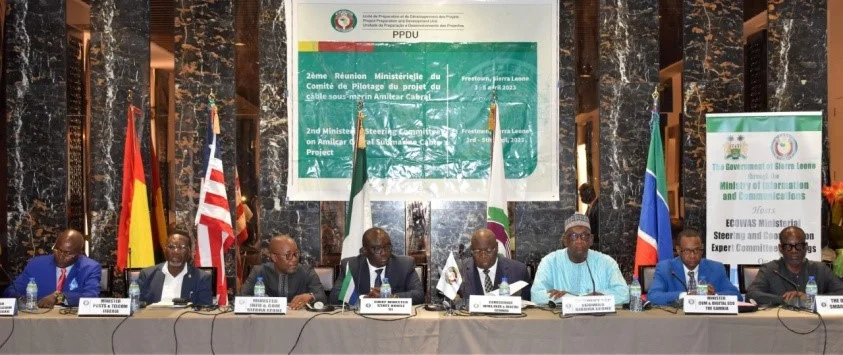
The Economic Community of West African States (ECOWAS) has called for a comprehensive enhancement of regional strategies to combat malaria during the 27th meeting of health ministers held in Freetown, the capital of Sierra Leone, on April 26. The two-day meeting brought together health ministers, government representatives, technical and financial partners, as well as regional health experts.
In his opening speech, Sierra Leone's President Julius Maada Bio emphasized the importance of the meeting in strengthening collective action to tackle one of the region's most significant public health challenges. He highlighted the need to build a robust health system based on data and innovation, transitioning from merely controlling malaria to completely eradicating it.
Event Details
Sierra Leone's Minister of Health, Austin Demby, reported that the political will to place health at the core of sustainable development has significantly strengthened. He noted that global progress in combating malaria has slowed since 2015 due to a decline in external funding and the impact of climate change on the disease's spread.
Demby called for increased local investments, the adoption of innovative solutions, and the establishment of strong health systems to enhance response capacity across the region. He also stressed the importance of cooperation among ECOWAS member states to achieve common goals in malaria control.
Background & Context
Malaria is one of the deadliest diseases in Africa, affecting millions of people annually. Despite ongoing efforts to combat this disease, challenges persist, including a lack of funding, limited health resources, and climate changes affecting disease transmission patterns.
ECOWAS was established in 1975 to promote economic and political cooperation among member states. With the increasing health challenges such as malaria, it has become essential to enhance coordination among member states to address these health crises effectively.
Impact & Consequences
Strengthening regional strategies to combat malaria can contribute to improving public health in West Africa, leading to reduced mortality rates and increased economic productivity. Additionally, enhancing health systems can have a positive impact on sustainable development in the region.
Furthermore, cooperation among ECOWAS member states can bolster the region's capacity to face future health challenges, contributing to the achievement of sustainable development goals.
Regional Significance
Although malaria is not a prevalent disease in Arab countries, regional cooperation in health can serve as a model. Arab nations can benefit from the experiences and expertise exchanged within ECOWAS to strengthen their health systems and address future health challenges.
In conclusion, the meeting held in Sierra Leone represents a significant step towards enhancing regional efforts to combat malaria and reflects a strong political will to achieve improvements in public health in West Africa.