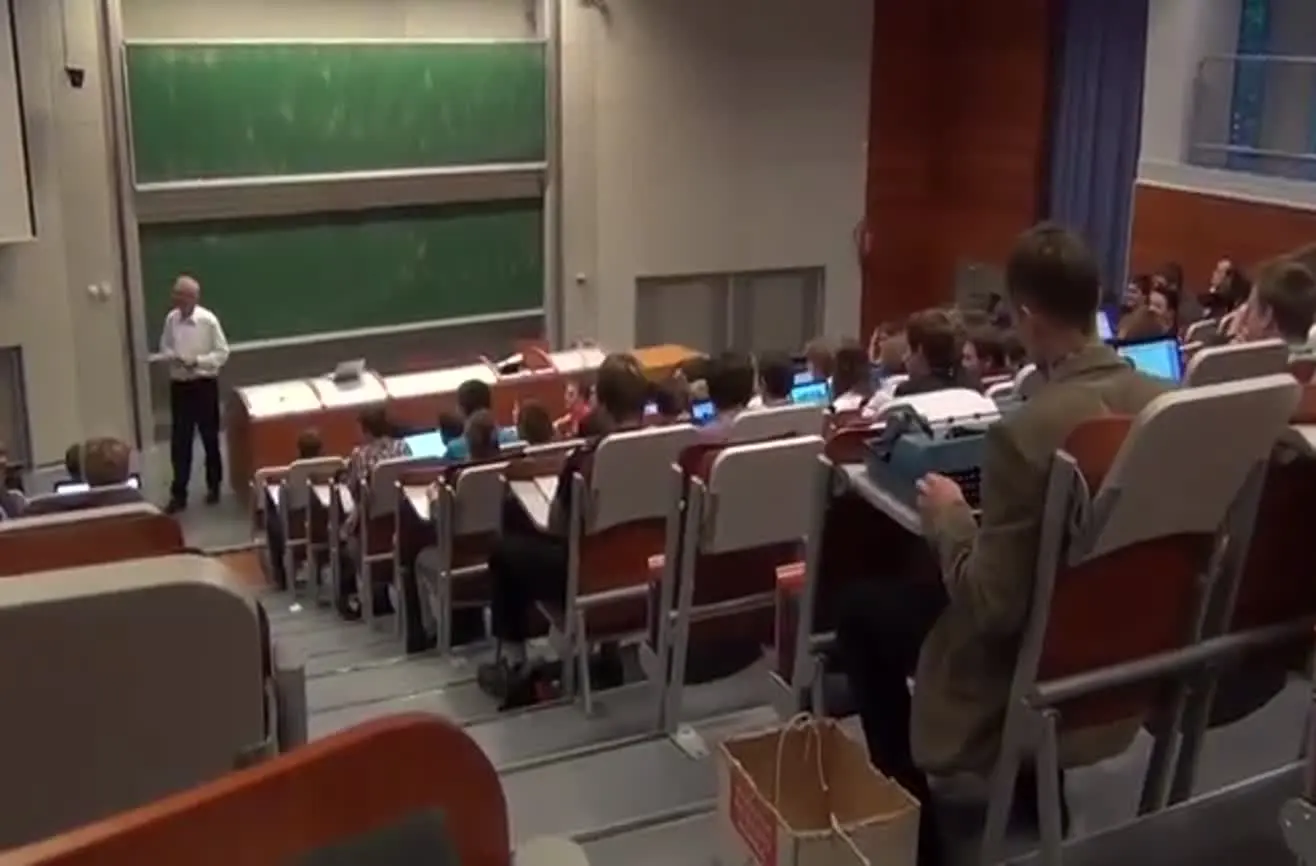
In an effort to curb the increasing reliance on AI tools in education, German professor Gret Matias Philips at Cornell University decided to reintroduce her students to the traditional writing experience using manual typewriters. This initiative aims to encourage students to write consciously, away from digital distractions.
The experiment involves completing assignments without using screens or electronic dictionaries, with Philips describing this task as an "analog assignment." She explained that the goal is to remind students of the importance of producing their texts independently, enhancing critical thinking about what they write before resorting to computers.
Event Details
When students arrived in the classroom, they found typewriters placed on the tables, some equipped with German keyboards and others with QWERTY layouts. This initially caused some confusion, especially among students who had never interacted with these machines before. Philips explained how to load the paper and how to press the keys with the appropriate force, clarifying that the bell sound indicates the end of the line and the need to return the carriage to the start.
This writing method intentionally slows down the pace, prompting students to focus on one task at a time, away from digital distractions. Students noted that the experience was not limited to learning how to use the typewriter; it also encouraged them to communicate more with their peers and seek help when facing simple technical difficulties. This helped them think more deeply about each word before writing it, rather than relying on instant searches or AI tools to generate sentences.
Background & Context
This experiment comes at a time when reliance on technology in education is increasing, with AI tools becoming an integral part of the learning process. However, the use of these tools may lead to a decrease in critical and creative thinking among students. Therefore, Philips aims through this initiative to bring students back to the basics and enhance manual writing skills that may have been lost in the technological age.
Historically, typewriters were the primary means of writing before computers emerged. With technological advancements, they were replaced by computers, leading to significant changes in writing and communication methods. However, returning to manual writing may help enhance focus and critical thinking skills.
Impact & Consequences
This experience is considered an important step towards enhancing critical thinking and creativity among students. Students indicated that the absence of a delete key forced them to reconsider each sentence before writing it, giving them the opportunity to mentally review and modify their thoughts before they settled on paper. This type of deep thinking could positively impact their writing skills in the future.
Moreover, this experience fosters social interaction within the classroom, as students must communicate with each other to assist in using the typewriter. This could contribute to building stronger relationships among students and enhancing the spirit of collaboration.
Regional Significance
In the Arab region, where education is also undergoing significant digital transformations, this experience could serve as an inspiration for both teachers and students. Returning to traditional writing methods can enhance critical thinking and creativity skills, contributing to the development of education in the Arab world. It may also help strengthen cultural identity by focusing on traditional writing methods.
In conclusion, Gret Matias Philips' experience at Cornell University serves as a model for addressing the challenges posed by modern technology. By promoting manual writing and critical thinking, this initiative can help prepare a generation of students capable of thinking deeply and creatively.