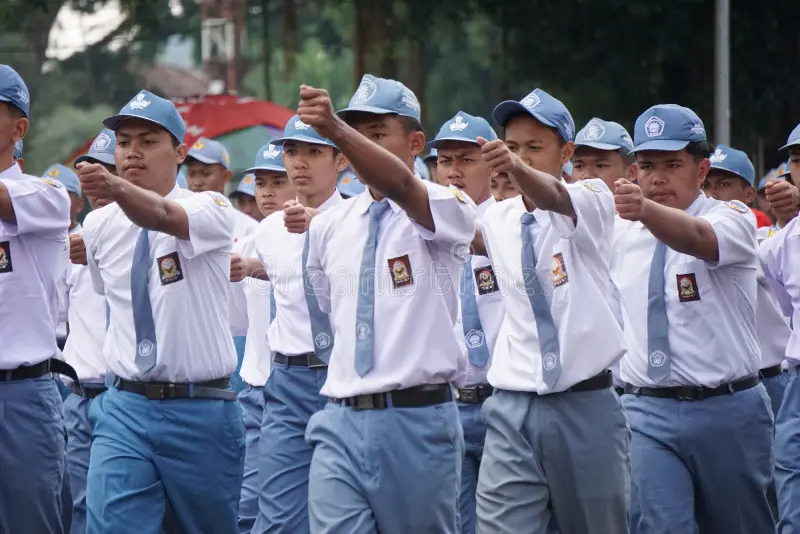
Schools in Indonesia, including SDN 84 in Kendari, began welcoming students on their first day back after a long holiday, where students kissed their teachers' hands as part of a tradition known as "halalbihalal." This custom reflects respect and appreciation for teachers and is considered an essential part of the educational culture in the country.
Students eagerly flocked to schools, wearing new school uniforms and carrying backpacks filled with books and school supplies. The schools were filled with an atmosphere of joy and celebration, as parents gathered with their children to bid farewell at the start of a new academic year.
Details of the Event
In Kendari, students lined up in front of their teachers, kissing their hands as a sign of respect. This tradition is seen as a symbol of communication between generations and reflects the cultural values that enhance the status of teachers in Indonesian society. Teachers expressed their joy at the return of students, emphasizing the importance of education in building a better future.
This return to school follows a long period of remote learning due to the COVID-19 pandemic, making this day particularly special for students and parents. Schools prepared special programs to welcome students, including recreational and educational activities to boost morale.
Background & Context
Historically, education in Indonesia has been a priority for the government, as the country seeks to improve the quality of education and provide a suitable learning environment. Over the years, Indonesia has faced numerous challenges in this area, including resource shortages and infrastructure issues. However, the return to schools after the COVID-19 pandemic is seen as a positive step towards restoring the educational system.
It is worth noting that Indonesia is not the only country facing educational challenges, as many nations worldwide have been affected by the COVID-19 pandemic, leading to radical changes in educational systems. Nevertheless, Indonesia is striving to overcome these challenges by developing new educational programs.
Impact & Consequences
The return to schools in Indonesia is a sign of recovery from the effects of the COVID-19 pandemic, as students show their readiness to return to normal life. This event boosts community morale and instills hope for a better future. Additionally, the return to traditional education is an important step in developing students' skills and enhancing their social interactions.
Despite the challenges that schools may face in the future, there remains hope that students will achieve academic and social success. The Indonesian government is also working to improve educational infrastructure and provide the necessary resources to support students and teachers.
Regional Significance
Indonesia's experience in returning to schools highlights the importance of education in building communities, a lesson that Arab countries can benefit from. Education is considered one of the fundamental pillars of sustainable development, and Arab nations should enhance their investments in this sector to ensure a better future for upcoming generations.
Moreover, promoting cultural values and traditions in education is essential, as it contributes to building a strong national identity. Arab countries can draw inspiration from Indonesia's experience in fostering respect between students and teachers, thereby enhancing the quality of education and achieving positive outcomes.