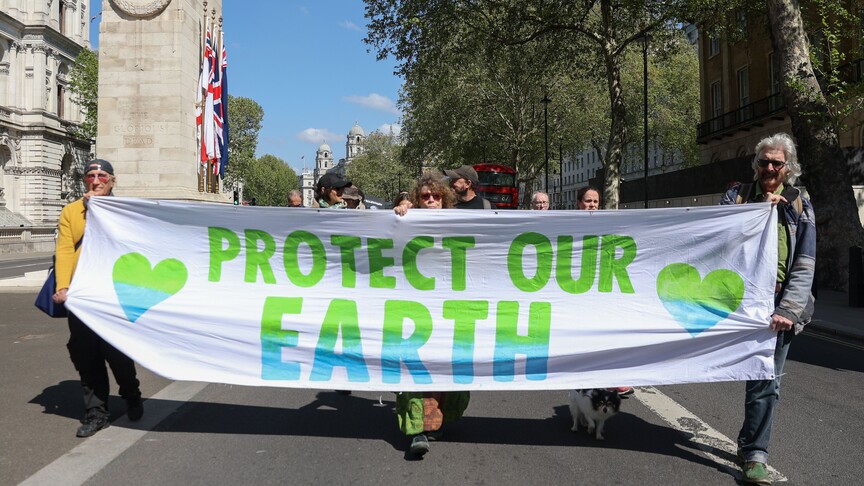
A recent study has revealed that the punitive policies adopted by the British government against peaceful climate activists, such as blocking roads or damaging buildings, may yield counterproductive results by fostering extremism among these activists. These findings, published by The Guardian, raise questions about the effectiveness of current policies in addressing climate issues.
Reports suggest that the British government has taken stringent actions against climate protests, resulting in the arrest of numerous activists. However, these measures might exacerbate the problem rather than resolve it, as activists feel compelled to escalate their protests in the face of repression.
Punitive Measures and Their Implications
The punitive measures implemented by the British government include imposing fines and penalties on individuals participating in peaceful protests. Concerns have been raised that these policies could push activists towards more extreme actions, thereby increasing tensions between the government and civil society.
This study is part of a broader discussion on how to tackle the climate crisis, with many activists calling for more effective actions to address climate change rather than suppressing voices advocating for change.
Background & Context
Historically, the UK has witnessed numerous climate protests, particularly since the early 21st century. These protests have significantly increased in recent years, coinciding with a rise in public awareness regarding the climate crisis. However, government responses to these protests have varied, with some administrations leaning towards harsh measures against activists.
In recent years, the Climate Rage Days movement has emerged, aiming to raise awareness about climate issues. Nevertheless, the harsh reactions from authorities may worsen the situation instead of improving it.
Impact & Consequences
The study indicates that punitive measures may enhance feelings of frustration and resentment among activists, potentially driving them to take more extreme steps. This situation could create a vicious cycle of violence and protests, making it challenging for the government to achieve its climate goals.
Moreover, these policies could negatively impact the UK's image on the international stage, where it is viewed as a key supporter of global efforts to combat climate change. This may lead to a loss of trust from the international community in the UK's ability to lead climate initiatives.
Regional Significance
The implications of these findings extend beyond the UK, as they reflect a growing trend of governments worldwide grappling with how to manage climate activism. The balance between maintaining public order and allowing freedom of expression is delicate, and missteps could lead to increased radicalization among activists globally.
Ultimately, the study underscores the need for governments to reconsider their approaches to climate activism, advocating for dialogue and constructive engagement rather than punitive measures that could backfire.