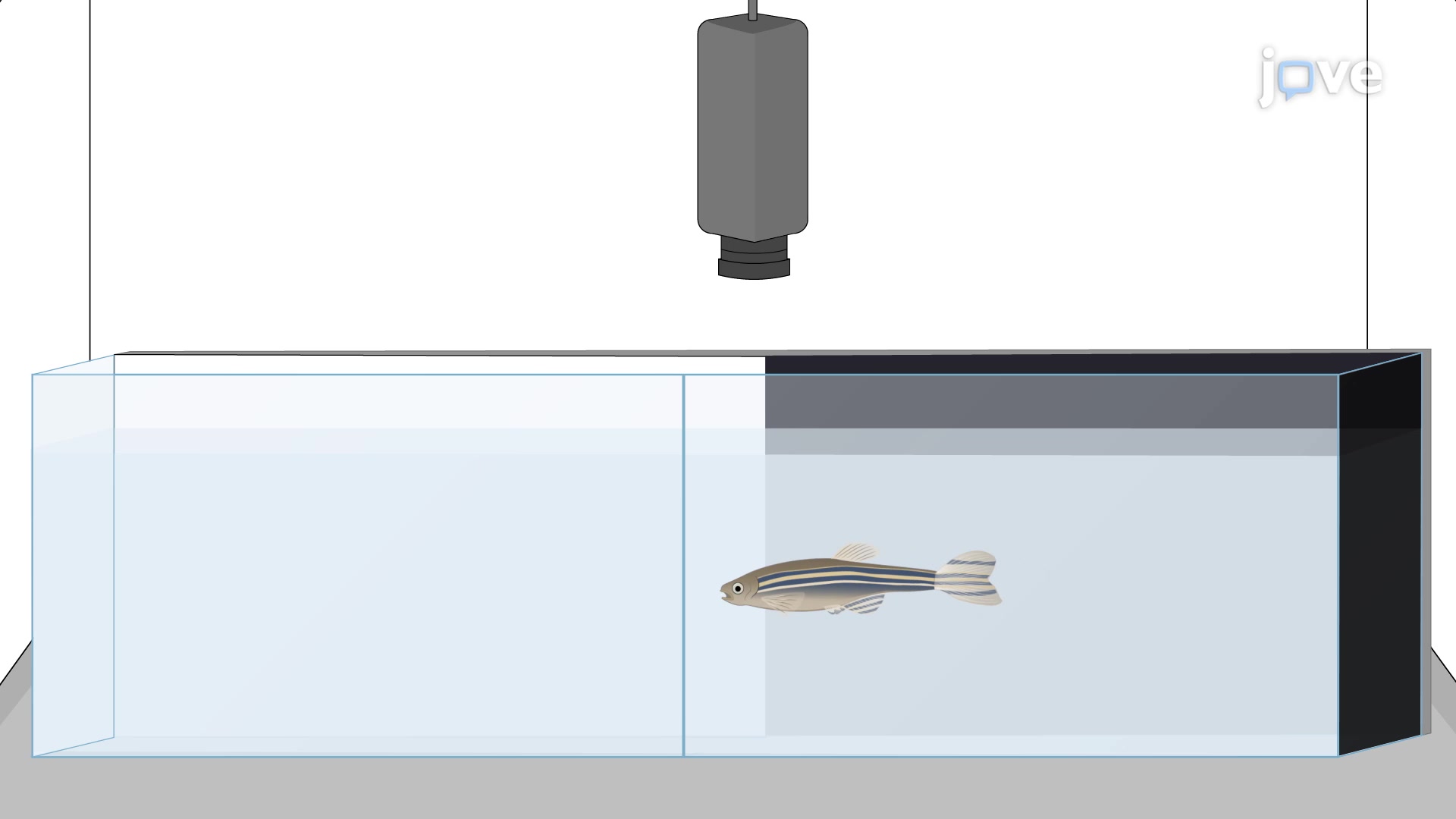
A recent study conducted on a type of fish revealed that its brain integrates light signals coming from the eyes and the pineal gland, affecting its swimming behavior. The pineal gland, also known as the "third eye," plays a crucial role in determining the direction of swimming, whether upward or downward.
The study, published on March 30 in the Proceedings of the National Academy of Sciences (PNAS), relied on precise experiments using zebrafish. Zebrafish are considered leading organisms in neuroscience research due to their simple nervous system and the ease of tracking their brain activity.
Details of the Study
The results demonstrated how light signals travel from the pineal gland to specific areas within the brain, where they are processed and converted into behavioral responses. Akihisa Terakita, a professor in the Department of Biology at Osaka Metropolitan University, confirmed that the pineal gland is known for its role in regulating the body's biological clock, but the new discovery highlights its function as an "additional eye" in some organisms.
Terakita stated, "The pineal gland contains cells capable of directly sensing light, meaning that light can influence the brain through multiple pathways." The researchers relied on a specific light-sensitive protein known as "parapinopsin 1," which acts as a photoreceptor within the cells.
Background & Context
The study shows that this protein interacts with different types of light, producing various signals based on the light type. When exposed to ultraviolet rays, the neural signals decrease, while they increase under visible light. This distinction allows the neurons to understand the nature of light, not just its presence.
Terakita explained that signals are transmitted from the light-sensitive cells to other neurons known as "ganglion cells," which serve as a link between the light-sensing location and other parts of the brain. By using advanced neuroimaging techniques, the researchers were able to trace the pathway of these signals within the brain.
Impact & Consequences
The findings showed a direct impact on fish behavior, as researchers observed that zebrafish change their position in the water in response to changes in light type. This indicates that light is not only perceived but also utilized for making movement decisions. When the protein responsible for light sensing was disabled, this behavior was clearly disrupted, demonstrating the importance of this neural circuit.
These results indicate the existence of an additional sensory system in some vertebrates, helping organisms quickly understand and interact with their environment. They also illustrate how the brain can integrate information from multiple sources simultaneously, which is essential for making accurate decisions.
Regional Significance
Although the study was conducted on zebrafish, its significance extends to understanding the mechanisms of nervous system development in other organisms, including humans. Such systems may exist in a simplified form in other creatures, opening new avenues for understanding the effects of light on sleep, mood, and biological clocks.
In conclusion, this study enhances our understanding of how organisms interact with their environment, contributing to the development of new research in the fields of neuroscience and animal behavior.