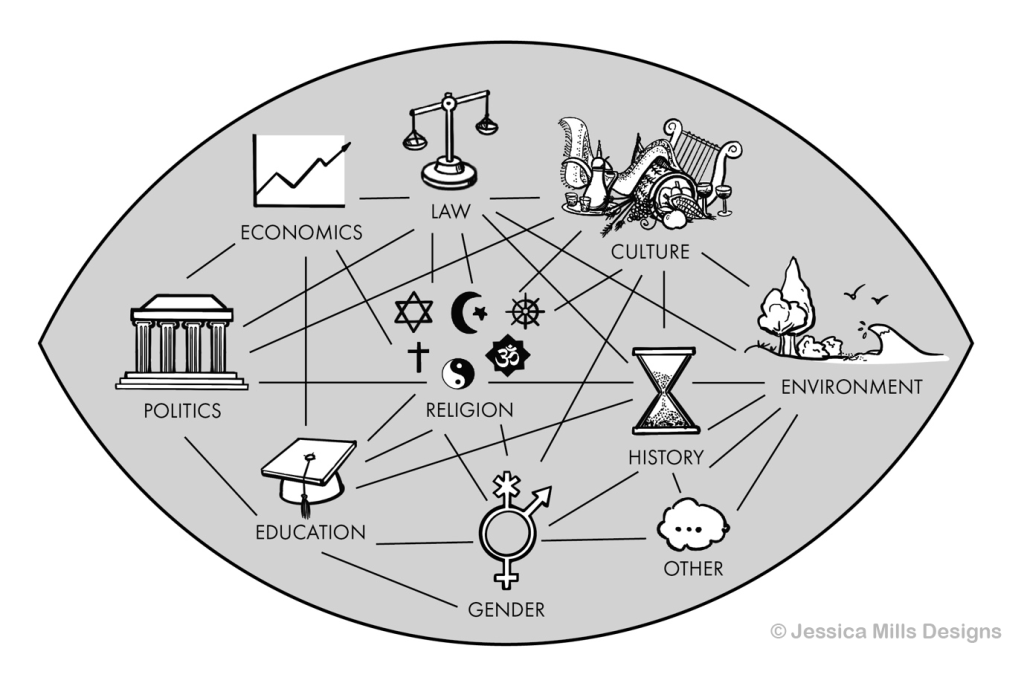
A recent report highlights the deep influence of religion on societies globally, showing its pivotal role in shaping values and behaviors. Conducted across several countries, the study reflects the diversity of religious experiences and their impact on daily life.
The study emphasizes how religion affects social and political decisions, revealing that communities with high levels of religious commitment tend to exhibit greater social solidarity. Additionally, religion contributes to promoting positive values such as generosity and tolerance.
Event Details
The study was conducted by a group of researchers in sociology and religion, analyzing data from several countries including the United States, India, and the Middle East. The findings indicate that religion not only influences individuals but also extends its impact to entire communities, shaping cultural and political identities.
The research also shows that religion can have both positive and negative effects on societies. In some cases, it can foster unity and cooperation, while in others, it may lead to division and conflict. This variation in effects reflects the complexity of the relationship between religion and society.
Background & Context
Historically, religion has played a central role in shaping human societies. Since ancient times, religions have been used as a means to explain natural phenomena and guide human behaviors. As societies evolved, religion continued to influence values and ethics, contributing to the formation of cultural and political identities.
In modern times, with the rise of globalization, the influence of religion has become more complex. The openness to other cultures has led to new challenges, where traditional religious values clash with modern values. This conflict creates new dynamics that profoundly affect societies.
Impact & Consequences
The results of this study underscore the importance of understanding religion as a social force. While religion can be a source of unity, it can also be a cause of conflict. Therefore, it is crucial for societies to adopt policies that promote interfaith dialogue and work to reduce tensions arising from religious differences.
Furthermore, these dynamics must be considered when formulating public policies. Understanding how religion influences behaviors can help design more effective social programs that enhance social cohesion.
Regional Significance
In the Arab region, religion plays a pivotal role in shaping cultural and political identities. Religion is not merely a personal belief; it is an integral part of daily life. Thus, understanding the impact of religion on Arab societies can help foster dialogue and understanding among various groups.
Moreover, religion in the Arab region can have positive effects on social development, promoting values of cooperation and solidarity. However, the challenges faced by Arab societies, such as political and economic conflicts, require careful addressing that takes religious dimensions into account.
In conclusion, the report highlights the significance of religion as a powerful force in societies. By understanding these dynamics, communities can work to enhance positive values and reduce tensions arising from religious differences.