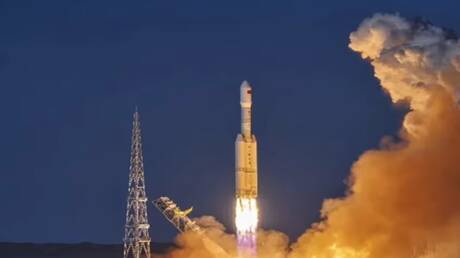
CAS Space, a Chinese company, announced on Monday the successful launch of its new Kinetica-2 rocket, which successfully sent three satellites into orbit. This achievement represents an important milestone in China's journey to enhance its space capabilities and reflects the technological advancements the country has made in recent years.
The Kinetica-2 rocket is part of China's space program, which aims to develop new technologies in the field of space launch. This launch follows a series of successful tests conducted by the company, further solidifying its position in the global space market.
Details of the Launch Event
The launch took place from the launch center in Jiuquan, with the rocket lifting off at exactly 10:00 AM Beijing time. The Kinetica-2 has been designed to carry multiple satellites, making it an attractive option for various international and local customers.
The three satellites launched include those for communication and monitoring purposes, showcasing the diverse applications that this modern technology can provide. Images captured during the launch process demonstrated significant success, with the satellites separating from the rocket as scheduled.
Background & Context
China is considered one of the leading countries in the field of space, having invested heavily in developing its space programs since the early 21st century. The country has launched numerous successful missions, including sending astronauts into outer space and building its own space station.
Through these achievements, China aims to enhance its status as a global space power, competing with major nations such as the United States and Russia. The development of new rockets like the Kinetica-2 reflects a trend towards innovation and advanced technology in this field.
Impact & Consequences
The successful launch of Kinetica-2 marks a significant milestone in the history of Chinese space exploration, bolstering the country's ability to compete in the global space market. This achievement may also open doors for further international cooperation in space, where China could become an important partner in future space projects.
Moreover, the development of space technology can contribute to improving various other sectors, such as communications and environmental monitoring, which would benefit the national economy.
Regional Significance
As Arab countries strive to develop their own space programs, Chinese achievements could positively impact these efforts. Arab nations can benefit from Chinese expertise in space, helping them achieve their goals in this sector.
Additionally, cooperation between Arab countries and China in the field of space could lead to the development of joint projects that enhance technological capabilities in the region, contributing to sustainable development.
In conclusion, the launch of Kinetica-2 represents an important step towards enhancing China's capabilities in space, reflecting the technological progress the country has achieved. This accomplishment is expected to have positive effects on international cooperation in space and further solidify China's position as a global space power.