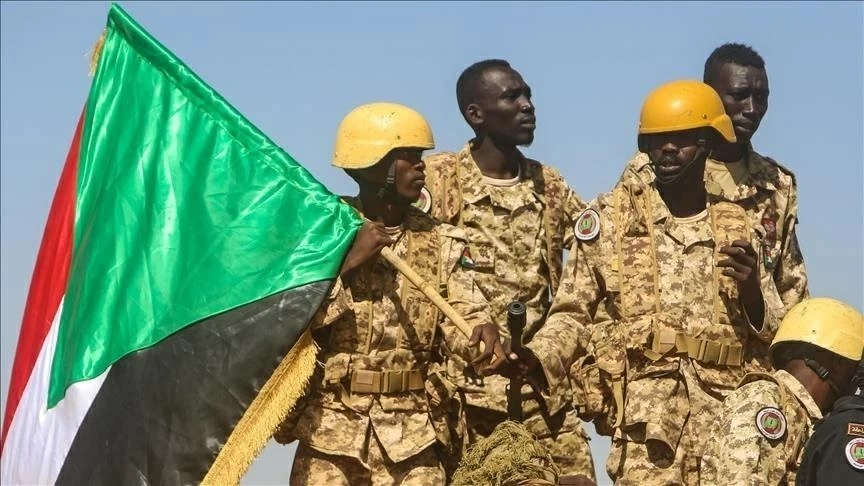
The Sudanese army announced today (Saturday) that it has achieved new victories in the Blue Nile state, successfully taking control of the Kili area near the city of Kurmuk. This move follows a series of fierce battles against the Rapid Support Forces, as well as elements from the Sudan People's Liberation Movement-North led by Joseph Toka.
The army stated in an official announcement that the 4th Infantry Division, supported by auxiliary forces, succeeded in liberating the Kili area after intense confrontations, resulting in heavy losses for the rebels in terms of lives and equipment. The statement also indicated that the remaining rebel forces fled the area.
Details of the Event
The Sudanese Armed Forces showcased a video demonstrating their troops' advance towards the Kili area, which has been completely cleared of Rapid Support Forces elements. The Kili area is considered one of several strategic towns on the route leading to the city of Damazin, the capital of the Blue Nile state, which borders both Ethiopia and South Sudan.
The Blue Nile state has become one of the prominent fronts in the ongoing conflict between the Sudanese army and the Rapid Support Forces, complicating the security situation in the region. The army indicated that military operations will continue until all areas under its control are secured and the rebellion is defeated.
Background & Context
It is noteworthy that the conflict in Sudan has escalated significantly since the outbreak of hostilities between the army and the Rapid Support Forces, exacerbating the humanitarian situation in the country. The Chairman of the Transitional Sovereignty Council, General Abdel Fattah al-Burhan, previously stated that there is no room for negotiation with the Rapid Support Forces, emphasizing the necessity of maintaining the country's sovereignty and security.
This statement comes at a time when the capital, Khartoum, is experiencing relative stability, with Burhan assuring that the security situation in the capital is reassuring and will remain so. This reflects the military leadership's desire to regain control over the situation in the country and assert its strength in the face of internal challenges.
Impact & Consequences
Control over the Kili area is a significant step in the ongoing war, reflecting the Sudanese army's ability to reclaim territory it previously lost. These developments may influence the course of the conflict in the country and could prompt some parties to reassess their strategies.
Moreover, these victories could strengthen the Sudanese army's position in international forums, as it seeks greater support from the international community to address the security and humanitarian challenges facing the country.
Regional Significance
The repercussions of the conflict in Sudan extend beyond its borders, potentially affecting the stability of the entire region. The ongoing conflict may lead to a flow of refugees into neighboring countries, placing additional pressure on these nations.
Furthermore, the situation in Sudan could impact relations between Arab countries, especially those with interests in the region, necessitating the search for diplomatic solutions to the current crisis.
In conclusion, the control of the Kili area represents a turning point in the Sudanese conflict, highlighting the challenges the country faces in achieving security and stability. The current situation requires the concerted efforts of local and international stakeholders to find lasting solutions to the conflict.