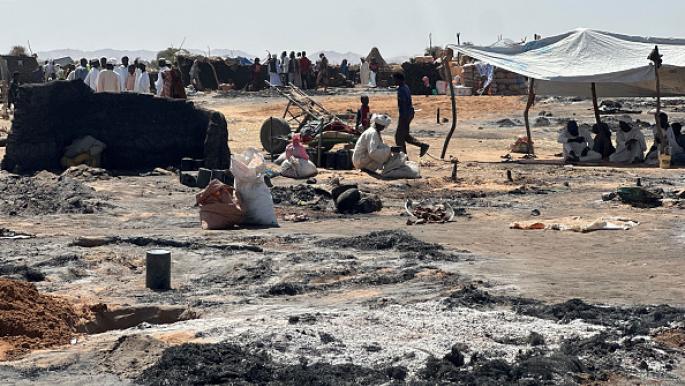
The Sudanese army has announced the "liberation" of the Kili area located near the city of Kurmuk in the Blue Nile region, following a series of violent battles with the Rapid Support Forces. These events are part of the ongoing conflict between the Sudanese army and the Rapid Support Forces, which has escalated in intensity in recent months.
The Kili area is considered strategically important, as it is located near the border with Ethiopia, making it a pivotal point in the conflict. The Sudanese army reported that it managed to regain control of the area after confrontations that lasted several days, resulting in numerous casualties on both sides.
Details of the Event
The Sudanese army clarified in an official statement that precise military operations were carried out that led to the recovery of Kili, indicating that these operations are part of the armed forces' efforts to enhance security and stability in border areas. The statement noted that Sudanese forces faced fierce resistance from the Rapid Support Forces, which in turn seeks to control more territory in the region.
It is worth mentioning that the conflict between the Sudanese army and the Rapid Support Forces has intensified in recent years, leading to a deterioration of security conditions in many areas, including the Blue Nile region. The area has witnessed an increase in clashes, negatively impacting civilian lives and causing many to be displaced.
Background & Context
Historically, Sudan has experienced multiple internal conflicts, with various armed factions competing for power and influence. The Rapid Support Forces were established in 2013 as part of the government's efforts to combat rebellion, but they quickly became an independent force pursuing their own objectives. This conflict reflects the deep-seated tensions within Sudanese society, where tribes and factions struggle over resources and influence.
In recent years, tensions between the Sudanese army and the Rapid Support Forces have escalated, leading to increased clashes in various parts of the country. These conflicts have exacerbated humanitarian conditions, with civilians suffering from the effects of war and displacement.
Impact & Consequences
The recent events in the Kili area signal a rise in conflict in Sudan, which may worsen humanitarian conditions in the region. As the conflict continues, the number of displaced persons and refugees is expected to rise, putting additional pressure on neighboring countries like Ethiopia.
Moreover, these developments could affect relations between Sudan and its neighbors, as neighboring countries strive to maintain stability in the region. International organizations are likely to intervene to monitor the situation and provide humanitarian assistance to those affected by the conflict.
Regional Significance
The events in Sudan have significant implications for the Arab region, as Sudan's stability is part of the overall stability of the Horn of Africa. Ongoing conflicts in Sudan could lead to security and political repercussions in neighboring countries, necessitating greater international attention.
Furthermore, the deteriorating humanitarian conditions in Sudan may impact relations between Arab countries, as humanitarian crises may require a response from Arab nations to provide aid and support to those affected.
In conclusion, the recent developments in the Kili area indicate a rise in tensions in Sudan, requiring urgent attention from the international community. As the conflict persists, hope for achieving peace and stability remains elusive.