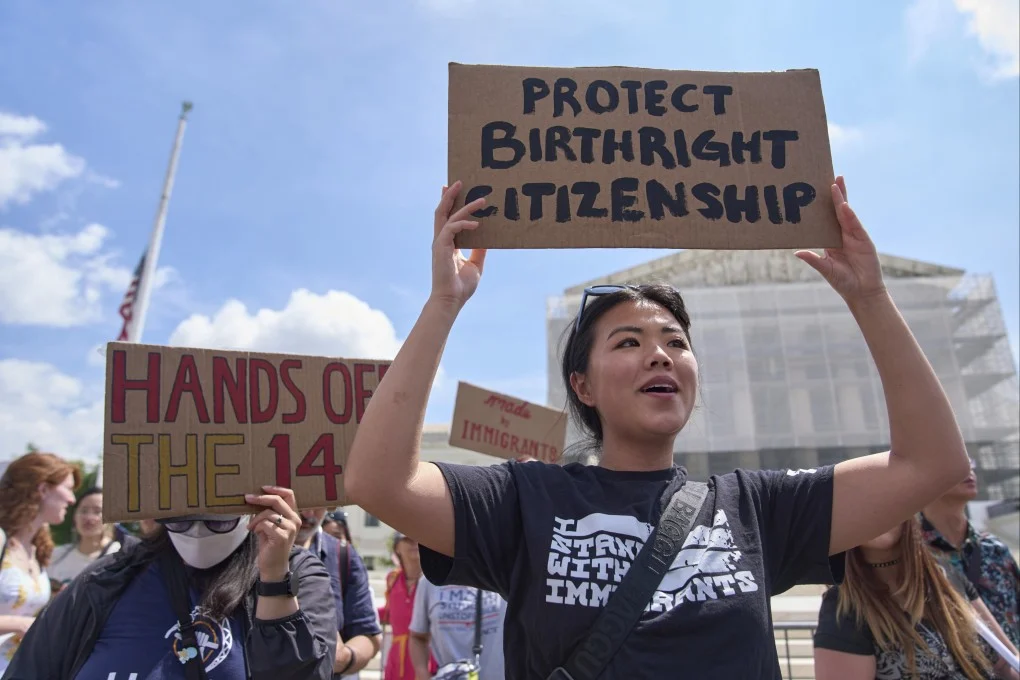
The U.S. Supreme Court is preparing to hold a hearing next Wednesday on the topic of birthright citizenship, with complaints from Chinese citizens at the forefront of discussions. This case arises amid the election campaigns of former President Donald Trump, who has made provocative statements on the subject via social media.
In a tweet, Trump asserted that "birthright citizenship is not for the wealthy from China and the rest of the world seeking to make their children American citizens for huge sums of money, but a right for the children born to the sons of slaves." These statements reflect the increasing tensions surrounding immigration and citizenship issues in the United States, especially given the current political climate.
Details of the Case
The current case pertains to the issue of birthright citizenship, a right that grants children born on U.S. soil automatic American citizenship. This right has sparked widespread debate in recent years, particularly with the rising number of immigrants from countries like China. It is believed that some Chinese families exploit this right to obtain citizenship for their children, leading to accusations of exploitation.
This issue comes at a sensitive time, as Trump seeks to bolster his electoral base by focusing on immigration issues, a topic that generates significant controversy within American society. Many observers have noted that these statements could exacerbate racial and social tensions in the country.
Background & Context
Historically, the right to birthright citizenship in the United States was established under the Fourteenth Amendment to the U.S. Constitution, adopted after the Civil War. This amendment aims to guarantee the rights of American citizens, including those born to the sons of slaves. However, the debate surrounding this right has evolved over the years, becoming a hot topic in electoral campaigns.
In recent years, the United States has witnessed a notable increase in the number of immigrants, leading to rising concerns about their impact on American society. Some politicians have used these concerns to enhance their electoral campaigns, resulting in a polarization of society around immigration and citizenship issues.
Impact & Consequences
If the Supreme Court decides to change or abolish the right to birthright citizenship, it could have significant implications for many immigrant families, particularly from countries facing economic or political crises. This decision could lead to increased social and racial tensions and may provoke strong reactions from immigrant communities.
Furthermore, this decision could affect immigration policies in the United States, potentially leading to changes in how the government addresses immigration issues. This could exacerbate political and social divisions within the country.
Regional Significance
Immigration and citizenship issues are particularly significant for the Arab region, where many Arab countries are experiencing political and economic crises that drive citizens to seek new opportunities abroad. U.S. immigration policies could impact the options available to Arab immigrants, especially those seeking American citizenship.
In light of these circumstances, it is crucial for Arab communities to remain informed about developments in the United States, as these policies could affect relations between Arab countries and the U.S., as well as the opportunities for Arab immigrants to obtain citizenship.