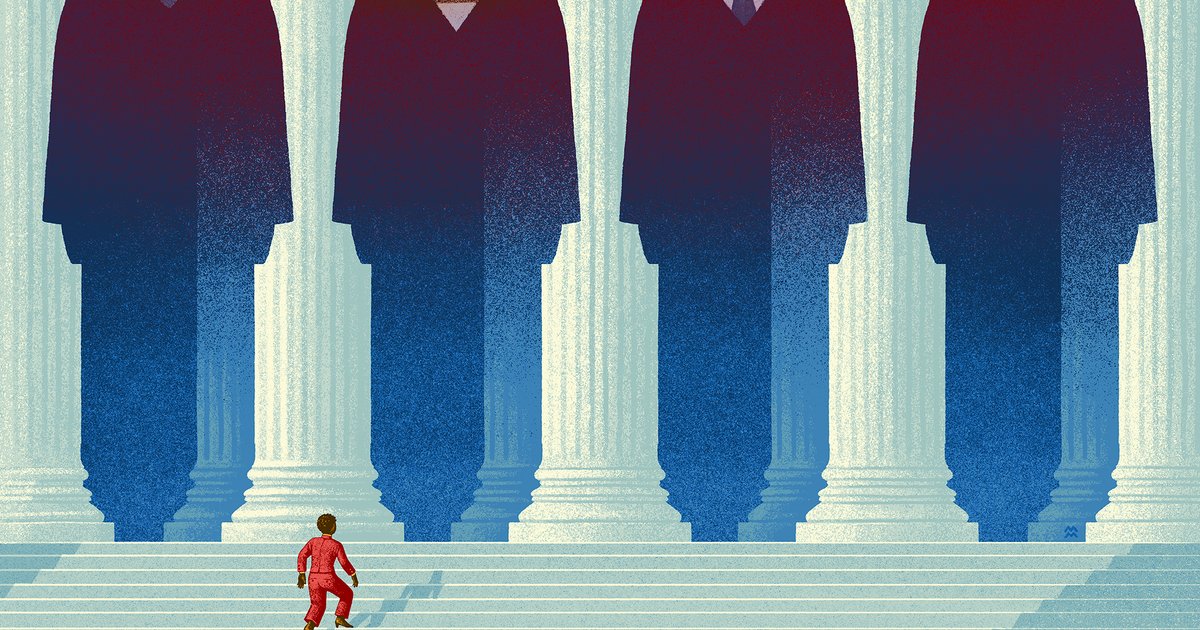
The U.S. Supreme Court has heard a significant case regarding former President Donald Trump's attempt to limit birthright citizenship. This case arises during a critical time as discussions on immigration and related policies intensify in the United States. Trump's initiative aims to change current laws that automatically grant citizenship to children born on American soil.
This case represents a major legal challenge concerning the fundamental rights of individuals born in the United States. It has sparked widespread debate among supporters and opponents of Trump's policy, with some arguing that this policy constitutes a violation of basic human rights, while others see it as essential for protecting national identity.
Details of the Hearing
The hearing at the Supreme Court took place in a charged atmosphere, where Trump's lawyers presented their arguments for the necessity of amending current laws. They asserted that allowing birthright citizenship encourages the flow of illegal immigrants into the country, negatively impacting the economy and security. In contrast, the plaintiffs' attorneys provided legal arguments indicating that the right to birthright citizenship is an integral part of the U.S. Constitution, and any attempt to change it should occur through legislative processes rather than executive decisions.
The case also involves legal challenges regarding the interpretation of the Fourteenth Amendment of the U.S. Constitution, which states that all persons born or residing in the United States are citizens. Some justices indicated that any change to this right must be approached with caution due to its potential ramifications for millions of individuals.
Background & Context
Historically, the United States has been regarded as a country that grants citizenship by birth automatically, making it a preferred destination for migrants from around the world. However, discussions surrounding this policy have intensified since Trump took office in 2017, as he launched a campaign against illegal immigration, leading to increased pressures on the U.S. immigration system.
This case is part of Trump's broader strategy to curb immigration, which also includes building a wall on the border with Mexico and implementing strict policies against migrants. These policies have elicited mixed reactions within American society, with some viewing them as necessary for national security, while others consider them discriminatory against minorities.
Impact & Consequences
If the Supreme Court decides to uphold Trump's position, it could lead to radical changes in U.S. immigration policy, potentially affecting millions of individuals who rely on birthright citizenship. Additionally, this ruling may open the door to more legal challenges related to immigrant rights, increasing tensions within American society.
On the other hand, if the Court rejects this attempt, it will bolster the position of advocates for immigrant rights and reaffirm the importance of current laws. It may also enhance confidence in the U.S. legal system and its ability to protect fundamental rights.
Regional Significance
This case also pertains to the interests of Arabs in the United States, as a significant number of Arabs live in America and rely on their rights as citizens. Any changes in citizenship policy could impact Arab communities, especially given the current economic and political conditions. Furthermore, this case may inspire other countries in the region to reconsider their immigration and citizenship policies.
In conclusion, this case represents a real test for the U.S. legal system and individual rights in the face of government policies. Legal and political circles worldwide will closely follow the outcomes of this case, as it may have far-reaching implications for the future of immigration in the United States.