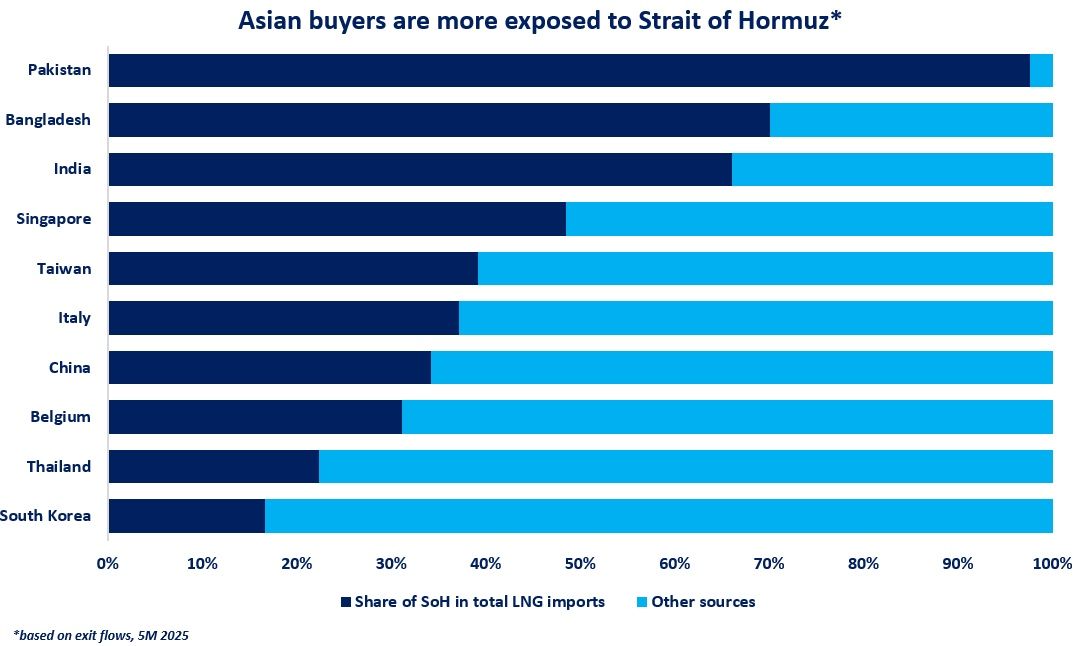
The United States is experiencing a severe crisis in supplying liquefied natural gas, having reached its maximum capacity due to escalating tensions in the Strait of Hormuz. This situation has put immense pressure on global supplies, resulting in a significant rise in gas prices. These developments are a major concern for global markets, especially given the increasing reliance on natural gas as an energy source.
Tensions in the Strait of Hormuz, one of the most critical waterways for transporting oil and natural gas, are intensifying. This strategic region has recently witnessed a spike in events that directly impact shipping and global trade. Experts have indicated that any disruption in this area could lead to significant fluctuations in energy prices.
Details of the Crisis
Reports indicate that the United States has reached its maximum production capacity for liquefied natural gas, meaning it is unable to meet the growing demand in global markets. This situation reflects the challenges the U.S. faces amid current geopolitical crises. Additionally, rising prices could have negative repercussions on the global economy, particularly in countries that heavily depend on natural gas.
The Hormuz crisis is one of the pressing issues causing concern in markets, as this region accounts for approximately 20% of global oil supplies. Any disruption here could lead to a significant price increase, affecting all oil and gas-importing nations.
Background & Context
Historically, the Hormuz region has always attracted the attention of major powers due to its strategic importance. This area has witnessed numerous crises in the past, ranging from military conflicts to political tensions. In recent years, the intensity of tensions has increased due to regional conflicts, raising the risks associated with energy supplies.
In recent years, the United States has become a key player in the liquefied natural gas market, significantly increasing its production. However, current challenges suggest that this increase may not be sufficient to meet the rising global demand, especially amid recurring crises in the Hormuz region.
Impact & Consequences
The rise in natural gas prices could have negative effects on the global economy, potentially leading to increased energy costs for businesses and consumers. This situation may impact economic growth in many countries, particularly those that rely heavily on natural gas as an energy source.
This crisis may also escalate political tensions between gas-producing and consuming countries. Under these circumstances, nations may seek alternative energy sources, potentially leading to shifts in global energy markets.
Regional Significance
The Hormuz crisis is a key factor influencing the stability of global energy markets, which in turn reflects on the global economy. The region's strategic importance as a transit route for energy supplies cannot be overstated, and any instability here could have far-reaching consequences.
In conclusion, the ongoing situation in the Strait of Hormuz highlights the interconnectedness of global energy markets and the potential for geopolitical tensions to disrupt supply chains, emphasizing the need for diversified energy strategies.