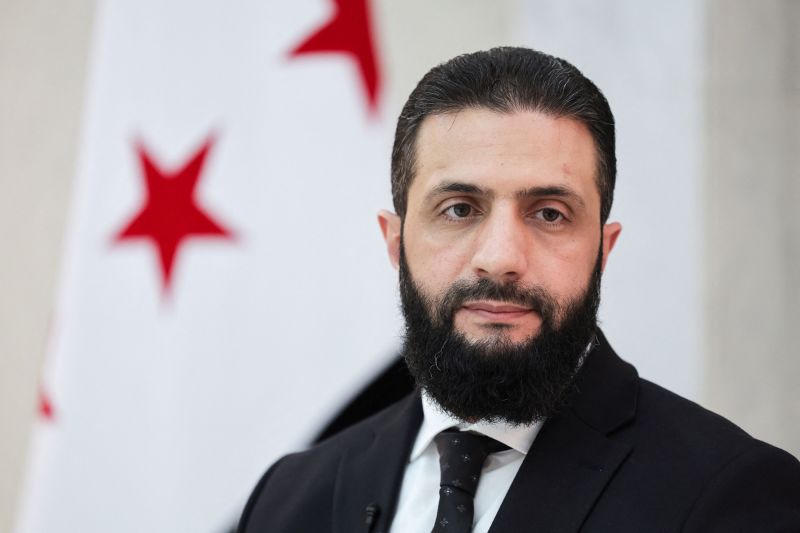
Interim President Ahmed al-Shaar emphasized that Syria will avoid any conflict unless it faces a direct attack, highlighting the government's focus on reconstruction after years of war. This statement was made during his address at Chatham House in London, where he clarified that Syria has suffered enough from the ravages of war, and the priority now is to restore stability and calm.
Al-Shaar explained that the Syrian government does not wish to engage in any conflict, stating: "No party is willing to participate in war, and we will only engage if we are targeted for aggression and have no diplomatic solutions." These remarks reflect the Syrian government's desire to avoid further military escalation amid the difficult circumstances the country is experiencing.
Details of the Event
Al-Shaar's statements come at a sensitive time as the Syrian government seeks to rebuild what has been destroyed by years of conflict. He pointed out that priorities include stabilizing the economy, rebuilding infrastructure, and facilitating the return of refugees. These goals reflect the government's desire to restore normal life to the country after years of conflict that have left devastating effects on Syrian society.
He also added that the Syrian people have suffered greatly from the war and that they recognize the value of peace. "We have endured heavy losses, and we do not wish to face the experiences of war again," he expressed, echoing the sentiments of many Syrians who are looking forward to a better future.
Background & Context
Since the outbreak of the conflict in Syria in 2011, the country has witnessed multifaceted struggles that have led to widespread destruction of infrastructure and the proliferation of poverty and unemployment. The war has resulted in the deaths of hundreds of thousands of people and the displacement of millions, making reconstruction a significant challenge for the Syrian government.
In recent years, the Syrian government has begun taking steps toward reconstruction, but challenges remain. Economic sanctions and political tensions with some Western countries hinder the government's efforts to restore stability. However, al-Shaar's recent statements may reflect a shift in the Syrian strategy toward focusing on peace and development rather than conflict.
Impact & Consequences
Al-Shaar's statements are seen as a positive step toward achieving peace in Syria, reflecting the government's desire to avoid further military escalation. If the government can achieve stability, this may lead to improved relations with neighboring countries and the international community, facilitating the reconstruction process.
However, the biggest challenge remains how to deal with armed groups and areas that are still outside government control. Reaching a comprehensive political solution requires ongoing diplomatic efforts, which may be difficult to achieve under the current circumstances.
Regional Significance
The situation in Syria directly affects stability in the Arab region. Continued conflict or escalation could have negative repercussions for neighboring countries, such as Lebanon and Jordan, which host large numbers of Syrian refugees. Additionally, Syria's stability can contribute to improving security in the region and enhancing cooperation among Arab countries.
In conclusion, Interim President Ahmed al-Shaar's statements represent a new opportunity for peace in Syria and may mark the beginning of a new phase of stability and development. However, the biggest challenge remains how to achieve these goals amid the complex circumstances the country is facing.