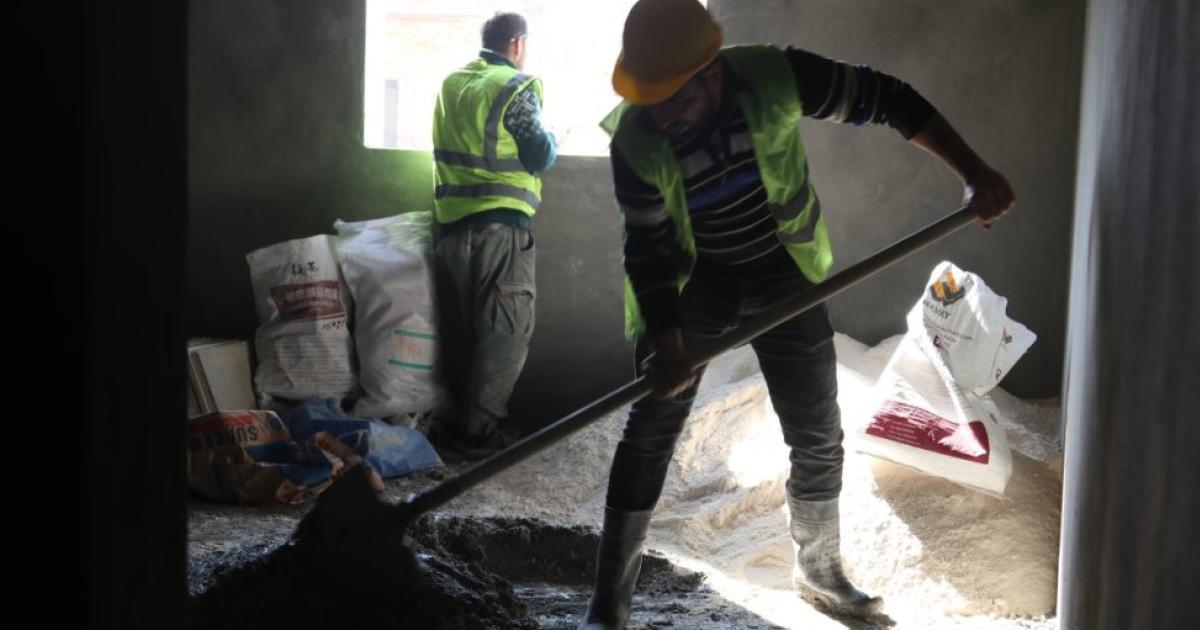
Over a year into Syria's transitional phase, citizens continue to endure harsh living and service conditions. Unemployment is on the rise, and income is insufficient to meet basic life needs, prompting some to mock the current situation.
The economic and social crises in the country are escalating, with reports indicating that the unemployment rate has significantly increased, exacerbating the suffering of Syrian families. At the same time, the prices of essential goods continue to rise, burdening citizens who struggle to secure their daily needs.
Details of the Situation
Statistics indicate that the unemployment rate in Syria has exceeded 30%, reflecting the worsening economic crisis the country faces. Additionally, the monthly income of families is inadequate to cover basic living costs, forcing many citizens to seek additional income sources or rely on humanitarian aid.
In these circumstances, citizens express their dissatisfaction with the current situation, with some mocking what is known as "liberation," lamenting the conditions that prevailed before the conflict began. This sentiment reflects a state of frustration and loss of hope for improving living conditions.
Background & Context
The transitional phase in Syria began after the outbreak of the ongoing conflict in 2011, which led to widespread destruction of infrastructure and the economy. Despite international and local efforts to achieve peace and stability, conditions remain deteriorating, making it difficult for citizens to see any tangible progress.
It is worth noting that many Syrian regions are still under the control of various armed factions, complicating reconstruction efforts and improving living conditions. Furthermore, the economic sanctions imposed on the Syrian regime exacerbate the situation, making it challenging for the government to meet citizens' needs.
Impact & Consequences
The deteriorating economic conditions in Syria affect social stability, with increasing cases of poverty and unemployment, which may lead to a rise in crime and social unrest. Additionally, the loss of hope for improving conditions may drive young people to emigrate in search of better opportunities in other countries.
Moreover, the continuation of economic and social crises may negatively impact peace efforts in the region, as extremists may exploit these conditions to recruit more individuals into their ranks, increasing tensions in the area.
Regional Significance
The situation in Syria serves as an indicator of the challenges faced by many Arab countries amid political and economic crises. The ongoing conflict in Syria could affect stability in neighboring countries, potentially leading to an influx of refugees and heightened border tensions.
Furthermore, the economic and social crises in Syria may impact relations between Arab countries, as some may seek to provide humanitarian and economic support, while others may adopt more hardline stances towards the Syrian regime.
In conclusion, the situation in Syria remains complex and difficult, as citizens look forward to improving their living conditions while political and economic challenges continue to affect their daily lives.