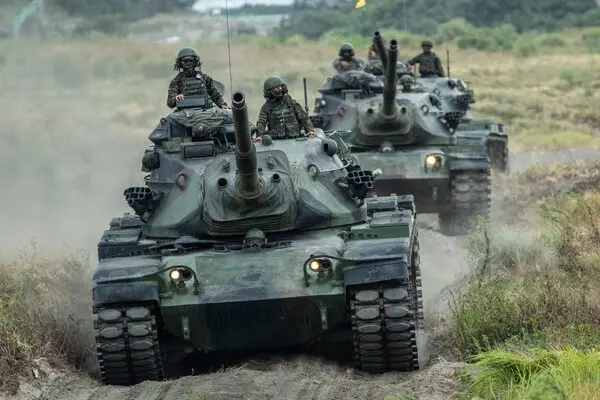
Amid rising tensions with China, Taiwan has the opportunity to set its defense direction through intense discussions taking place in parliament. This debate revolves around a defense budget proposal backed by President Lai Ching-te, which allocates $40 billion over eight years.
This discussion comes as the National Party, the main opposition party, strives to take a unified stance regarding dealings with China, while grappling with sharp divisions among its members. While some figures within the party support a position aligned with the United States and Taiwan's unity, others advocate for strengthening relations with Beijing.
Details of the Event
Formal negotiations among Taiwanese lawmakers regarding the military spending plan commence this week, also addressing alternative plans put forth by opposition parties. Smaller parties are promoting proposals for a moderate increase in the budget with the intent of securing future funding for arms from the United States, while the National Party aims to modify the proposed budget for defensive purposes.
Representative Lo Shia-yin, among the frontrunners for the National Party's presidential nomination, recently visited the United States to promote strong ties with Washington. Meanwhile, the party leader, Cheng Li-wen, advocates for dialogue with China in an effort to alleviate tensions, viewing this as a way to enhance cross-Strait relations.
Background & Context
Historically, Taiwan endures ongoing tensions with China, stemming from Beijing's view of the island as part of its territory. Since the National Party's victory in the last election, discussions on how to confront increasing Chinese pressures have resumed. This political situation presents an opportunity for the National Party to reaffirm its presence after several years of opposition, particularly ahead of the anticipated presidential elections in 2028.
The National Party faces the challenge of securing voter support amid internal divisions about the defensive strategy. The major obstacle is how to reconcile the differing stances of its members and strike a balance between national interest and electoral desires.
Impact & Consequences
Presenting a substantial military budget could influence Taiwan's position on the international stage and heighten tensions with Beijing. Should the budget be approved, China may react politically or militarily, escalating the situation in the region. This, in turn, could impact international alliances, as major powers like the United States and the European Union will monitor Chinese responses to Taiwanese actions.
The outcomes of these discussions will reflect not only the political landscape in Taiwan but also serve as a test of relations among major powers, contributing to shaping the future of regional security.
Regional Significance
In the tense atmosphere surrounding the Taiwan Strait, Arab nations must evaluate their relationships with global powers and elevate their stances on regional issues. U.S. warnings about the growing influence of China compel Arab states to reassess their alliances and military frameworks, particularly in light of maritime and oil activity.
Overall, China's emergence as a superpower signals the necessity for strategic frameworks among Arab nations aimed at achieving security and stability in the region.