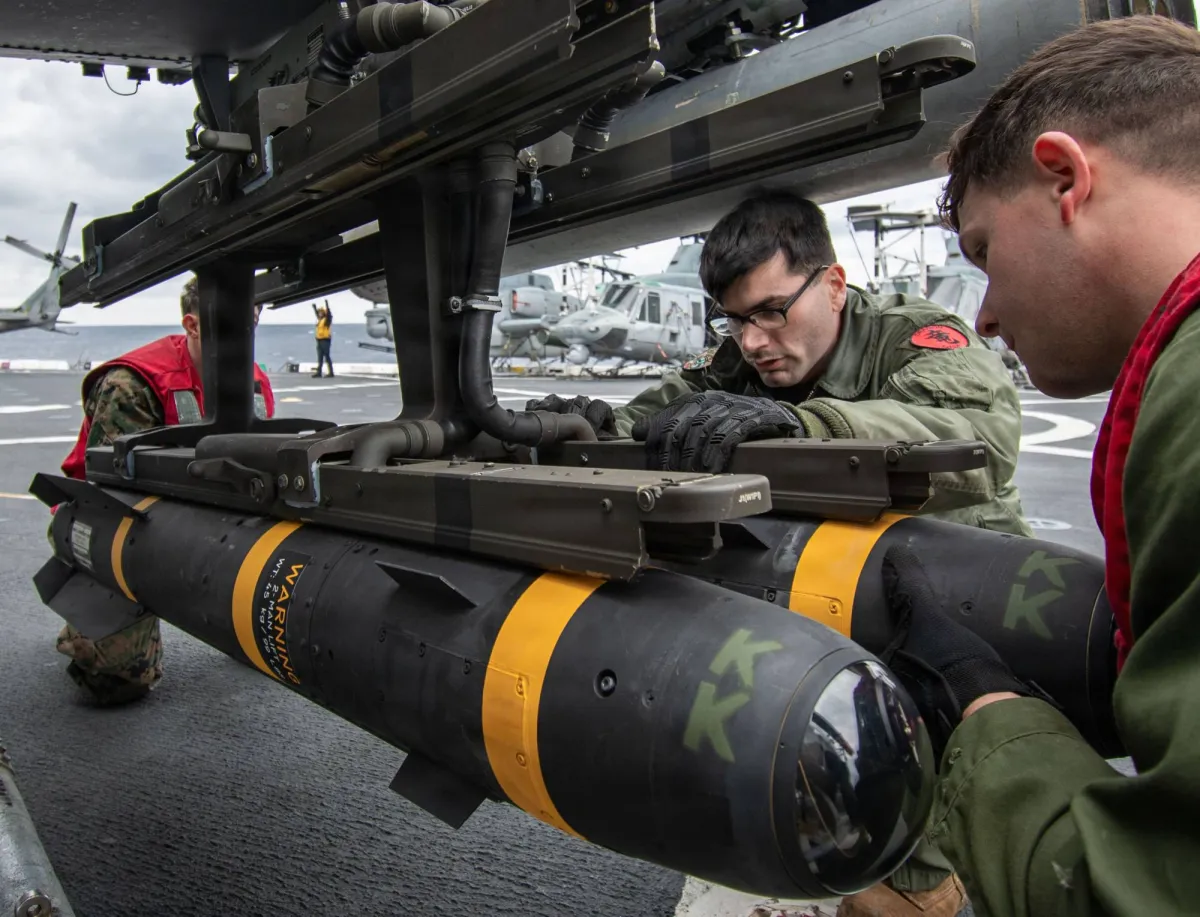
The AGM-114 Hellfire missile has once again come to the forefront, as U.S. Central Command (CENTCOM) announced its use in multiple operations, the latest being the targeting of an oil tanker heading to an Iranian port. This operation is part of the maritime blockade imposed on Iran and highlights the effectiveness of this weapon in achieving military objectives.
In an official statement, CENTCOM confirmed that an American aircraft launched a Hellfire missile at the engine room of the tanker MT Lexi after it ignored repeated warnings, resulting in the ship being disabled and preventing it from reaching Khark Island, without fully sinking it. This move reflects the U.S. approach of using precision weapons against maritime targets.
Details of the Incident
The Hellfire missile, originally designed during the Cold War to destroy Soviet tanks, has evolved into a versatile weapon, now used against vehicles, boats, and maritime targets. Development began in the 1970s, and it entered service in 1984, becoming one of the most well-known precision-guided munitions in the U.S. arsenal.
During the Gulf War in 1991, it was widely used against Iraqi armored vehicles, and since then, it has been associated with American drones such as the MQ-1 Predator and MQ-9 Reaper. The Hellfire is characterized by its small size and high precision, making it a preferred weapon in military operations.
Background & Context
Historically, the U.S. military has used the Hellfire missile from attack helicopters, but it has now become a primary weapon for drones. It has been employed in various targeting operations in Iraq, Afghanistan, and Syria, in addition to increasing maritime operations in the Red Sea and the Arabian Gulf.
In January 2020, the United States used it in the strike that resulted in the death of Qassem Soleimani, the commander of the Quds Force in the Iranian Revolutionary Guard, further increasing the significance of this weapon in U.S. military strategies.
Impact & Consequences
The use of the Hellfire missile against Iranian oil tankers reflects an escalation in tensions between the United States and Iran, indicating that Washington continues its strategy of pressuring Tehran through maritime blockade. These operations may provoke reactions from Iran, increasing the likelihood of escalation in the region.
Additionally, the use of such precision weapons minimizes collateral damage, providing U.S. forces with greater flexibility in conducting limited operations. With the continued development of the Hellfire, it is expected to remain a core component of the U.S. military arsenal.
Regional Significance
The impact of these operations extends to the Arab region, where tensions between the United States and Iran raise concerns among neighboring countries. The use of advanced weapons in maritime conflicts may lead to changes in defense strategies among Arab states bordering the Gulf.
In light of these circumstances, Arab countries must reassess their security and military strategies to address the increasing challenges in the region.
In conclusion, the Hellfire missile remains a symbol of American military advancement, reflecting current trends in regional conflicts, necessitating increased attention from Arab nations to monitor these developments.