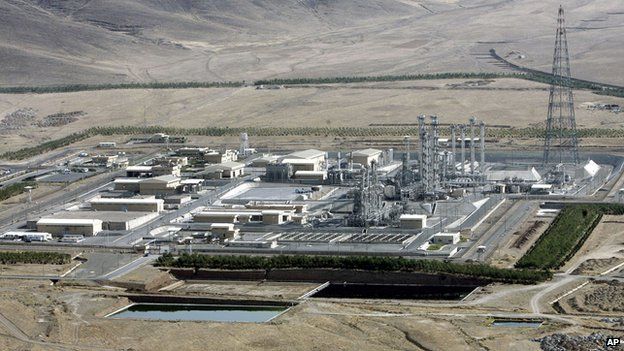
Israeli forces have targeted the Arak heavy water plant in Iran, raising concerns about the potential impacts of this attack on the environment and public health. Satellite images taken on March 29, 2026, showed the destruction of the Khondab reactor, which is part of Iran's nuclear complex.
Heavy water, produced at this facility, is water in which the regular hydrogen atoms are replaced with a heavier isotope known as deuterium. Although this difference may seem minor, it plays a vital role in nuclear physics, as heavy water is used as a moderator to slow down neutrons in certain types of nuclear reactors.
Details of the Incident
In an official statement, the Israeli military announced the targeting of the Arak plant, indicating that it is a key site for producing plutonium used in nuclear weapons. This attack comes amid escalating tensions between Israel and Iran, with the latter considering its nuclear program a part of its national sovereignty.
The International Atomic Energy Agency confirmed after the attack that there is no radiological risk associated with the incident, as the facility did not contain declared nuclear materials. However, experts noted that military strikes on such facilities could lead to significant economic damage, in addition to the loss of the ability to produce heavy water.
Background & Context
Historically, Iran has witnessed numerous military attacks on its nuclear facilities, which are considered strategic targets by several countries, especially Israel. Iran's nuclear program has raised concerns in the international community, leading to economic sanctions imposed on it in the past.
Heavy water is used in some nuclear reactors as a means to facilitate nuclear reactions, granting Iran greater capability to utilize natural uranium without the need for high enrichment. This makes the Arak plant a site of strategic importance, as its destruction could impact Iran's ability to develop its nuclear program.
Impact & Consequences
Although there is no immediate radiological threat, the attack on the Arak plant could lead to significant economic and industrial repercussions. Rebuilding such facilities is not an easy process and could take years, affecting Iran's ability to resume heavy water production.
Additionally, the attack may escalate tensions in the region, as Iran might feel compelled to respond to this aggression, increasing the risk of a wider conflict.
Regional Significance
Developments in Iran's nuclear program are a sensitive topic in the Arab region, as many countries fear that enhancing Iran's nuclear capabilities could lead to an arms race in the area. The attack on the Arak plant may reopen discussions about regional security and strategic balances in the Middle East.
In conclusion, the question of the long-term effects of this attack on Iran and its surrounding environment remains open. While the International Atomic Energy Agency confirms there is no radiological threat, concerns about military escalation persist, making the situation in the region more complex.