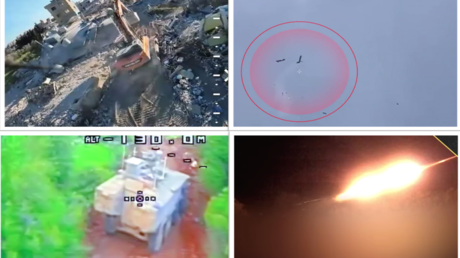
Hezbollah carried out military operations against Israeli targets on Thursday and Friday, showcasing footage documenting the targeting of a settlement and military vehicles in areas adjacent to the Lebanese-Israeli border. These operations come at a sensitive time, as tensions between the two sides are escalating, raising concerns about a potential escalation in the conflict.
The footage released by Hezbollah shows precise targeting of Israeli military sites, reflecting the party's ability to execute complex operations despite military and political pressures. These operations have elicited mixed reactions in political and military circles, with some viewing them as evidence of the party's strength and cohesion, while others consider them provocations that could lead to greater escalation.
Details of the Event
On Thursday, Hezbollah targeted Israeli military vehicles moving near the border, resulting in significant damage. The following day, the party targeted an Israeli settlement, causing panic among residents. These operations are part of the party's strategy to bolster its position in the face of ongoing Israeli threats.
These operations are part of a series of attacks carried out by Hezbollah in recent years, aimed at demonstrating its capability to respond to any Israeli aggression. Reports indicate that the party employs advanced techniques in executing these operations, complicating the security situation in the region.
Background & Context
Historically, the Lebanese-Israeli border has witnessed ongoing tensions, with Hezbollah being a key player in the region. Since the 2006 war, the party's military activities have increased, leading to a continuous escalation in the conflict. These operations coincide with rising regional tensions, particularly with events in Syria and their impact on the situation in Lebanon.
These operations are part of the broader conflict between Israel and Hezbollah, with each side seeking to strengthen its position against the other. Additionally, these events come at a sensitive time for Israeli domestic politics, as the government faces multiple challenges from the opposition and the international community.
Impact & Consequences
These operations underscore the ongoing conflict in the region, which could lead to greater escalation in hostilities. These events may impact stability in Lebanon, potentially provoking reactions from the Lebanese government or the international community.
Moreover, these operations could affect relations between Israel and Arab countries, as they may increase tensions among various parties. These events are likely to lead to renewed calls for de-escalation, but they may also face resistance from hardline factions.
Regional Significance
These events are significant for the Arab world, as they reflect the ongoing conflicts in the region. These operations may increase divisions among Arab states, especially amid current tensions between some countries and Israel.
Furthermore, these events could hinder peace efforts in the region, potentially obstructing any attempts to reach new agreements. Under these circumstances, the situation in Lebanon and Israel remains under close observation, as events could evolve rapidly.
In conclusion, Hezbollah's operations against Israel signify the continuation of the conflict in the region, necessitating serious steps from the international community to mitigate tensions.