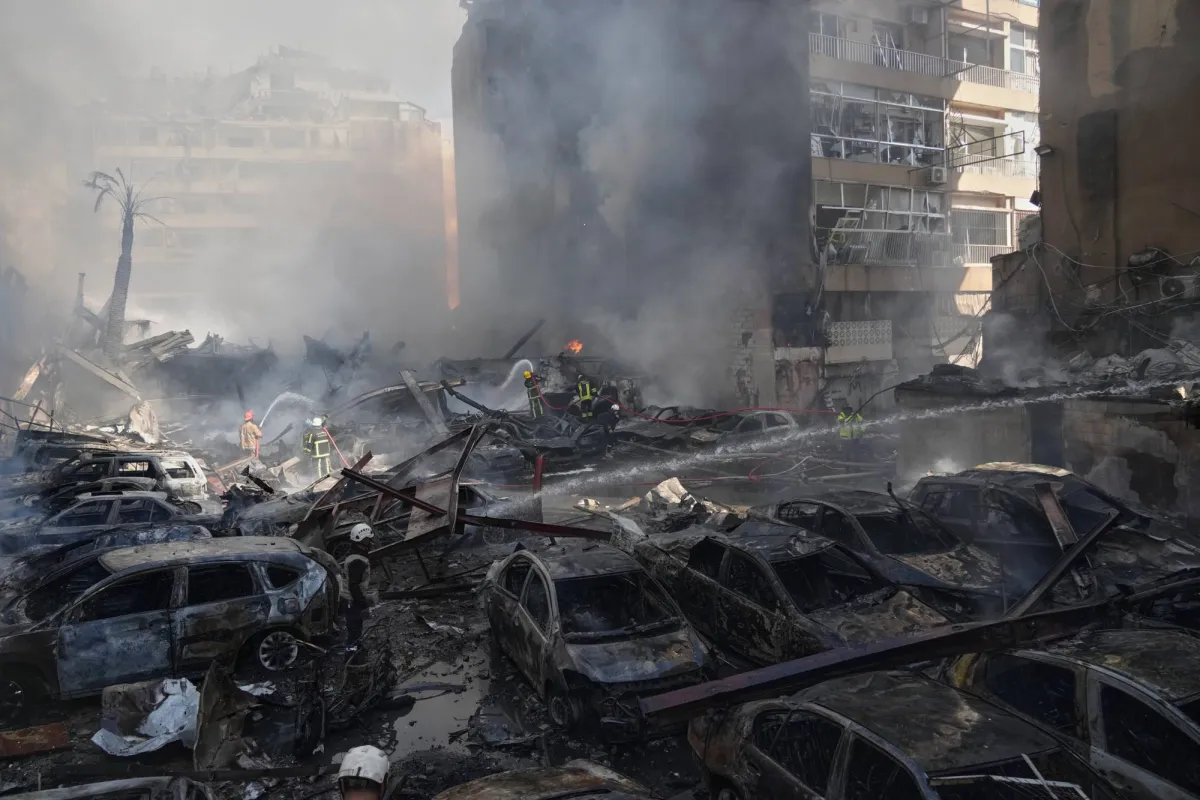
Israeli media reported on Wednesday that the nephew of Hezbollah's Secretary-General, Naeem Qassem, and his personal secretary were targeted in Beirut, resulting in unprecedented military escalation in the region. The Israeli army confirmed it targeted a Hezbollah leader in the Lebanese capital, amid reports of intensive airstrikes that led to numerous casualties.
In a statement, the Israeli army confirmed it carried out airstrikes on Hezbollah-affiliated targets, without revealing the identity of the individual targeted. These strikes come at a sensitive time, as the situation in Lebanon has been increasingly tense following a series of military events.
Details of the Incident
The Lebanese Civil Defense announced that 254 people were killed and around 1165 others injured due to the Israeli airstrikes. Hezbollah, for its part, affirmed its right to respond to these aggressions, indicating that the strikes caused widespread destruction to residential buildings.
The Israeli escalation occurred at a time when the region is preoccupied with global developments regarding the war with Iran, as Israel intensified its blockade on the Gaza Strip, exacerbating the suffering of its residents. Reports indicate that the humanitarian situation in Gaza has significantly worsened, with rising prices and shortages of food supplies.
Background & Context
Historically, relations between Israel and Hezbollah have been marked by ongoing tensions, with both sides exchanging accusations of aggression. The recent escalation comes after a period of relative calm, where there were hopes for a ceasefire between the involved parties, but the Israeli airstrikes dashed those hopes.
The Lebanese government had hoped to be included in any ceasefire agreement between Iran and the United States, but recent events have placed the country at the heart of an open military escalation. Lebanese President Joseph Aoun condemned these aggressions, stating that they represent a blatant violation of international laws.
Impact & Consequences
The military escalation could worsen the humanitarian situation in Lebanon, where residents are already suffering from the effects of ongoing conflict. Additionally, the continuation of airstrikes may contribute to increased tensions between Lebanon and Israel, potentially dragging the region into further conflicts.
The economic consequences will also be notable, as rising prices and shortages of essential goods could exacerbate social crises in Lebanon. The Lebanese government faces significant challenges in addressing these situations, requiring immediate responses to assist those affected.
Regional Significance
This military escalation highlights the ongoing tensions in the region, as any escalation between Israel and Hezbollah could impact regional stability. Neighboring Arab countries are closely monitoring the situation, as any escalation could lead to widespread repercussions.
Recent events reflect the urgent need for dialogue and negotiation among the involved parties, as violence cannot be a solution to the complex problems in the region. The international community is called upon to act to halt the escalation and ensure the protection of civilians in Lebanon.