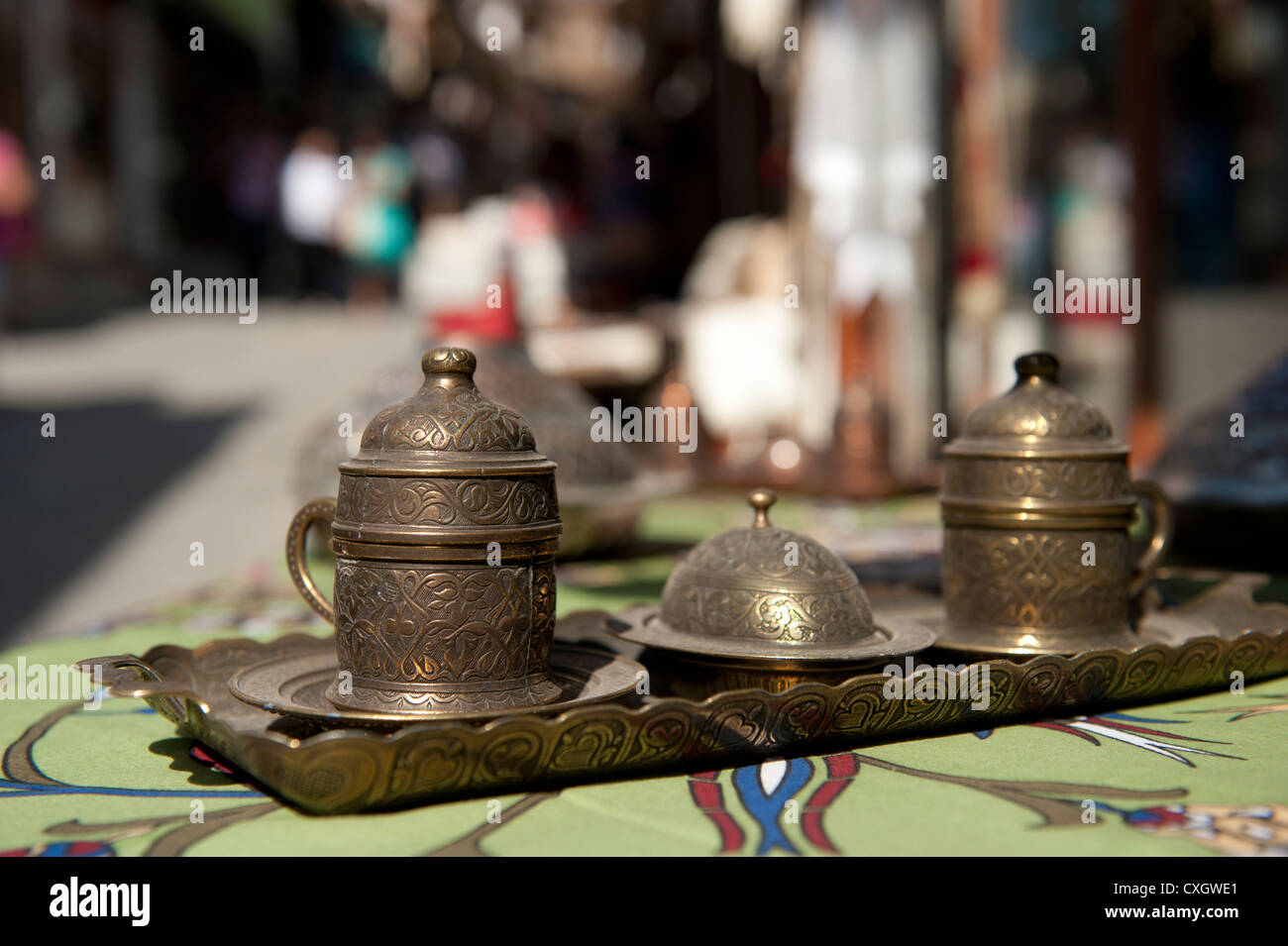
The profession of tea seller is iconic in Turkey, with vendors traversing streets and markets to serve hot tea in tulip-shaped cups. This trade is not merely a commercial activity; it is an inseparable part of the cultural and social heritage of the country, where moments of drinking tea provide opportunities for social interaction and conversation among people.
In the capital city of Ankara, tea sellers are a part of daily life, often seen at every corner of the city, carrying tea cups and offering them to passersby. Tea in Turkey is a symbol of hospitality, frequently served to visitors as a sign of welcome.
Details of the Tradition
Reports indicate that tea sellers in Ankara adhere to ancient traditions in the preparation and serving of tea, which is made with meticulous care. Black tea is brewed in a special kettle and then poured into small cups known as "çay bardağı." These cups are not only aesthetically pleasing but also help maintain the tea's warmth for a longer period.
There are numerous places to buy tea in Ankara, ranging from small stalls in popular markets to large cafes. Tea sellers in these venues are considered central figures, attracting customers with their cheerful conversations and quick service.
Background & Context
The roots of tea culture in Turkey date back to the Ottoman era, when tea was a preferred beverage among sultans and the elite. Over time, tea has become a part of everyday life for all segments of society. In recent years, the profession of tea seller has seen significant evolution, with many vendors using social media to promote their products and attract new customers.
The profession of tea seller in Turkey symbolizes generosity and hospitality, as vendors showcase their skills in serving tea in a distinctive manner, making the tea-drinking experience unique. This profession also provides job opportunities for many young people, contributing to the support of the local economy.
Impact & Consequences
The profession of tea seller in Turkey exemplifies how to preserve cultural heritage in an age of globalization. Despite rapid changes in lifestyles and communications, tea continues to hold its place as a symbol of hospitality and social connection. This demonstrates how ancient traditions can adapt to the modern era and remain relevant.
This profession also strengthens social bonds among individuals, as moments of tea drinking are opportunities for exchanging ideas and opinions. Additionally, tea sellers play an important role in promoting tourism, as drinking tea is a cultural experience that visitors must try.
Regional Significance
The tea culture in Turkey is similar to some Arab traditions, where tea is also a preferred beverage in many Arab countries. Arab nations could benefit from Turkey's experience in promoting tea culture by organizing events and festivals that celebrate this traditional drink.
In conclusion, the profession of tea seller in Ankara illustrates how ancient traditions can continue to thrive in a rapidly changing world. Preserving this profession is an important step towards enhancing cultural identity and social heritage in Turkey.