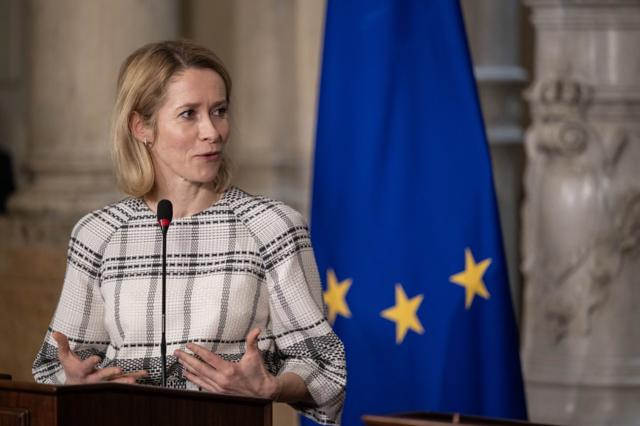
An official source from the European Union reported a telephone call between Kaja Kallas, the EU's foreign affairs chief, and Abbas Araqchi, the Iranian foreign minister, last Sunday. This conversation occurs at a time when European-Iranian relations are experiencing tension amid complex geopolitical transformations.
The call addresses key issues pending between the two sides, including the Iranian nuclear program, which raises concerns for many Western countries. Previous discussions over the past months aimed to revive the nuclear agreement from which the United States withdrew in 2018, causing economic difficulties for Iran and complicating relations with European nations.
The current context of EU-Iran relations is highlighted by escalating tensions since then, as the EU has sought to act as an intermediary since America’s withdrawal from the nuclear deal. Iran now faces increasing pressure due to economic sanctions and potential threats from the West, prompting a review of its foreign policy and regional strategies.
It is noteworthy that this call follows a series of strong European stances regarding Iranian nuclear activities. The EU finds itself in a precarious position, striving to strike a balance between the political and economic pressures on Iran and the need to reach a diplomatic solution that restores stability to the region.
The potential ramifications of this conversation could be far-reaching, potentially leading to improved relations between the EU and Iran if mutual understandings are reached. At the same time, these moves may raise concerns among certain regional countries like Saudi Arabia and Israel, which view Iran as a direct threat to their national security.
European-Iranian relations are not new, dating back decades, but the current circumstances and issues at hand have brought them under close scrutiny. European nations are trying to understand Iranian intentions more deeply, especially with the rise of Iranian investments in energy and the economy, impacting European interests in the region.
In a similar direction, these communications may serve as a means for Europe to try to convince Iran to reduce its nuclear activities, which is a priority for regional security. Consequently, the success of this conversation depends on the willingness of the parties involved to reach genuine agreements.
In the Arab arena, the outcomes of these talks directly impact Arab national security, especially with increasing Iranian activities in crisis files such as Iraq, Syria, and Lebanon, which are considered negotiation points that must be heeded in any future discussions between Iran and European states.
Thus, the essence of these events underscores the importance of continuing dialogue between the EU and Iran and its role in achieving stability in a region beset by numerous tensions, making this conversation more than just diplomatic communication, but a step toward recalibrating complex relationships in a rapidly changing world.