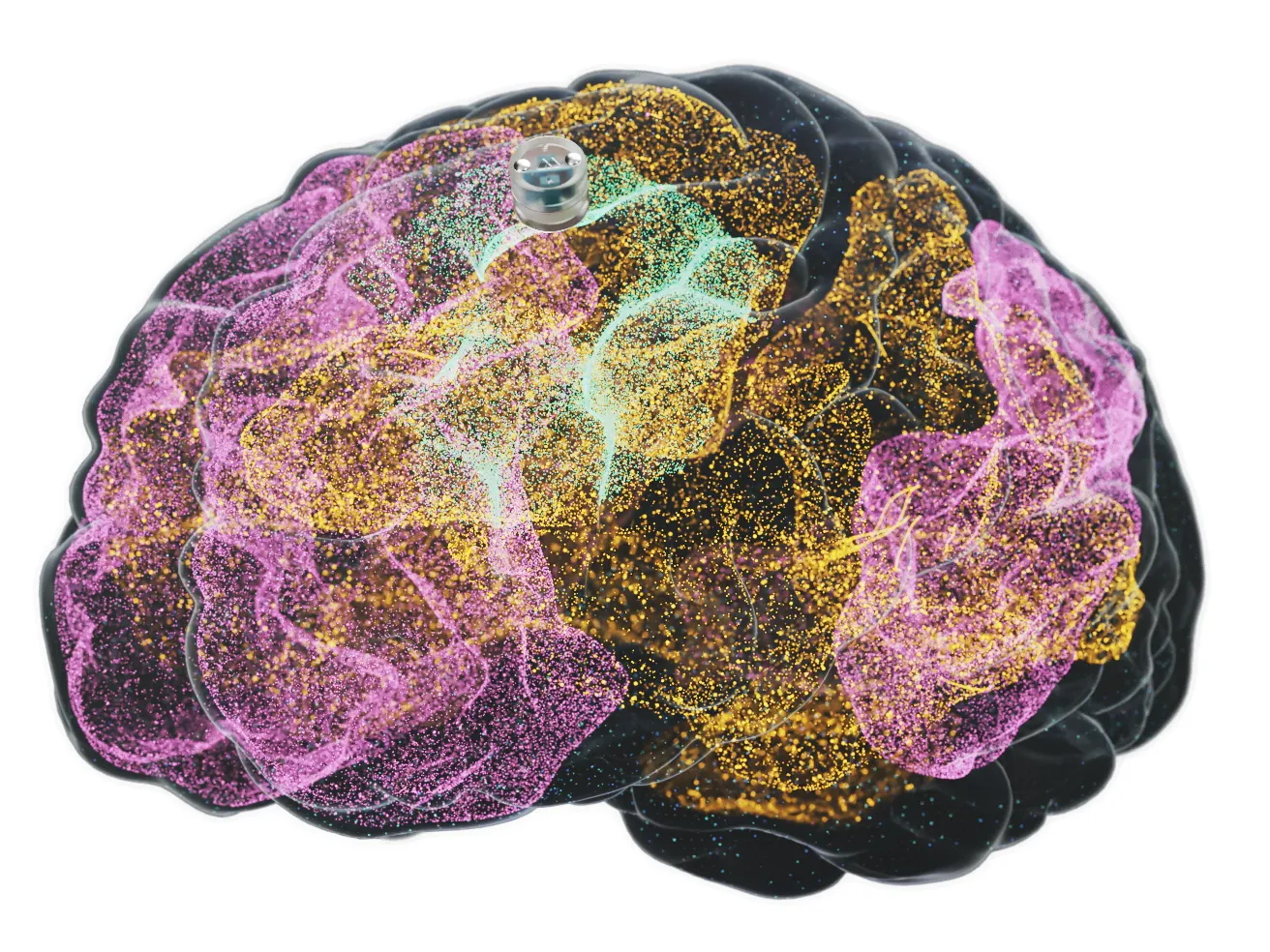
In a move that could revolutionize depression treatment, Motif Neurotech, based in Houston, has announced that the U.S. Food and Drug Administration (FDA) has approved a human study to test a brain implant the size of a blueberry. This device, which is implanted in the skull, aims to provide electrical stimulation to treat depression in individuals who have not responded to traditional medications.
The device targets the central executive network in the brain, an area responsible for higher cognitive functions that is often inactive in individuals suffering from severe depression. By sending specific patterns of stimulation, researchers hope to reactivate this network, potentially helping patients regain their daily activities.
Details of the Device
The device has been developed to be implantable in an outpatient procedure that takes about 20 minutes, eliminating the need for complex brain surgery. It relies on wireless electro-magnetic technology, where it is charged using a cap worn by patients while receiving stimulation. This cap sends data about the prescribed dosage of stimulation to the device, ensuring that patients receive accurate treatment.
Patients are expected to start seeing a response to the treatment, possibly entering a state of recovery within the first ten days of therapy. After that, the use of the cap will be reduced to provide maintenance doses of stimulation.
Background & Context
Historically, electrical stimulation has been used to treat depression for decades, with electric therapies beginning in the 1930s and still in use today. However, the new approach offered by Motif represents an evolution in this field, aiming to provide a less invasive and more effective treatment for patients who do not respond to conventional therapies.
Studies indicate that approximately 9 million adults in the United States were receiving treatment for severe depression, with about 3 million considered to have treatment-resistant depression, meaning their symptoms do not improve after using multiple antidepressant medications.
Impact & Consequences
If the trials prove successful, this device could significantly transform how depression is treated, providing patients with new and unconventional options. Additionally, the ability to deliver treatment at home may contribute to improving the quality of life for many individuals suffering from depression.
This innovation is a step towards achieving a better understanding of mental health, as it could lead to the development of future devices capable of recording and monitoring brain activity, helping doctors provide more personalized treatment.
Regional Significance
In the Arab region, where rates of depression and mental disorders are rising, this innovation may represent a beacon of hope for many patients. With increasing awareness of mental health, this new technology could open new avenues for treating depression in Arab countries.
In conclusion, the Motif device represents an important step towards improving available treatments for depression and may transform how this complex mental health condition is understood and treated.