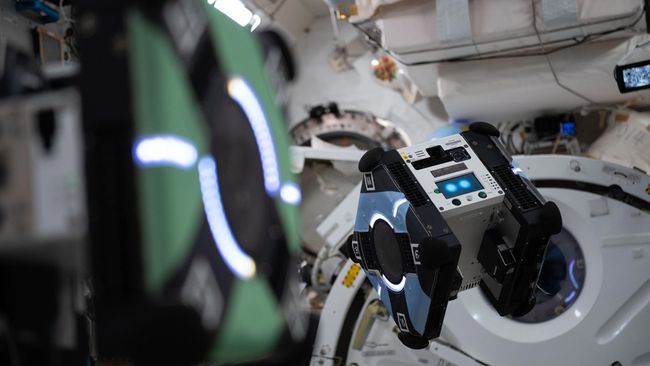
In a new step towards enhancing innovation in the field of space, Voyager Technologies has announced the signing of a contract with Icarus Robotics to conduct a test of a flying robotic system at the International Space Station. This announcement comes at a time when NASA is seeking to increase private activity in low Earth orbit, especially with the station's planned retirement in 2030.
The robotic system, known as "Joyride", is designed to operate within crewed stations, and the test aims to assess how it performs in a microgravity environment. This test will also play a vital role in collecting the necessary data to train artificial intelligence models that will operate robots in space.
Details of the Event
Under the agreement, Voyager will prepare the robot for launch, secure the necessary safety approvals, organize the launch process, and support operations once it arrives at the International Space Station. Jamie Palmer, co-founder and head of technology at Icarus Robotics, stated to Reuters that "the first step in creating powerful AI systems is to introduce hardware into the actual environment. Space represents the highest barrier to entry in any field, and no simulator can replace the actual presence there."
Robots in space are considered a vital tool that can be used for inspecting and repairing satellites, assisting with routine maintenance and logistics aboard space stations, and ultimately managing and maintaining data centers and other infrastructure in Earth orbit.
Background & Context
Historically, space technologies have seen significant evolution, as NASA has recently begun encouraging private companies to participate in space exploration, leading to the emergence of many startups in this field. This move is part of a larger strategy aimed at fostering innovation and alleviating the financial burdens on government agencies.
Currently, attention is focused on developing new technologies that can contribute to the exploration of outer space, including the Moon and Mars. Robots play a central role in these plans, as they can be used in missions that may be dangerous for humans.
Impact & Consequences
These tests are an important step towards achieving space exploration goals, as they can contribute to the development of advanced AI systems capable of operating in harsh environments. Additionally, the success of these robots could open the door to new applications in space, such as self-maintenance of space stations or even building new infrastructure in space.
Moreover, these developments could lead to improved efficiency and reduced costs in space operations, making space exploration more economically feasible.
Regional Significance
In light of the global trend towards space exploration, the importance of developing technological capabilities in Arab countries is highlighted. These innovations could enhance cooperation among Arab nations in the fields of space and technology, opening new horizons for economic development and scientific research.
Furthermore, investment in space technology could bolster the standing of Arab countries on the international stage and enhance their ability to participate in major global projects.
In conclusion, this test represents an important step towards achieving tangible progress in the field of space technology and reflects the global trend towards enhancing innovation in this vital area.