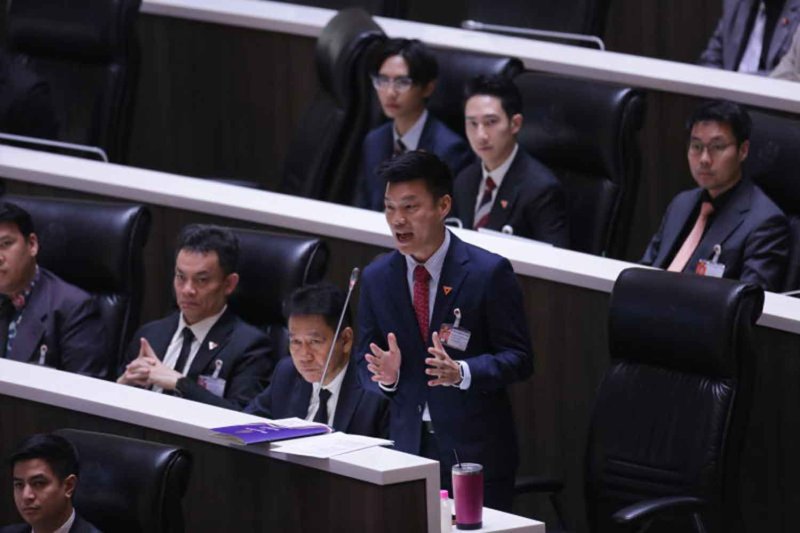
The Supreme Court of Thailand has put the People's Party (PP) in a precarious position by accepting an ethical lawsuit against 44 former MPs from the Move Forward Party. The case, filed by the National Anti-Corruption Commission, pertains to a proposed amendment to the lese majeste law, with the first hearing scheduled for June 30. Ten MPs from the party, including party leader Nattapong Ruengbanyawat, are allowed to continue their duties until a ruling is issued.
Following the court's decision, it is believed that a planned leadership change, where Virayuth Kanchotchat was set to take over the party's presidency, has been postponed. The party is likely to fill only the position of secretary-general, which was vacated by Sarayut Jelik after his resignation during the annual general meeting scheduled to conclude today.
Details of the Case
Questions are mounting regarding the party's future. Political analysts outline the challenges the party may face if the court rules against the ten MPs. Stithorn Thananitchoot, a political science professor at Chulalongkorn University, states that there may not be an urgent need for a leadership change at this time, as Nattapong can continue to fulfill his duties as a parliament member.
However, if the court rules against the MPs, changes will be inevitable. Stithorn points out that selecting a new leader, such as Virayuth, would be a short-term arrangement for the current parliamentary term, rather than a long-term strategy. The goal of the party leadership is to stabilize the party, manage its parliamentary duties, and maintain its position as the largest opposition party.
Background & Context
The Move Forward Party is the successor to the People's Party and has faced numerous challenges since its inception. Thanathorn Juangroongruangkit, the former party leader, was banned from politics for ten years in February 2020 by the Constitutional Court due to an illegal loan provided to his party. This ban led to the dissolution of the party and the exclusion of its leadership.
Now, Thanathorn leads the Progressive Movement and serves as a campaign assistant for the People's Party. His potential return to the political arena in the upcoming elections is seen as a significant factor influencing the party's future, as he is expected to return in the next electoral cycle.
Impact & Consequences
If Thanathorn's return is successful, it could significantly impact the political landscape in Thailand. Stithorn notes that the impact of his return depends on his ability to create real political momentum. If his return does not lead to significant change, there may be no need to act against him. However, if momentum increases, other mechanisms may emerge to address the situation.
On the other hand, Suvicha Buwari, director of the NIDA polling center, points out that support for the People's Party has declined since Nattapong was elected, but the party is trying to mitigate any further decline by signaling potential leadership changes. Nattapong's continued presence in the party after his performance in the general elections raises questions about his leadership.
Regional Significance
The political situation in Thailand serves as an example of the challenges faced by political parties worldwide, including in Arab countries. Issues related to corruption and social justice remain vital topics in the region. Developments in Thailand could influence how Arab parties address similar issues, highlighting the importance of transparency and accountability.
In conclusion, the future of the People's Party hangs in the balance, dependent on the court's decisions and the party's performance in parliament. If the party can strengthen its position as an effective opposition, it may succeed in regaining voter trust, but challenges remain.