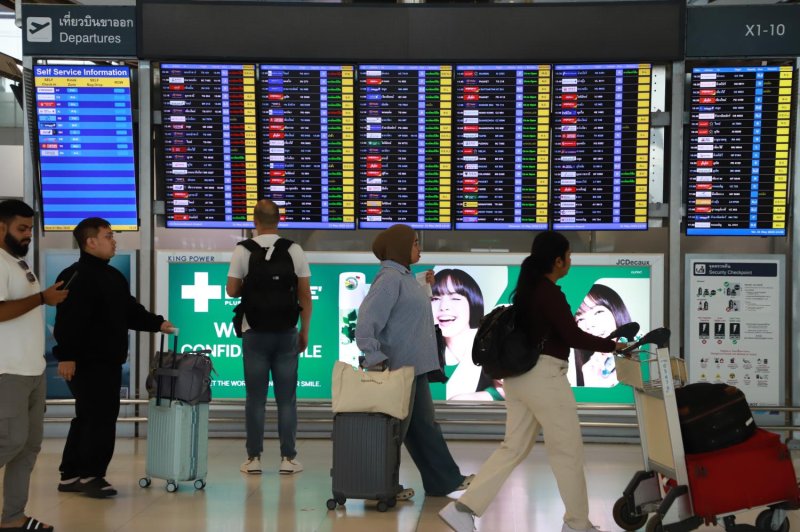
The Thai Travel Agents Association (TTAA) has firmly rejected the government's plans to impose a departure tax of 1,000 baht on Thai travelers. The association stated that this tax would adversely affect bilateral tourism flows, potentially harming the national economy at a time when the country is grappling with a cost-of-living crisis.
Chutchawan Surangura, the association's vice president, emphasized that while the goal of increasing revenue is understandable, the principles underlying this plan are unacceptable. He pointed out the lack of clarity regarding how the budget would be allocated for various types of incentives, which undermines transparency in managing these funds.
Details of the Proposal
This move comes at a time when tourism businesses are under pressure from the war in the Middle East, along with rising living costs. Additionally, other public bodies are preparing to collect extra fees from travelers, such as passenger service fees at airports, which further increases the financial burden on travelers.
Chutchawan warned that imposing this tax would clearly affect outbound travel, which could in turn lead to a decline in the number of visitors coming to the country, as air travel relies on bilateral demand to survive and maintain capacity.
Background & Context
Earlier this week, Minister of Tourism and Sports Surasak Phantacharoenrakul announced that the Ministry of Finance was planning to impose a departure tax of 1,000 baht on Thai travelers by reviving the emergency decree from 1983 regarding the departure tax, which had been suspended for over two decades. The minister explained that outbound travel is estimated at 10 million travelers annually, meaning this tax could generate around 10 billion baht in revenue, which could be allocated to stimulate domestic tourism instead of solely relying on the government budget.
The ministry intends for this plan to be separate from the 300 baht tourism tax, which only applies to foreign visitors. Chutchawan noted that how this tax would be collected remains unclear, as it would only apply to Thai travelers and not to foreigners, unlike the departure tax in Japan, which applies to all departing travelers.
Impact & Consequences
During the tenure of Vibhath Ratchakitprakarn as Minister of Tourism and Sports, the government faced challenges in collecting a 300 baht fee from foreign visitors through airlines. Aviation bodies viewed this plan as impractical due to airline operational systems and could be considered discriminatory under International Civil Aviation Organization rules.
Kriangfon Piaykhaitchai, another vice president of the association, stated that if the government wishes to increase tax revenues related to tourism, there are many alternative measures that would not hinder outbound travel or restrict people's ability to travel. Possible options include regulating unlicensed operators, such as illegal accommodations, and integrating them into the formal system to broaden the tax base.
Regional Significance
Tourism is a vital sector in many Arab countries, with numerous economies relying on the influx of tourists. The imposition of new taxes could affect tourism flows between Arab countries and Thailand, prompting Arab governments to reconsider their tourism policies to attract more visitors.
In conclusion, the current situation requires the Thai government to deeply consider the implications of this potential tax and work towards finding alternative solutions that enhance the tourism sector without negatively impacting travelers.