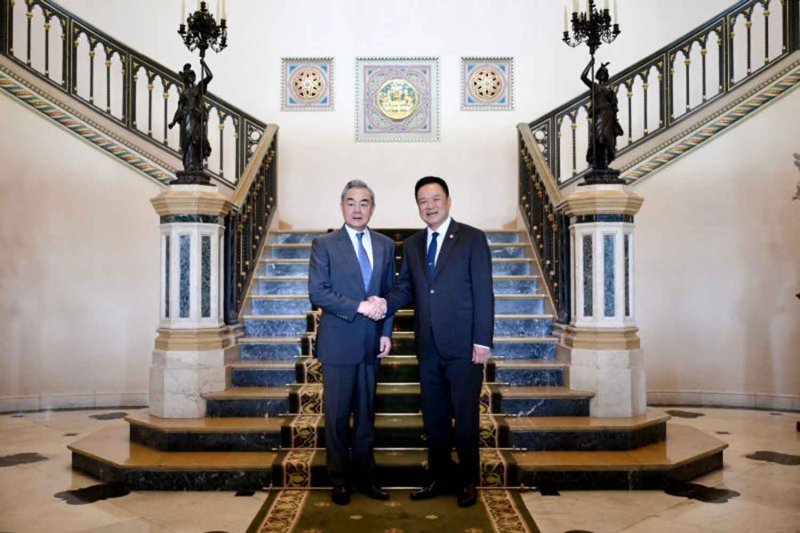
Thailand's Foreign Minister, Sehasak Fuangkitkiwa, has requested China's assistance in conducting talks with Iran to secure energy transport routes through the Strait of Hormuz. This request was made during an informal meeting with Chinese Foreign Minister Wang Yi in Krabi last Friday. The Thai minister emphasized the importance of maintaining peace and stability in accordance with international law, amid concerns over the declining rules-based global order.
The discussions centered on the ongoing conflict between Iran and the United States and Israel, which is considered one of the biggest challenges in the region, particularly regarding its impact on energy supplies. Thailand has faced disruptions in shipments of gas, oil, and fertilizers, which are vital for food production and export.
Details of the Meeting
Sehasak reported that Thai Prime Minister Anutin Charnvirakul had requested China to communicate with Iran to facilitate the passage of major vessels through the Strait of Hormuz, which is currently experiencing heightened security measures. He noted that this step aims to ensure the safety of vital supplies for Thailand.
The meeting also addressed the prospects of improving relations between Thailand and Cambodia, where China views stable relations between the two countries as essential for regional security. Regarding Myanmar, Sehasak indicated that Thailand is seeking to reintegrate the country into the Association of Southeast Asian Nations (ASEAN).
Background & Context
Historically, the Strait of Hormuz is one of the most important waterways in the world, through which approximately 20% of global oil supplies pass. Regional conflicts, especially those involving Iran, significantly affect the stability of these waterways, negatively impacting countries that rely on these supplies, such as Thailand.
In recent years, relations between Thailand and China have seen notable growth, with China investing in clean energy projects and the digital economy in Thailand. These investments align with the sustainable development goals pursued by the Thai government.
Impact & Consequences
This move by Thailand is seen as an attempt to enhance its energy security amid the tense conditions in the region. Cooperation with China could help mitigate risks associated with energy supplies, thereby strengthening the Thai economy's stability.
Moreover, improving relations with Iran could open new avenues for cooperation in other areas, such as trade and investment, benefiting the Thai economy and enhancing its position in the regional arena.
Regional Significance
Arab countries are directly affected by conflicts in the Gulf region, as any disruption in energy supplies can impact global oil prices. Therefore, Thailand's efforts to secure transport routes through the Strait of Hormuz may have positive implications for the stability of oil markets.
In conclusion, this request from Thailand represents a strategic step aimed at enhancing energy security amid increasing regional challenges. Cooperation with China and Iran may contribute to greater stability in the region, benefiting all parties involved.