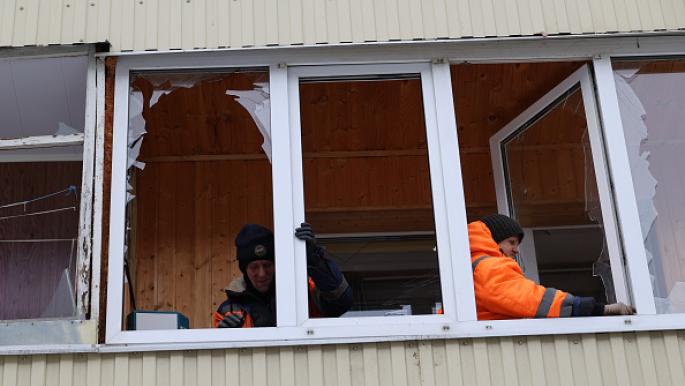
Russia's Ministry of Defense announced today, Tuesday, that three individuals were killed in the city of Belgorod due to drone attacks from Ukraine. This incident comes at a time when tensions between the two countries are escalating, as Ukrainian forces continue their military operations using drones.
Reports also indicated a fire at the Tuapse oil refinery, further complicating the security situation in the region. The reciprocal drone attacks between Ukraine and Russia have become a recurring phenomenon, reflecting the military escalation between the two sides.
Details of the Incident
Belgorod is one of the Russian cities located near the Ukrainian border and has been subjected to several attacks since the conflict began. The recent attack, which resulted in the deaths of three people, illustrates the rising tensions in the area. Additionally, the fire at the Tuapse refinery poses an additional threat to vital infrastructure in Russia.
It is noteworthy that the use of drones has become a prominent feature of the conflict, as both Russia and Ukraine seek to enhance their military capabilities through modern technology. This type of attack reflects the evolution of combat methods in modern conflicts.
Background & Context
Historically, Russian-Ukrainian relations have seen increasing tensions since 2014, when Russia annexed Crimea. Since then, military conflicts in Eastern Ukraine have escalated, resulting in thousands of deaths and the displacement of millions. Drone attacks represent a development in warfare methods, allowing conflicting parties to conduct precise military operations without the need to deploy ground troops.
In recent years, Ukraine has increased its investments in military technology, including drones, which has contributed to enhancing its defensive capabilities. On the other hand, Russia seeks to protect its territory from any potential threats, further intensifying the conflict.
Impact & Consequences
The recent attacks could lead to a greater escalation in the conflict, as Russia may respond with larger military operations in Ukraine. This escalation could affect regional stability and increase tensions between Russia and Western countries that support Ukraine.
Furthermore, the continuation of drone attacks may exacerbate humanitarian conditions in the affected areas, where populations suffer from the effects of the ongoing conflict. International pressure on Russia to cease hostilities is likely to increase, which could impact its foreign policies.
Regional Significance
The Arab region is indirectly affected by the Russian-Ukrainian conflict, as tensions in Europe could have repercussions on global energy markets. Rising oil and gas prices due to the conflict may impact Arab economies that rely on energy exports.
Additionally, the situation in Ukraine may affect food security in the region, as Ukraine is one of the largest grain exporters. Any escalation in the conflict could lead to fluctuations in food prices, impacting Arab importing countries.
In conclusion, the situation in Belgorod serves as another example of the escalating tensions in the Russian-Ukrainian conflict, warranting close monitoring by the international community.