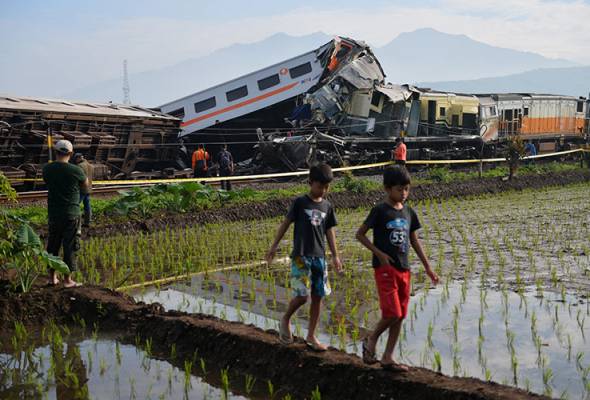
A horrific collision occurred in the Indonesian city of Bekasi between the KRL Commuter Line and the KA Argo Bromo Anggrek train, leading to injuries among numerous passengers. The incident took place at Bekasi Timur station, where the injured were taken to three local hospitals for medical attention.
According to the Mayor of Bekasi, Tri Adhianto, the number of injured individuals reached 29, who were transported to RSUD Kota Bekasi, Bella Hospital, and Primaya Hospital. He confirmed that rescue efforts are ongoing to extract those still trapped inside the train.
Details of the Incident
The accident occurred late on Monday evening, with the circumstances surrounding the collision still unclear. The head of the Metro Jaya police, Irjen Asep Edi Suheri, indicated that seven individuals remain trapped in the train, necessitating the intervention of rescue teams to cut through the train and free them.
Rescue teams are working tirelessly, employing specialized equipment to cut parts of the train to reach the injured. Asep confirmed that the operation is challenging but they hope to rescue all those trapped as quickly as possible.
Background & Context
Indonesia is one of the countries that heavily relies on rail transport services, connecting major cities. However, train collisions are not new in the country, with several similar incidents occurring in recent years, raising questions about the safety of transport systems.
Historically, there have been efforts to improve railway infrastructure, but significant challenges remain regarding maintenance and operations. Incidents like this highlight the urgent need to enhance safety standards and provide adequate training for personnel.
Impact & Consequences
This incident may raise significant concerns among passengers and affect their confidence in the rail transport system. It is likely to increase pressure on the government to improve safety standards and provide compensation to the injured. A comprehensive review of emergency plans and response strategies may also be required.
Furthermore, this accident could disrupt transport operations in the area, as train services may be suspended for some time to investigate the incident and carry out necessary repairs.
Regional Significance
While the incident may seem distant from the Arab region, it serves as a reminder of the importance of improving transport systems and public safety worldwide. Similar accidents can occur anywhere, necessitating enhanced international cooperation in safety and transport.
This incident can also serve as a lesson for Arab countries seeking to develop their transport infrastructure, where safety should be a top priority in any developmental project.