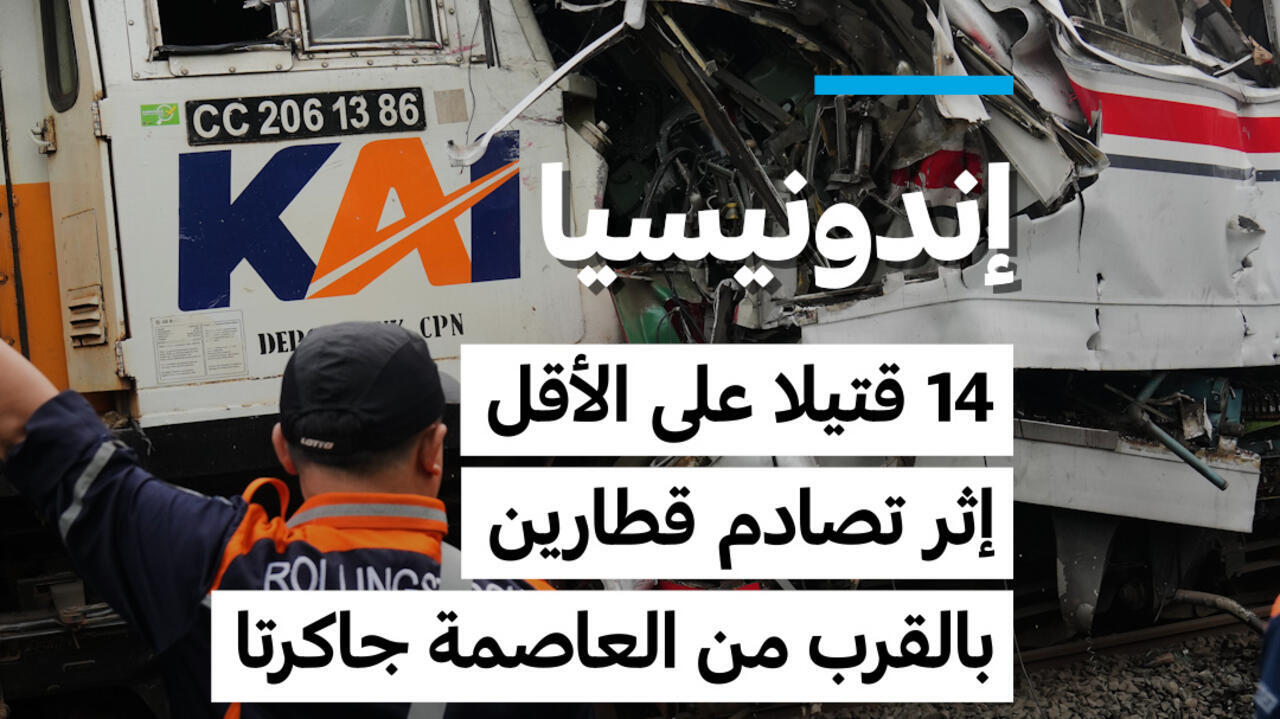
A horrific train collision occurred late on Monday night on the outskirts of Jakarta, Indonesia, where a passenger train collided with a long-distance train. The accident resulted in the deaths of approximately 14 people and injuries to 84 others, according to initial reports that may change as rescue operations and investigations continue.
Jakarta is known as one of the most congested cities in the world, with a significant portion of the population relying on rail transport services. This incident comes at a time when the local railway network is under immense pressure due to ongoing congestion.
Details of the Incident
The accident occurred late at night, complicating rescue operations. Emergency teams rushed to the scene to assist the injured and evacuate victims. Local authorities confirmed that a comprehensive investigation has been launched to determine the circumstances of the accident, amid fears of a recurrence of such incidents in the future.
Reports indicate that trains in Jakarta are often overcrowded, increasing the risk of accidents. This incident raises questions about the safety of public transport in the city, especially with the growing population.
Background & Context
Historically, Indonesia has witnessed numerous railway accidents, but this incident ranks among the deadliest in recent years. The Indonesian government had previously announced plans to upgrade the railway network and enhance its safety, yet implementation remains slow.
There is increasing pressure on the government to improve public transport infrastructure, especially with the rising population in Jakarta, which is one of the fastest-growing cities in the world. Previous accidents have affected public confidence in the public transport system, necessitating a swift and effective response from authorities.
Impact & Consequences
This accident could significantly impact transport operations in Jakarta, as some train services are expected to be suspended for a period during the investigations. It may also increase pressure on the government to improve safety standards in public transport.
Furthermore, the incident may provoke reactions from civil society and human rights organizations calling for improved transport conditions and public safety. Similar accidents could lead to calls for radical changes in the management of transport in the country.
Regional Significance
Although the accident occurred in Indonesia, it highlights public transport safety issues faced by many countries, including Arab nations. Traffic accidents and railway incidents pose significant challenges in numerous Arab cities, requiring effective government responses to improve infrastructure.
This incident could serve as a catalyst for Arab countries to assess their public transport systems and enhance safety standards, contributing to reducing accidents and protecting lives.