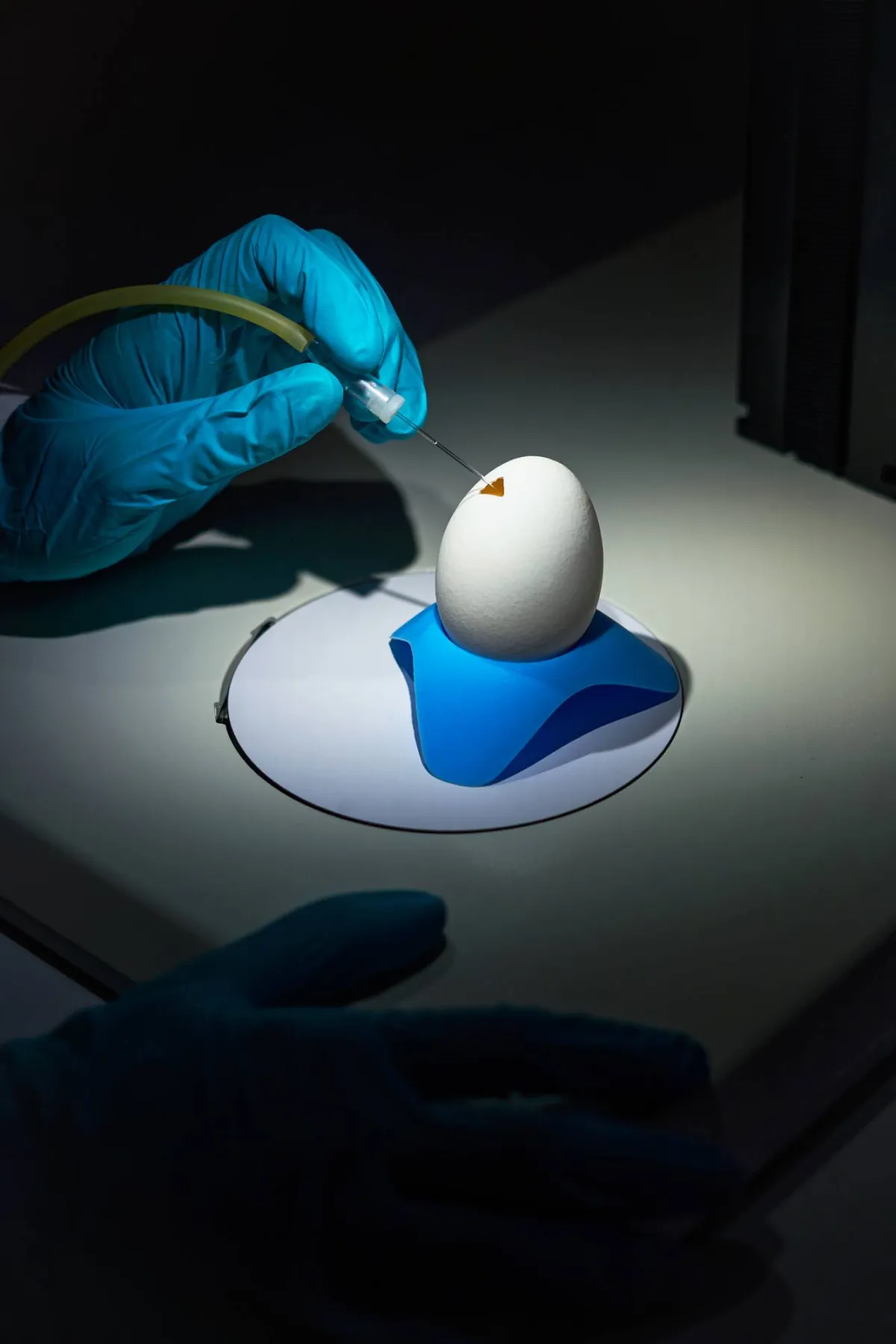
Neon Bio, a startup company, is striving to transform chicken eggs into factories for drug production, which could revolutionize the medical treatment industry. According to Sam Levin, one of the company's founders, utilizing eggs in drug manufacturing could reduce costs to less than one-tenth or even one-hundredth of their current expenses.
This process involves using an advanced technique known as injection into the embryonic artery of the chicken, which requires precise skills. Researcher Esther Oluagbeniga, one of the few scientists capable of executing this technique, explains how introducing the dye into the arteries of the embryo demonstrates how eggs can be transformed into a source for drug production.
Event Details
Over the past three decades, scientists have attempted to produce drugs in eggs, but the results have been minimal. So far, the U.S. Food and Drug Administration has approved only one drug produced from chickens for use in the United States, which is "Canuva," a treatment for a rare liver disorder, costing up to $310,000 annually. However, recent discoveries have facilitated the process of engineering chickens, opening the door for the production of new drugs at lower costs.
Neon Bio, founded in 2024, recently announced an agreement to develop three compounds with a major pharmaceutical company, reflecting the progress it has made in this field. This agreement represents an important step towards achieving the company's goals of producing effective and affordable medications.
Background & Context
Historically, drugs were often produced from Chinese hamster ovary cells, which required complex techniques and high costs. However, chicken eggs are considered a rich source of protein, making them a potentially more efficient option. Jay Young Han, a biologist at Seoul National University, states that eggs can function as self-sufficient bioreactors.
Nevertheless, converting eggs into drug factories has not been easy, as the technology has been extremely complex. Scientists like Michael McGraw have contributed to developing new methods to enhance this process, leading to the production of genetically modified chickens capable of efficiently producing drugs.
Impact & Consequences
If this technology succeeds, it will radically change how drugs are produced, potentially leading to significant cost reductions. This could open doors for the development of new medications to treat rare diseases and cancers, making them accessible to more patients.
Moreover, this advancement could enhance the ability of developing countries to produce affordable medications, contributing to improved healthcare in those nations.
Regional Significance
In the Arab region, this technology could have a significant impact on the pharmaceutical industry. With rising treatment costs, using chicken eggs as a source for drug production may help alleviate the financial burdens on healthcare systems. It could also enhance the ability of Arab countries to achieve self-sufficiency in pharmaceuticals, thereby strengthening health security in the region.
In conclusion, utilizing chicken eggs as drug factories represents an innovative step in the field of medicine, potentially transforming how medical treatments are produced. As research and development continue, we may see a brighter future in the pharmaceutical industry.