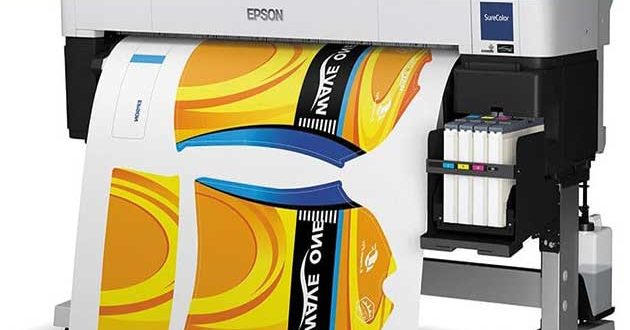
The fashion industry is at a critical juncture, facing increasing pressure on manufacturers to reduce carbon emissions and comply with sustainability practices. With rising expectations from global brands, companies are striving to enhance their production processes to meet these demands.
In this context, Epson stands out as a leading company contributing to this transformation by providing digital textile printers aimed at minimizing environmental impact while maintaining production quality. Epson relies on an ambitious environmental vision for 2050, aiming to become carbon-neutral and resource-efficient.
Event Details
Epson aims to offer flexible and diverse solutions for manufacturers through its series of industrial Monna Lisa printers. Since their launch in the early 2000s, these printers have proven capable of printing on a wide range of fabrics, from luxury garments to industrial signage.
The Monna Lisa printers are characterized by their use of dye-based inks, which reduce water consumption by up to 97% compared to traditional methods. Traditional printing requires large amounts of water for pre-treatment, washing, and steaming processes.
Background & Context
The textile industry faces increasing challenges amid a global shift towards sustainability. Many European countries are adopting new strategies aimed at promoting sustainability in fabric production, necessitating that companies adapt to these changes. There is also growing pressure from consumers to reduce waste and increase recycling rates.
In Southeast Asia, manufacturers have begun transitioning from analog to digital printing, enabling them to meet rapidly changing demands. The Vietnamese company Fadatech, for example, relies on Epson printers to provide fashionable and sustainable fabrics for global markets.
Impact & Consequences
Digital printing technologies help companies reduce waste and improve production efficiency. By integrating physical innovations with production efficiency, manufacturers can decrease reliance on new materials and enhance recycling rates.
Epson's Dry Fiber Technology exemplifies how used clothing can be transformed into printable non-woven fabric sheets, facilitating factories in reducing their dependence on new materials.
Regional Significance
With increasing environmental awareness in Arab countries, the textile industry can benefit from these innovations. Manufacturers in the region can adopt digital printing technologies to enhance the sustainability of their operations and increase their competitiveness in global markets.
In conclusion, the shift towards digital printing represents a significant step towards achieving sustainability in the textile industry. Through innovation and adaptation to environmental requirements, companies can ensure a more sustainable future.