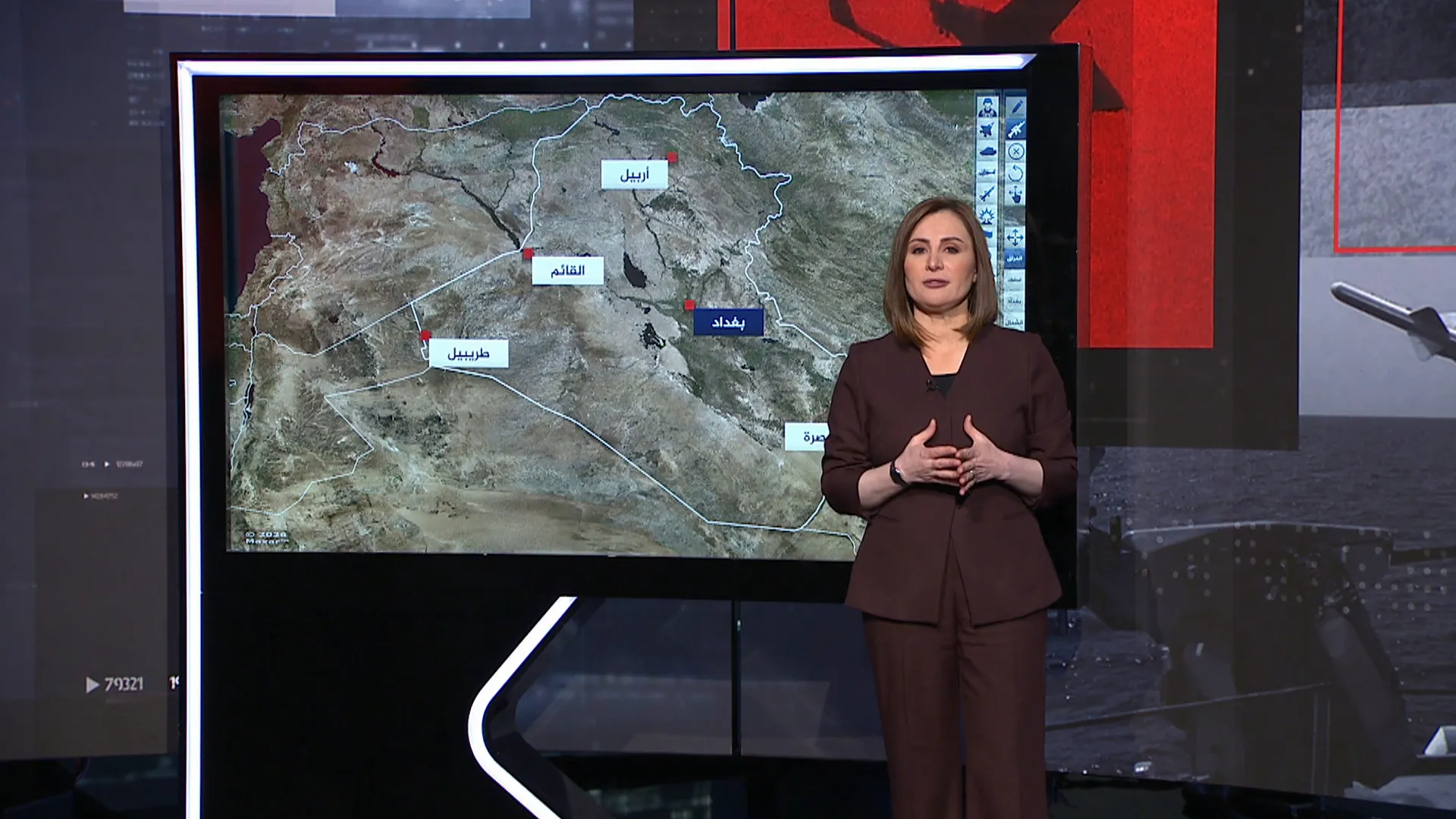
Iraq has recently become Iran's focal point in regional conflicts, experiencing unprecedented military escalation. According to military expert Brigadier General Elias Hanna, Iraq is no longer a mere side arena but has transformed into an 'indirect battleground' in a broader war between the American-Israeli axis and Iran.
The intertwining of forces and armed factions in Iraq reflects a state of chaos and instability. This conflict relies on the 'asymmetrical principle,' which makes Iraqi sovereign and economic institutions legitimate targets in the eyes of armed factions, whether to strike Western interests or to pressure the central government.
Details of the Situation
Brigadier General Hanna considers Iraq to be the 'Iranian focal point' and the frontline in the confrontation, due to its long shared border with Iran and the overlap of security files. He points out that Iraq is experiencing a state of 'contradiction' similar to the Lebanese model, where the logic of the 'state' clashes with the logic of 'loyalist factions.'
In this context, the phenomenon of 'Iraq fighting Iraq' emerges, where armed factions launch attacks against official state institutions and American interests simultaneously. This dynamic reflects the depth of the internal conflict that Iraq is suffering from, threatening its stability and security.
Background & Context
Iran seeks to expand instability horizontally to alleviate pressure on itself, with Iraq being the key gateway for this strategy under the concept of 'unity of arenas.' Recently, there has been a noticeable escalation in mutual shelling, including direct Iranian missile strikes towards Erbil in the Kurdistan Region of Iraq.
The targeting map shows that the attacks have affected the entire Iraqi geography, focusing on three main pathways. The Iraqi intelligence headquarters in the Al-Mansour area of Baghdad was also targeted, reflecting the factions' adoption of a treasonous doctrine towards certain intelligence officers, considering them collaborators with Washington.
Impact & Consequences
The repercussions of this conflict on Iraq are manifold, as it faces significant challenges related to sovereignty and security. The repeated attacks on government institutions reflect the state's weakness and the erosion of its authority, complicating the security and political landscape.
Moreover, the rise in violence could exacerbate humanitarian and economic crises in the country, as the Iraqi people suffer from the ongoing conflict's consequences, threatening the stability of the region as a whole.
Regional Significance
Today, Iraq represents a battleground for Iranian-American conflict, affecting the balance of power in the Arab region. Tensions in Iraq could lead to escalated conflicts in neighboring countries, increasing instability in the Middle East.
In conclusion, Iraq remains at the heart of the regional conflict, necessitating serious steps from the international community to support its stability and enhance its sovereignty before the situation escalates into a larger crisis affecting all countries in the region.