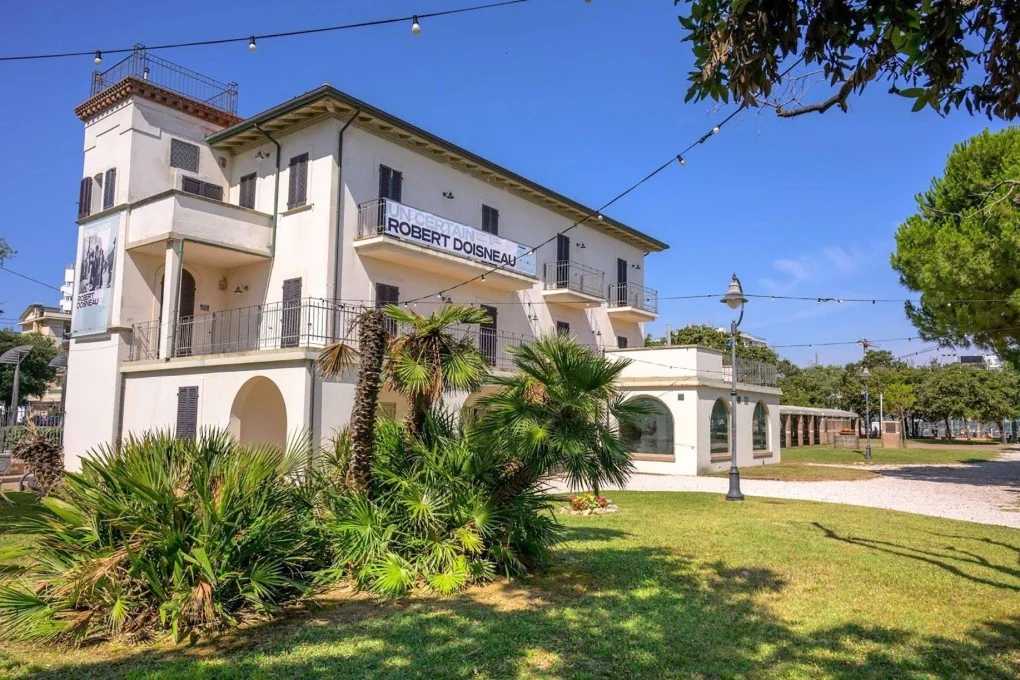
Local authorities in Riccione, Italy, have announced plans to transform Mussolini's Villa into a cultural space focused on promoting democratic values through historical exhibitions. The villa, located on the beachfront of the Adriatic resort town of Riccione, was acquired by the local council for $1.3 million.
Built in 1890 in the style of traditional summer houses along the Adriatic coast, the villa was purchased by the Mussolini family in 1934. It served as a summer residence for the Italian dictator Benito Mussolini, making it a symbol of a dark period in Italy's history. However, transforming it into a cultural space represents a step towards reevaluating this history.
Event Details
The local authorities aim to use the villa as a cultural center that attracts visitors and fosters dialogue about democratic values. The planned historical exhibitions will include information about the fascist period in Italy, along with discussions on the importance of democracy and human rights. This transformation comes at a time when calls are increasing across Europe to rethink historical symbols associated with dictatorial regimes.
This initiative is part of broader efforts in Italy and Europe to reassess fascist history, as the villa represents a place from which lessons can be learned from past mistakes. Additionally, this project reflects the local community's desire to confront history in a positive and constructive manner.
Background & Context
Modern Italian history is fraught with challenges, having witnessed the rise of fascism in the early 20th century under Mussolini's leadership. The fascist regime was a period of political repression, during which many social groups were marginalized. Following the fall of the fascist regime in 1945, Italy began reconstructing itself as a democratic state, yet debates continue on how to deal with historical symbols linked to that era.
In recent years, discussions have intensified regarding how to manage historical sites associated with oppressive regimes. Many European countries, including Germany and Spain, have taken similar steps to convert sites linked to dictatorships into educational and cultural spaces.
Impact & Consequences
Transforming Mussolini's villa into a cultural space could significantly impact how Italians understand their history. By offering educational exhibitions, this project may help enhance historical awareness and teach new generations about the importance of democracy and human rights. It could also serve as a model for other countries seeking to address their complex histories.
Furthermore, this project could contribute to boosting cultural tourism in Riccione, as it is expected to attract visitors interested in history and politics. This may support the local economy and enhance the city's image as a cultural destination.
Regional Significance
In the Arab world, where many countries still suffer from the effects of authoritarian regimes, Riccione's experience could serve as inspiration. The shift from symbols of oppression to educational spaces can encourage Arab communities to rethink their history and how to deal with the past. Promoting democratic values and human rights is vital in the context of the political and social transformations occurring in the region.
In conclusion, the transformation of Mussolini's villa into a cultural space represents a bold step towards confronting history and promoting democratic values. This project is not only significant for Italy but carries important lessons for the entire world.