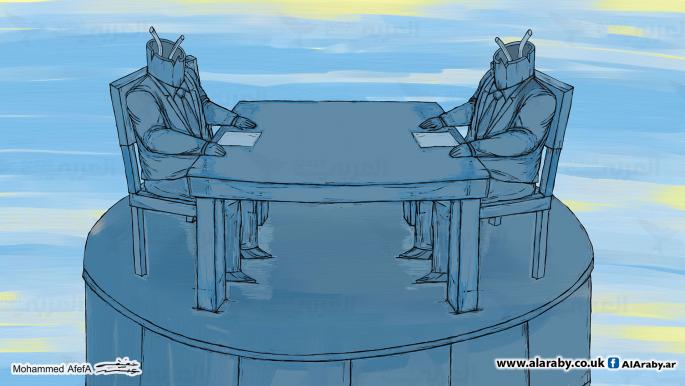
Negotiations currently appear far removed from being just an art of compromise, previously seen as a dialogue where both parties exchanged offers and concessions. Today, this process has morphed into a strange spectacle, where it is unclear who is playing and who is being played, raising numerous questions about the effectiveness of these negotiations.
The reasons behind this transformation are manifold, as political and economic interests intertwine in complex ways, making it difficult to pinpoint the true objectives of each party. Under these circumstances, negotiations seem to have become more complicated, with agendas overlapping and visions diverging.
Event Details
Reports indicate that many negotiations once deemed crucial have concluded without yielding tangible results. This reflects a state of chaos and uncertainty in the political arena, where pressures on the involved parties to reach solutions are increasing, yet to no avail.
This phenomenon is evident in various regions around the world, where it seems that conflicting parties are no longer capable of reaching compromises, further complicating situations. At times, negotiations appear to be used as a means to postpone solutions rather than to achieve them.
Background & Context
Historically, negotiations were considered an effective tool for resolving disputes, but over time, the dynamics have changed. Recent years have witnessed a rise in armed conflicts, leading to a decline in trust among the conflicting parties. This complex environment makes it challenging to achieve any real progress in negotiations.
Moreover, the influence of major powers on these negotiations complicates matters further, as the interests of powerful nations intervene in shaping the dialogue's paths. This interference can lead to divergent objectives between local and international parties, making it even more difficult to reach solutions.
Impact & Consequences
The repercussions of this situation are numerous, as the chaos in negotiations affects regional and international stability. The absence of effective solutions exacerbates humanitarian crises and increases the suffering of affected populations.
Furthermore, the continuation of this situation may lead to the proliferation of armed conflicts, reflecting the failure of the international community to achieve peace. These dynamics directly impact security and stability in the region, necessitating a reevaluation of negotiation strategies.
Regional Significance
The Arab region is particularly affected by this situation, as many countries are experiencing ongoing conflicts. The lack of effective compromises heightens the suffering of populations and reinforces instability. Under these circumstances, it becomes essential for the involved parties to adopt new strategies focused on achieving peace and stability.
In conclusion, the current situation necessitates a comprehensive reassessment of negotiation methods, prioritizing the interests of the people over narrow political agendas. Restoring trust between conflicting parties is the first step towards achieving effective and sustainable compromises.