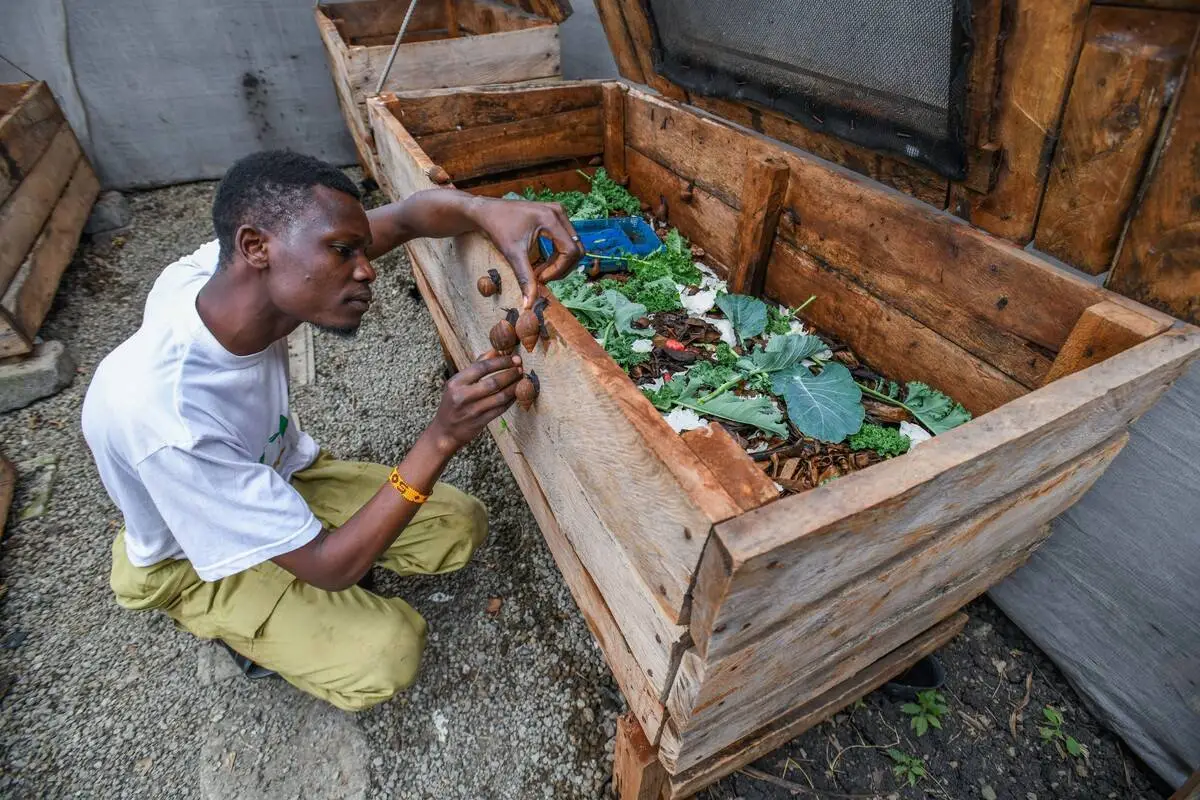
Tunisia is seeking to exploit its snail wealth as a promising investment opportunity, with snail farms in Manouba serving as a unique model. As global demand rises, could these small creatures become a significant source of income for the country?
In a quiet farm near Manouba, Sofiane Kenzari returns to his farm, which is one of the few in Tunisia specializing in snail farming. Although a visitor might think they are in a traditional farm, the details reveal an unusual project in the Tunisian agricultural scene.
Event Details
Sofiane began his adventure in this sector searching for an alternative investment opportunity, choosing snail farming after hesitating between several options. His project relies on breeding species such as the large gray and small gray snails, with the production cycle starting from the hatching stage, where the snail weighs less than 0.04 grams, reaching the fattening stage where weights range between 17 and 25 grams over a period extending from six to seven months.
Snail farming is a seasonal activity linked to precise climatic factors, with the production cycle commencing between late May and late June. In summer, the breeders are moved to cooling rooms to maintain temperatures between 4 and 6 degrees, entering a state of hibernation before resuming breeding in September.
Background & Context
Snail farming is considered part of the Tunisian culinary heritage, being used in many traditional recipes. However, breeders face significant challenges in marketing their products, with some preferring to sell snails live to restaurants, while others seek to convert them into derived products such as snail meat or snail slime used in cosmetic industries.
Despite the presence of several snail breeding centers in Tunisia, most are not officially registered due to the complexities of health regulations. According to figures from the Central Cooperative of Snail Breeders, the number of recognized breeders does not exceed seven, indicating an urgent need to improve regulatory conditions.
Impact & Consequences
Figures show that snails are considered a promising export product, enjoying high demand in European markets, particularly in France, Spain, and Italy. However, exporting requires adherence to precise standards regarding the quality of snails and their breeding locations, posing an additional challenge for breeders.
The Ministry of Agriculture is working to provide necessary training for youth, but weak funding from banks represents a major obstacle to developing this sector. Statistics indicate that the number of breeders has fluctuated significantly, reflecting the need for greater investments to support these projects.
Regional Significance
Tunisia's experience in snail farming serves as a model to be emulated in the region, as it could contribute to enhancing food security and providing new job opportunities. If administrative and financial obstacles are overcome, snail farms could become an important source of income in many Arab countries.
In conclusion, breeders in Tunisia are betting that overcoming these obstacles will transform snails from small creatures in the wild into a genuine economic resource within the future of Tunisian agriculture.