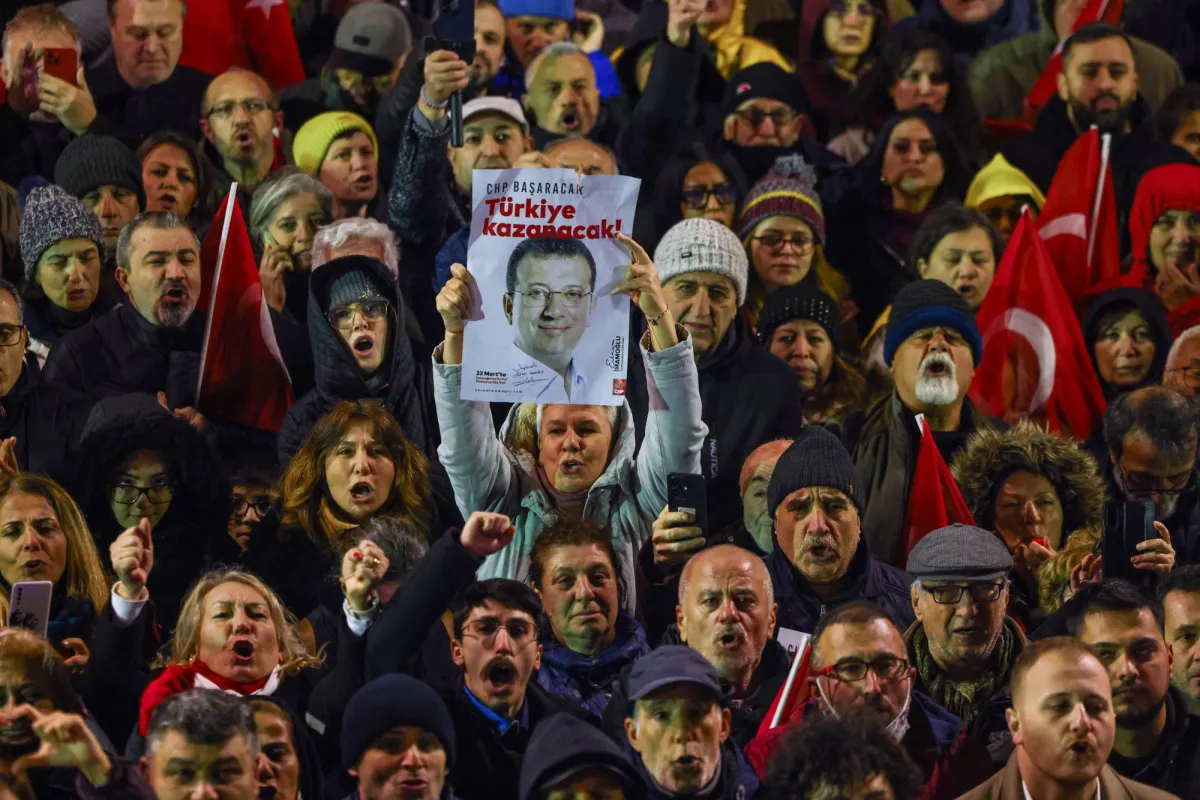
The trial of Istanbul's opposition mayor, Ekrem İmamoğlu, begins today at the Silevri Prison in western Istanbul, facing charges of "political espionage" while he is still under investigation for corruption related to his management of the municipality. İmamoğlu appears in court amid serious allegations of leaking data concerning millions of voters to foreign entities, including Israeli intelligence.
The 25th Istanbul Criminal Court is handling the case, where an indictment against İmamoğlu and three others has been accepted, seeking penalties of up to 20 years in prison for each. The indictment also calls for a ban on engaging in any political activities for a similar duration.
Details of the Charges
İmamoğlu, regarded as one of Turkey's most prominent opposition figures, faces accusations of leaking data related to 4.7 million voters during the local elections held in 2019. This case has been linked to a previous espionage case involving businessman Hüseyin Gün, who was arrested for spying for foreign countries. Interestingly, Gün met with one of İmamoğlu's advisors shortly before the elections, raising questions about their relationship.
Also on trial in this case are İmamoğlu's advisor, journalist Necati Özkan, and the director of the opposition channel Tele 1, Merdan Yanardağ, who were detained on suspicion of facilitating the data leak. The defense for the accused argues that the prosecution is attempting to connect unrelated matters to the case, asserting that the evidence presented is insufficient.
Context and Background
This trial comes at a sensitive time for Turkey, as İmamoğlu is seen as a major competitor to President Recep Tayyip Erdoğan. İmamoğlu was arrested in March 2025 and faces 142 charges related to corruption in municipal management, with potential penalties reaching 2430 years. These cases have sparked widespread debate regarding the political motivations behind them, with many believing the aim is to sideline İmamoğlu from political competition.
The trial coincides with a new wave of arrests involving 29 officials and employees from the Istanbul municipality, accused of involvement in fraudulent tenders. These developments reflect a climate of political tension in the country, where pressure on the opposition is increasing.
Implications and Effects
The trial of İmamoğlu is a real test for Turkey's justice system, facing widespread criticism from human rights organizations that view the judiciary as a tool for pressuring opponents. Amnesty International has called for the release of Yanardağ, arguing that journalists in Turkey are being silenced through vague laws.
If İmamoğlu is convicted, it could significantly impact the future of the Republican People's Party, the largest opposition party. This may also negatively affect the opposition's chances in the upcoming elections, further increasing political polarization in the country.
Impact on the Arab Region
The events in Turkey illustrate how internal issues can influence the political landscape in the region. With increasing pressure on the opposition, relations between Turkey and Arab countries may be affected, especially those seeking to promote democracy and human rights. The success or failure of İmamoğlu could have repercussions for political forces in neighboring countries.
In conclusion, the trial of İmamoğlu remains a focal point for observers, reflecting the challenges facing democracy in Turkey and highlighting the political conflicts that may impact the stability of the region as a whole.