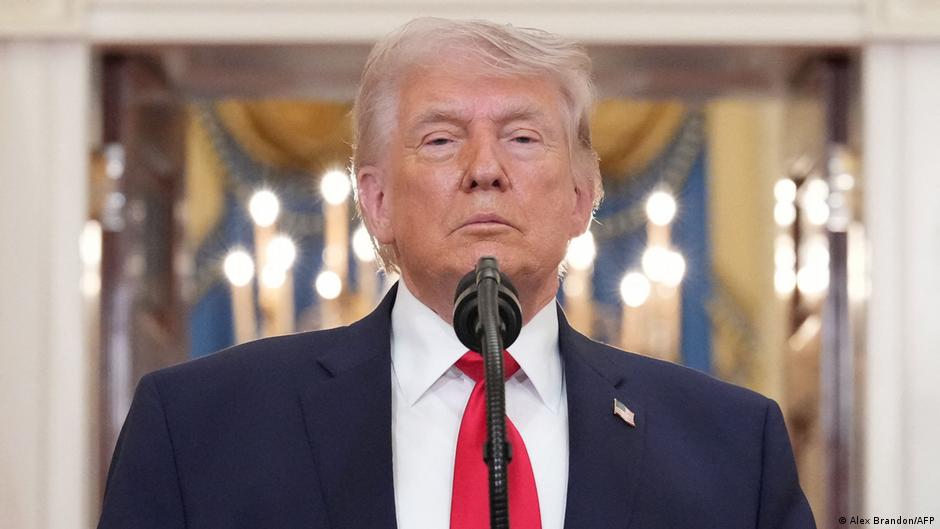
In a speech directed at the American people, President Donald Trump confirmed that the military campaign against Iran is nearing its end, indicating that the United States would return Iran to the stone age. This statement comes at a sensitive time, as global markets are experiencing sharp fluctuations due to the ongoing conflict.
During his address, Trump noted that military operations conducted by the United States and Israel have reduced Iran's ability to launch missiles and drones, asserting that Iranian forces have lost much of their military capabilities. He also mentioned that the Iranian navy has been destroyed and that the Iranian air force is in ruins.
Details of the Event
Trump discussed the impact of military operations, stating that Iran is no longer capable of threatening navigation in the Strait of Hormuz, which is a vital artery for global oil trade. However, Iran's closure of the strait has led to a significant increase in oil prices, with Brent crude rising by 5% to reach $106.22 per barrel.
At the same time, financial markets in Asia have declined, with the Nikkei 225 index in Tokyo dropping by 1.4%, while the Kospi index in South Korea fell by 3.4%. These fluctuations reflect investors' concerns about the implications of the ongoing conflict on the global economy.
Background & Context
The roots of the conflict between the United States and Iran date back many years of political and military tensions. Since the United States withdrew from the Iranian nuclear agreement in 2018, tensions have escalated significantly, leading to a series of attacks and military responses between the two sides. Recent months have witnessed a notable escalation in military operations, intensifying the conflict.
Historically, Iran has been considered a major regional power, but increasing U.S. sanctions and military operations have significantly impacted its capabilities. In this context, the United States seeks to achieve its strategic objectives in the region by diminishing Iran's influence.
Impact & Consequences
The ramifications of the conflict between the United States and Iran extend beyond regional borders, affecting the global economy and energy markets. The rise in oil prices due to tensions in the Strait of Hormuz could lead to increased energy costs worldwide, impacting economic growth.
Moreover, the continuation of the conflict may exacerbate humanitarian conditions in Iran, where the country is suffering from the effects of economic sanctions. Additionally, military escalation could draw other countries in the region into the conflict, complicating security situations further.
Regional Significance
For Arab countries, the conflict between the United States and Iran represents a significant challenge. Many countries in the region rely on stable oil prices, and any escalation in the conflict could negatively affect their economies. Furthermore, tensions could lead to increased sectarian and political divisions in the region.
In conclusion, the situation in Iran and its regional surroundings remains under observation, with growing concerns about the implications of the conflict on security and stability in the region. Arab countries must take proactive steps to address any developments that may affect their interests.