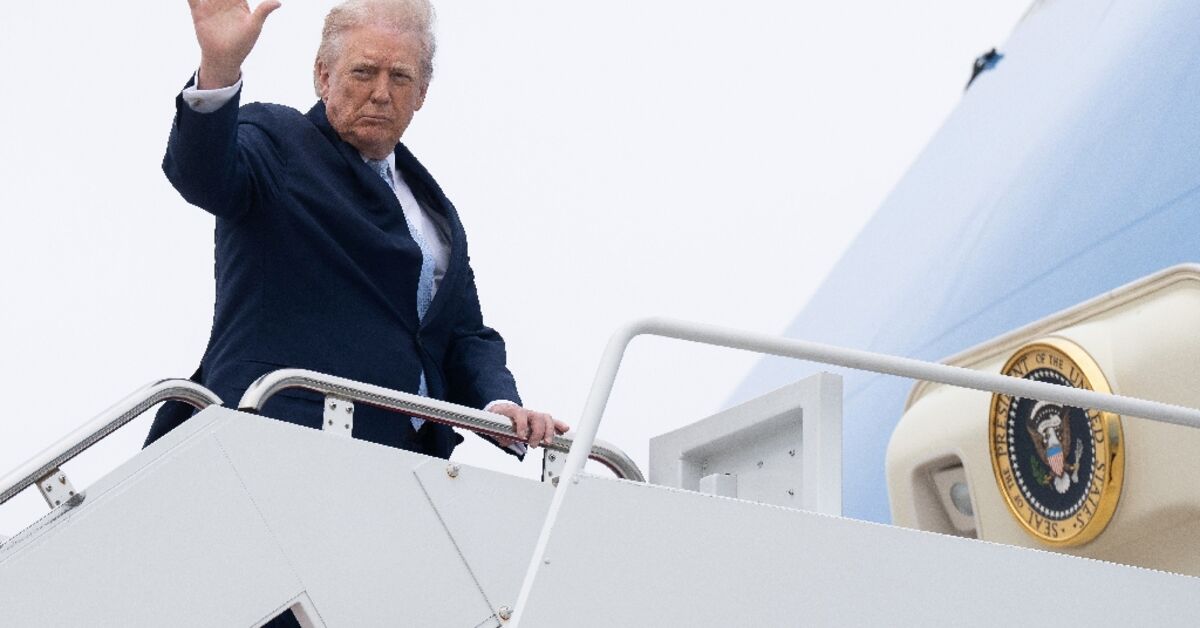
U.S. President Donald Trump revealed during an interview with Agence France-Presse on Monday that "things are going well" in relations with Iran, as negotiations with Tehran are being reconsidered following heightened tensions in recent times. This announcement came after Trump confirmed he would cease targeting Iranian power stations for a period of five days, marking a new step towards de-escalating tensions in the region.
Trump's remarks came just hours before the expiration of a two-day deadline during which he threatened to launch attacks on Iranian facilities if Tehran did not open the strategic Strait of Hormuz. This sudden shift in Trump's tone signals a diplomatic push and an effort to achieve greater consensus with Iran.
Details of the Event
In this context, Trump has exerted significant pressure on Iran in recent months, indicating that closing the Strait of Hormuz would lead to the loss of a major source of global oil supplies. Therefore, his decision to halt attacks on power stations is seen as a step towards calming the situation in the Gulf, where fears of military conflict continue to loom.
This change in U.S. policy towards Iran raises many questions about the intentions of the Trump administration and whether it aims to revive the nuclear negotiations that collapsed in 2018. Trump's retreat from his threats could provide a new opportunity for diplomacy, despite the ongoing escalation of tensions between the two sides.
Background & Context
Since the United States withdrew from the Iranian nuclear deal in 2018, relations between Washington and Tehran have soured significantly, with the U.S. reinstating economic sanctions on Iran and asserting its capability to use military force if necessary. This has led to a sharp escalation in the region, including attacks on oil facilities in Saudi Arabia and maritime assaults in the Gulf.
In recent years, the Strait of Hormuz has played a central role in global energy trade, accounting for approximately 20% of the world's seaborne oil. Thus, any threat to this vital corridor could lead to rising oil prices and increased instability in the market.
Impact & Consequences
Attention now turns to Tehran's reactions to the new U.S. statements, which may be viewed as a positive step towards opening dialogue. However, the continuation of military threats could complicate trust in U.S. intentions. It is believed that the Iranian administration will assess these statements to ensure that negotiations do not lead to new pressures.
Internationally, Trump's change of stance is seen as a green light for many countries eager to support peace and stability efforts in the Middle East. The Strait and ongoing shipping operations demonstrate that any escalation could impact the global economy as a whole.
Regional Significance
The current events are particularly significant for the Arab region, where many countries rely on stable oil prices and secure supplies. An escalation in conflicts between the U.S. and Iran could directly affect oil prices and the ability of Arab nations to maintain their economies. Many Arab countries are seeking to allocate greater resources towards building sustainable economies that can withstand fluctuations arising from any military conflict.
In conclusion, the situation in the Gulf remains under close observation, and it will become clearer in the coming days whether a genuine diplomatic breakthrough with Iran is achievable and whether the new U.S. statements signify a fundamental change in American foreign policy towards Tehran.