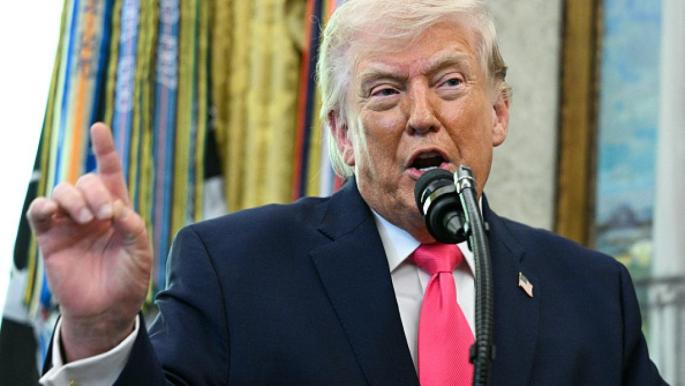
In a revealing interview with Israeli Channel 14, U.S. President Donald Trump disclosed that practical steps are being taken to control the Strait of Hormuz, as the region witnesses escalating tensions after 30 days of the U.S.-Israeli war against Iran.
Trump, who is in office during a critical time, emphasized that coordination with Israel has become more reliable, reflecting a new strategy aimed at enhancing regional security in the face of Iranian threats. These statements come as fears grow over the escalation of conflict in the region, where Iran is considered a key player in ongoing disputes.
Details of the Event
During the interview, Trump addressed several issues related to regional security, highlighting the importance of the Strait of Hormuz as a vital maritime passage through which a significant percentage of global oil supplies flow. He explained that controlling this strait would help reduce Iranian influence in the region, reflecting a new American strategy aimed at countering the increasing threats from Tehran.
Trump also noted that cooperation with Israel has never been at such a strong level, as the two countries work together to develop military and security plans to face common challenges. This cooperation reflects new trends in American policy towards the Middle East, focusing on strengthening ties with traditional allies in the region.
Background & Context
Historically, the Strait of Hormuz is considered a vital strategic point, through which approximately 20% of global oil passes. In recent years, the region has seen rising tensions between the United States and Iran, especially after Washington's withdrawal from the Iranian nuclear deal in 2018. Since then, military and economic pressures on Tehran have increased, leading to heightened tensions in the area.
The U.S.-Israeli war against Iran, which began 30 days ago, is part of joint efforts to contain Iranian influence in Iraq, Syria, and Lebanon. This war raises concerns among many countries in the region, as it could lead to greater escalation of the conflict.
Impact & Consequences
Analysts expect that these statements will escalate tensions in the region, as Iran may respond to any American or Israeli moves in the Strait of Hormuz. This escalation could affect global oil prices, as any closure of the strait would significantly increase prices.
Moreover, these developments could increase divisions among Arab countries, as positions towards Iran and the United States vary. Some Arab nations may view these moves as a threat to their national security, while others may support U.S.-Israeli cooperation.
Regional Significance
Given the current situation, American statements could significantly impact relations between Arab countries and Iran. Many Arab nations are concerned about the rising Iranian influence in the region, which may drive them to enhance cooperation with the United States and Israel. This cooperation could lead to the formation of new alliances in the region, reflecting a shift in regional dynamics.
In conclusion, it appears that American statements regarding control of the Strait of Hormuz and coordination with Israel indicate a new phase of tensions in the region, necessitating close monitoring by Arab nations and the international community.