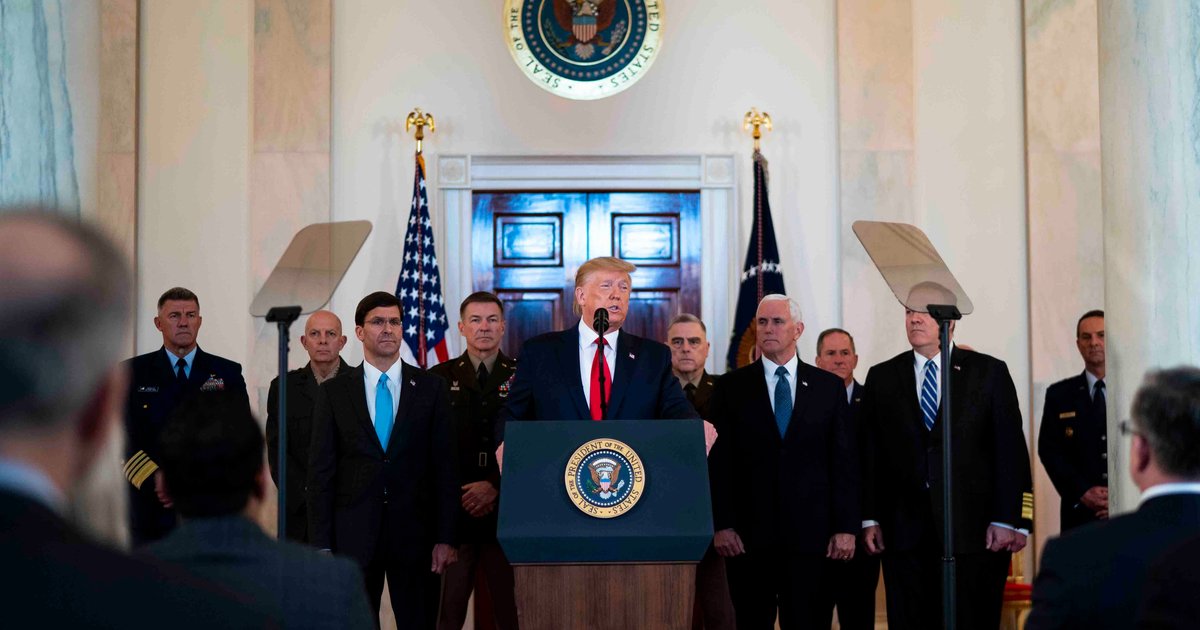
Former U.S. President Donald Trump stated that discussing Iran's defeat does not mean the end of military operations against it. This was highlighted during a press conference in Florida, where he explained that Iranian threats remain persistent, and the United States must stay vigilant in addressing these challenges.
Trump, who had taken a hard stance against Iran during his presidency, pointed out that the Iranian regime still poses a threat to both regional and international security. He emphasized that the United States should continue to support its allies in the region, such as Israel and Gulf countries, to confront Iranian threats.
Details of the Event
During the conference, Trump discussed various issues related to U.S. foreign policy, stressing the importance of maintaining an effective strategy to counter Iran. He also criticized the current administration, indicating that it has not taken sufficient steps to address the increasing Iranian influence in the region.
Trump also touched upon the Iranian nuclear deal, asserting that it was a bad agreement and that the United States should reconsider its policy towards Tehran. He noted that Iran is exploiting the current administration's weaknesses to gain ground.
Background & Context
The U.S.-Iranian relations are considered one of the most complex relationships in international politics. Since the Islamic Revolution in 1979, these relations have experienced ongoing tensions, especially after the United States withdrew from the nuclear deal in 2018. This withdrawal led to heightened tensions between the two countries, with the United States imposing strict economic sanctions on Iran.
In recent years, Iranian military activities in the region have increased, including support for militias in Iraq, Syria, and Lebanon. These activities have raised concerns among many countries, prompting the United States to occasionally take military actions, such as airstrikes against Iranian positions.
Impact & Consequences
Trump's statements come at a sensitive time, as fears of a potential escalation in the region are growing. Many analysts believe that continued military operations against Iran could exacerbate the situation, negatively impacting regional security.
On the other hand, some argue that sustained pressure on Iran may be necessary to deter it from continuing its destabilizing activities. This approach could strengthen the position of U.S. allies in the region, but it may also lead to violent reactions from Iran.
Regional Significance
Arab countries, especially those neighboring Iran, find themselves in a sensitive position regarding these developments. Countries like Saudi Arabia and the United Arab Emirates fear the rising Iranian influence in the region, which could affect their stability and security.
Moreover, U.S. statements may impact the relationships between Arab countries and Iran, potentially prompting some nations to bolster their alliances with the United States to confront Iranian threats. Simultaneously, these statements could escalate tensions between Iran and Arab countries, increasing the likelihood of new conflicts in the region.
In conclusion, Trump's remarks regarding Iran remain a focal point of interest, reflecting the ongoing challenges faced by U.S. foreign policy in the Middle East. It is crucial to monitor upcoming developments, as any escalation could significantly impact security and stability in the region.