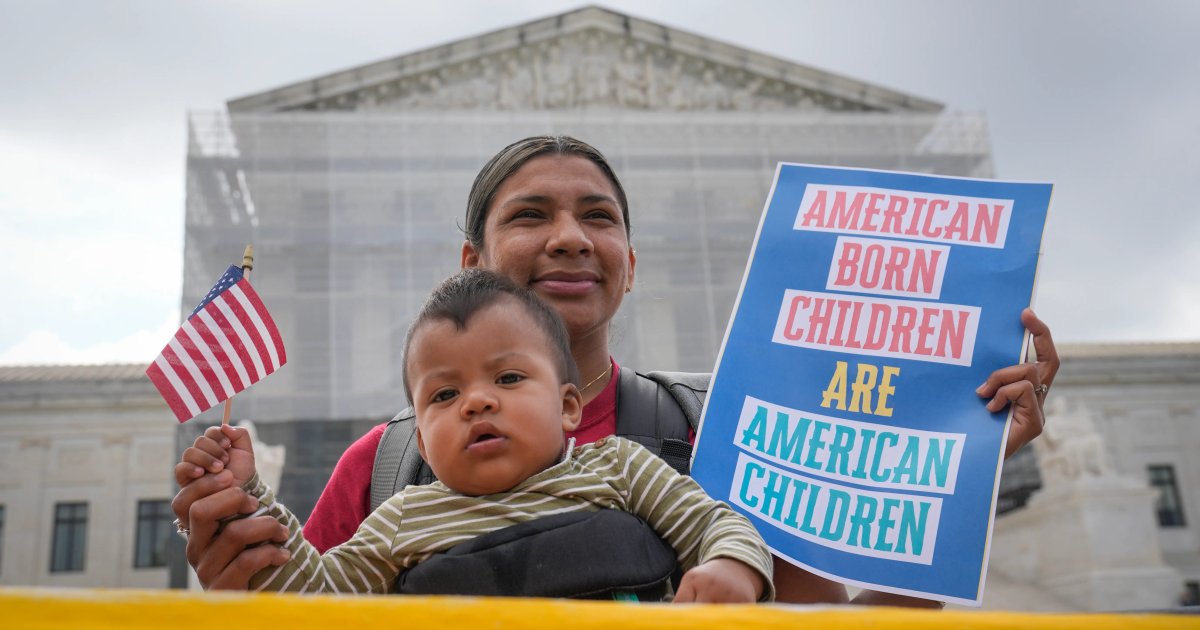
President Donald Trump is participating in Supreme Court sessions on Wednesday, where the court will discuss issues related to the automatic elimination of birthright citizenship. This issue has sparked widespread debate in the United States, as Trump seeks to change the laws that grant citizenship to children born on American soil regardless of their parents' status.
These sessions come at a sensitive time for American immigration policies, as Trump aims to fulfill his campaign promises related to reducing illegal immigration and enhancing national security. This topic has elicited mixed reactions from supporters and opponents, with some viewing it as a step towards strengthening national identity, while others see it as discrimination against immigrants.
Details of the Event
The Supreme Court will hold its sessions early on Wednesday, where justices will hear arguments from both sides. These sessions are expected to be pivotal in determining the future of citizenship policy in the United States. Trump has indicated on several occasions that birthright citizenship is exploited by illegal immigrants, leading to an increase in migrant numbers.
Trump's stance is based on constitutional amendments, as he believes that the 14th Amendment, which grants citizenship by birth, needs reinterpretation. The justices are expected to address the complex legal issues surrounding this amendment and how it should be applied in the modern era.
Background & Context
Historically, birthright citizenship was introduced in the United States as part of the 14th Amendment, which was ratified after the Civil War. This amendment aimed to ensure the rights of new citizens, particularly following the emancipation of slaves. Over time, this amendment has become a fundamental part of American identity, reflecting values of freedom and equality.
However, in recent years, the United States has witnessed significant changes in immigration policies. The debates surrounding immigration have intensified, especially with the increase in migrants from Latin America and the Middle East. These changes have led to the emergence of political movements advocating for stricter immigration laws, making the issue of birthright citizenship a focal point of public discussion.
Impact & Consequences
If the Supreme Court decides to eliminate birthright citizenship, it could lead to radical changes in how the United States handles immigrants. This decision may create uncertainty among immigrant families, affecting their decisions regarding immigration to the United States.
Moreover, this decision could heighten social and political tensions, increasing divisions between supporters and opponents of this approach. There are also concerns that this decision could lead to discrimination against certain groups of immigrants, exacerbating feelings of fear and anxiety within immigrant communities.
Regional Significance
American immigration and citizenship policies are of great importance to the Arab region, as many Arabs migrate to the United States in search of better opportunities. If birthright citizenship is eliminated, it could affect numerous Arab families living in the United States, making them more vulnerable to discrimination.
Additionally, this trend may lead to an increase in illegal immigration from Arab countries, as more people may seek to reach the United States despite the risks. This decision could also impact relations between the United States and Arab countries, as it may be viewed as a step towards tightening American policies towards migrants.
In conclusion, the Supreme Court sessions on birthright citizenship represent a crucial turning point in American policy. The outcomes of these sessions could significantly influence the future of immigration in the United States, warranting close attention from observers and analysts.