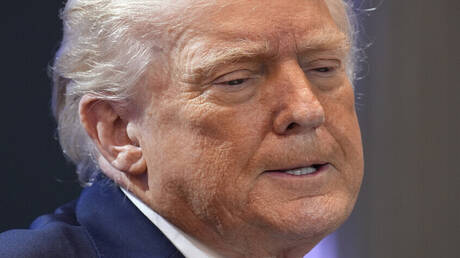
U.S. President Donald Trump stated he does not wish to comment on the recent Iranian message, raising concerns about potential escalation in the Gulf region. This remark was made during an interview with the Italian newspaper Corriere della Sera, where Trump expressed his reluctance to discuss the content of the message, raising questions about the U.S. administration's stance on the rapidly evolving situation in the area.
These statements come at a highly sensitive time, as fears of a possible military escalation between the United States and Iran are increasing. Relations between the two countries have been tense since the U.S. withdrawal from the nuclear agreement in 2018, which was followed by the imposition of strict economic sanctions on Iran. These sanctions have exacerbated the economic situation in Iran and heightened regional tensions.
Details of the Event
In his remarks, Trump did not provide details regarding the Iranian message but indicated that he prefers not to comment on matters that could escalate the situation. This stance reflects the U.S. administration's strategy aimed at avoiding any military escalation that could lead to open conflict in the region.
Despite the lack of details, the recent Iranian message may relate to the escalation of military activities in the Gulf, where the region has recently witnessed an increase in military maneuvers by Iranian forces. These activities raise concerns among neighboring countries and the United States, which is closely monitoring the situation.
Background & Context
Historically, U.S.-Iranian relations have experienced significant fluctuations, with periods of cooperation and others of tension. Following the Islamic Revolution in 1979, diplomatic relations between the two countries were severed, and since then, Iran has become one of the biggest challenges facing U.S. foreign policy in the Middle East.
In recent years, tensions have notably escalated, especially after attacks on oil facilities in Saudi Arabia, for which Iran was accused of being behind. These events led to an increased U.S. military presence in the region, further intensifying tensions between the two sides.
Impact & Consequences
Trump's statements could exacerbate the situation in the Gulf, as they may be interpreted as a weakness in the U.S. response to Iranian activities. This could encourage Iran to take bolder steps in the region, increasing the risk of military escalation.
Furthermore, the ambiguity of the U.S. position may lead to confusion among Washington's allies in the region, who rely on U.S. support to counter Iranian threats. This confusion could result in ill-considered decisions by some countries, increasing the risk of escalation.
Regional Significance
Arab countries are directly affected by any potential escalation in the Gulf, as many of these nations depend on regional stability for their security and economy. Heightened tensions could lead to rising oil prices, impacting the global economy and increasing pressure on oil-importing countries.
Additionally, any military escalation could result in a flow of refugees and increased sectarian tensions in the region, threatening stability in neighboring Arab countries. Therefore, closely monitoring developments in U.S.-Iranian relations is vital to ensure regional security.