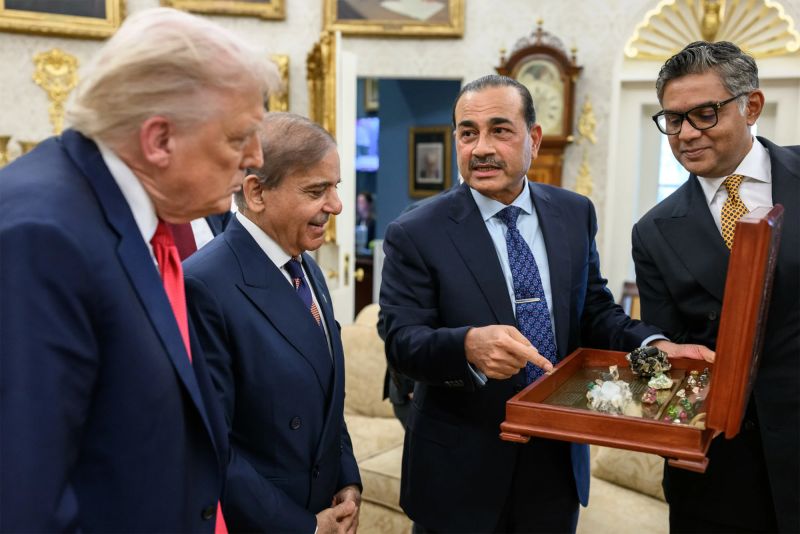
U.S. President Donald Trump announced the cancellation of a visit that was scheduled for his envoys, Steve Witkoff and his son-in-law Jared Kushner, to Pakistan, marking a new setback for hopes of achieving peace in the Iranian conflict. This decision came after Iranian Foreign Minister Abbas Araghchi left Islamabad without any indication of progress in talks with Prime Minister Shahbaz Sharif and other officials.
In a post on social media, Trump pointed out that there is a significant confusion within the Iranian leadership, which led him to make this decision. He wrote: "A lot of time has been wasted on travel, and there is much work to be done! Additionally, there are internal conflicts and confusion within their leadership. No one knows who is in charge, including themselves."
Details of the Situation
Iranian Foreign Minister Abbas Araghchi left Pakistan after what he described as "fruitful" discussions, indicating that he discussed with Pakistani officials a workable framework for permanently ending the war over Iran. However, there were no signs that the United States was serious about diplomacy, as Araghchi reported in another post.
After leaving Islamabad, Araghchi headed to the Omani capital Muscat, where he is scheduled to meet with senior officials to discuss bilateral relations and regional developments. Iranian media reported that Tehran has ruled out a new round of direct talks with the United States, stating that Iran will not accept Washington's maximalist demands.
Background & Context
These developments come at a time when relations between Washington and Tehran are at a standstill, as Iran has largely closed the Strait of Hormuz, which typically carries one-fifth of global shipments of oil and liquefied natural gas, while the United States continues to ban Iranian oil exports. The conflict, which is marked by a ceasefire, began with U.S. and Israeli airstrikes on Iran on February 28, escalating tensions in the region.
Since then, Iran has carried out strikes against Israel and U.S. bases in Gulf countries, leading to record-high energy prices and increased inflation, threatening global growth prospects.
Impact & Consequences
The cancellation of the American envoys' visit to Pakistan highlights the complexity of the situation in the Middle East, where tensions between major powers are rising. The inability of the United States to make progress in talks with Iran could exacerbate conditions, increasing the risk of military escalation.
Moreover, the ongoing conflict in the region affects global energy prices, negatively impacting the global economy and increasing economic pressures.
Regional Significance
This situation underscores the importance of diplomatic efforts in resolving the Iranian conflict, as the stakes are high for regional stability. The cancellation of the visit signals a potential shift in U.S. strategy, which may have broader implications for its relations with other nations in the region.
In conclusion, the developments surrounding the cancellation of the envoys' visit to Pakistan reflect the intricate dynamics at play in the Middle East, emphasizing the need for renewed diplomatic engagement to address the underlying issues.