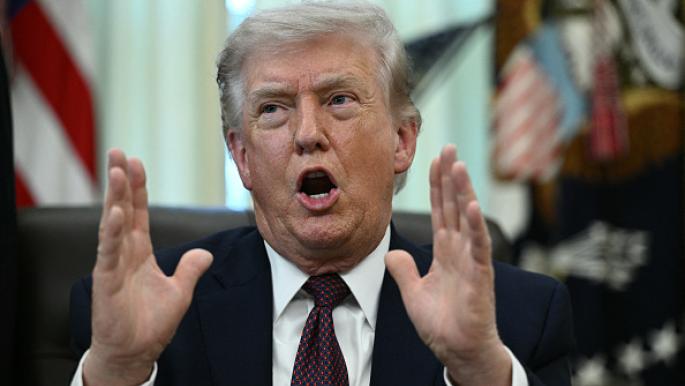
In an interview with the British newspaper 'Daily Telegraph' on Wednesday, U.S. President Donald Trump stated that he is seriously considering the possibility of withdrawing the United States from NATO. These remarks come at a time when relations between Washington and its European allies are notably tense, raising concerns about the future of this military alliance established after World War II.
Trump, who has long criticized NATO, described the alliance as a "paper tiger," indicating that it is not achieving its intended goals. These statements come at a sensitive time, as NATO seeks to strengthen its unity to face increasing security challenges, including threats from Russia.
Details of the Event
In the interview, Trump emphasized that he feels some member countries are not contributing enough to the defense budget, placing a greater burden on the United States. He noted that this situation might lead him to reevaluate his country's commitment to the alliance. These statements are not new, as Trump has previously criticized NATO, causing concern among his European allies.
NATO is considered one of the most important military alliances in the world, comprising 30 countries and aiming to ensure collective security for its members. It was established in 1949 in response to tensions arising from the Cold War. However, Trump's remarks reflect a significant shift in U.S. policy towards the alliance, which could have major implications for European and international security.
Context and Background
Historically, NATO has represented a cornerstone of security in Europe, especially in facing Soviet threats during the Cold War. With the collapse of the Soviet Union, the alliance's role evolved to include new missions such as combating terrorism and cybersecurity. However, current tensions with Russia, particularly following the annexation of Crimea in 2014, have refocused attention on the importance of this alliance.
In recent years, NATO has faced new challenges, including increased defense spending by some members and the emergence of new powers like China. These dynamics make Trump's statements even more significant, as they could lead to a reevaluation of security strategies in the region.
Impact and Consequences
If the United States decides to withdraw from NATO, it could destabilize security in Europe. Many member countries would find themselves in a difficult position, as their security depends on U.S. support. Additionally, such a withdrawal could encourage Russia to take more aggressive steps in the region, increasing tensions.
Moreover, the U.S. withdrawal could lead to a reshaping of international alliances, as European countries might seek to enhance their military cooperation with each other or look for new partnerships. This situation could alter the balance of power in the region and affect global stability.
Impact on the Arab Region
For the Arab region, a U.S. withdrawal from NATO could have indirect effects. With the diminishing American role in international affairs, Arab countries may find themselves compelled to reassess their security strategies. This withdrawal could also impact existing military alliances, especially amid rising regional tensions.
Ultimately, Trump's statements regarding NATO remain a significant point of interest, raising questions about the future of military alliances worldwide. As security challenges increase, the question remains: Will the United States continue to support its allies, or will it move towards a new isolationist policy?